Overview
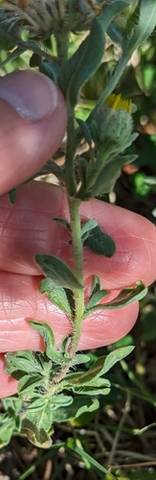
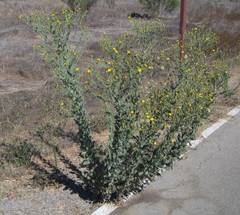
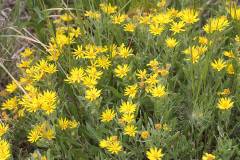
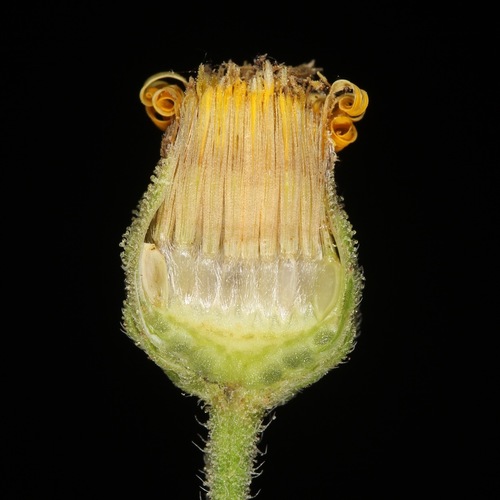
Heterotheca subaxillaris is an annual to biennial herb of the daisy family, growing 1-4 feet (30-120 cm) tall on stiff, branching stems coated in sticky, gland-tipped hairs that give off a strong camphor odor when bruised. The lower leaves are oval and stalked, 1-3 inches (2.5-7.5 cm) long, while the upper leaves clasp the stem. From summer into fall the branch tips bear yellow flower heads 0.5-1 inch (1.3-2.5 cm) across, each with both ray and disk florets in the daisy pattern. Two kinds of seed form on each head: the outer ray seeds are smooth and stay put, while the inner disk seeds carry a parachute of bristles and blow on the wind. The plant grows fast in loose, sandy soil and self-sows freely, colonizing dunes, roadsides, and disturbed ground. It tolerates heat, drought, and salt spray but is short-lived, completing its cycle in one or two seasons and dying after setting seed.
Native Range
Native to the southern and southeastern United States and northern Mexico, from the Atlantic and Gulf coasts west to Arizona. It is most frequent on coastal dunes, sand flats, and dry disturbed sites, and has spread north along sandy roadsides and railways.Suggested Uses
Grown in coastal, dune, and sandy wildflower plantings and for erosion control on loose soils, spaced 12-18 inches (30-45 cm) apart. The late-season flowers serve as a nectar source for bees and butterflies.How to Identify
Appearance
Size & Dimensions
Height1' - 4'
Width/Spread1' - 2'
Bloom Information
Detailed Descriptions
Foliage Description
greenGrowing Conditions
Sun Requirements
Requires 6-12 hours of direct sunlight daily
• Full Sun: 6+ hours of direct sunlight
• Partial Shade: 3-6 hours of direct sunlight
• Full Shade: Less than 3 hours of direct sunlight
Water & Climate
Water Needs
Drought Tolerance
Drought tolerant when established
Care & Maintenance
Care Guide
Grows in full sun on loose, sandy, fast-draining soil and tolerates a pH from 5.5 to 7.5. It withstands heat, drought, poor fertility, and coastal salt spray once established and needs no irrigation in most climates. Rich or wet, heavy soil shortens its life and encourages weak growth. As a fast-cycling annual or biennial, it is grown from seed sown on bare sandy ground in spring. It self-sows readily and can spread beyond where it is wanted. No fertilizer is required.Pruning
No routine pruning is needed. Cutting plants back before seed heads ripen limits self-sowing. Spent plants are cleared once they dry after seeding.Toxicity
Non-toxicPlanting Guide
Planting Methods & Timing
Planting Method
direct sow
Direct Sow Timing
spring
Days to Maturity
70–110 days
Plant Spacing
12 inches