Image 1 of 4
1 / 4
Anthony Valois and the National Park Service, no rights reserved (CC0) · Wikimedia Commons
Heterotheca, Genus, spp., Multiple species,
- Genus
- Multiple species
false goldenasters
North America, centered in the arid west and southwest
Overview
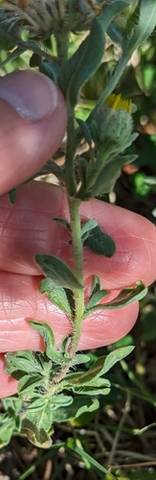
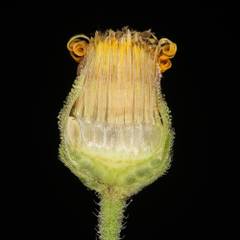
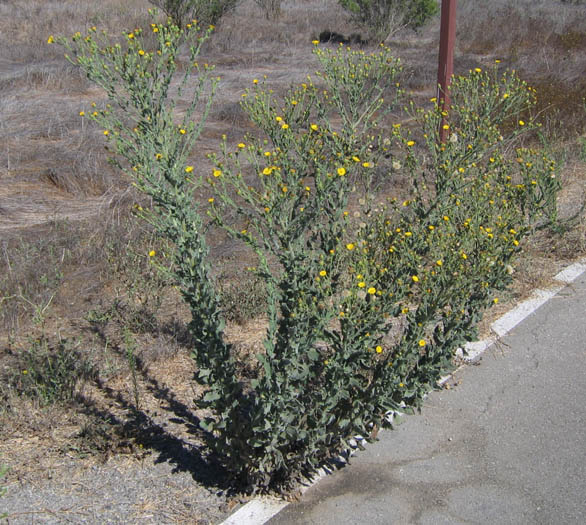
Heterotheca is a genus of about 25 to 30 species in the daisy family (Asteraceae), called false goldenasters, golden-asters, or camphorweeds. The genus is native to North America, most diverse in the dry western and southern United States and Mexico, where it grows on sand, gravel, disturbed roadsides, and open prairie. It takes in annuals, biennials, and perennials that range from low mats to bushy stems 6 in to 5 ft (15 cm to 1.5 m) tall. The leaves and stems are usually clothed in stiff hairs and resin glands, and several species, including H. subaxillaris, give off a strong camphor-like scent when crushed. The flower heads are yellow, with a ring of strap-shaped ray florets around a yellow disc, and open over a long summer-to-autumn season. They draw bees, butterflies, and other insects, while finches take the small dry seeds. Plants stand heat, drought, and lean soil but can self-sow heavily and spread into open ground. H. villosa, the hairy false goldenaster, is grown in prairie and rock gardens for its low, grey-green, free-flowering habit.
Native Range
The genus is native to North America, centered in the arid west and southwest of the United States and northern Mexico. Some species extend east and north into prairies and sandy coasts.Suggested Uses
Used in dryland, prairie, gravel, and pollinator gardens and in roadside and restoration plantings across much of North America. Low species edge paths and fill rock-garden pockets, spaced 12 to 18 in (30 to 45 cm) apart. Taller kinds stand in the middle of sunny, water-wise borders.How to Identify
Appearance
Size & Dimensions
Height6" - 5'
Width/Spread1' - 2'
Bloom Information
Detailed Descriptions
Foliage Description
grey-greenGrowing Conditions
Sun Requirements
Requires 6-10 hours of direct sunlight daily
• Full Sun: 6+ hours of direct sunlight
• Partial Shade: 3-6 hours of direct sunlight
• Full Shade: Less than 3 hours of direct sunlight
Care & Maintenance
Care Guide
Plants grow in full sun on lean, sharply drained sandy, gravelly, or rocky soil and need little water once established. Rich or moist ground makes soft, floppy growth and shortens the life of perennial kinds. Most are raised from seed sown in autumn or spring, and perennials can also be divided. No feeding is required. Cutting plants back after the first flush tidies them and limits self-sowing. Few pests are serious, though powdery mildew and rust may mark crowded plants.Pruning
No routine pruning is needed. Shearing perennial species after the main flush keeps them compact and curbs seeding. Annual and biennial kinds are pulled once they finish and set seed.Container Growing
Suitable for container growing