Image 1 of 10
1 / 10
Anthony Valois and the National Park Service, no rights reserved (CC0) · Wikimedia Commons
Heterotheca, Genus, grandiflora, Species,
- Genus & species
telegraphweed
Southwestern United States and northwestern Mexico
SunFull Sun
Overview
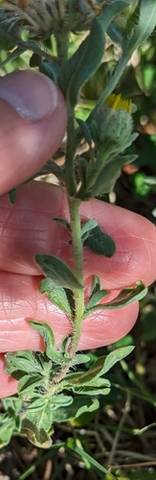
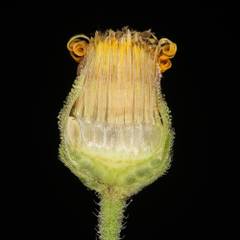
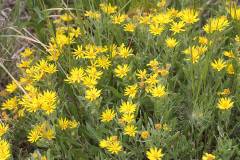
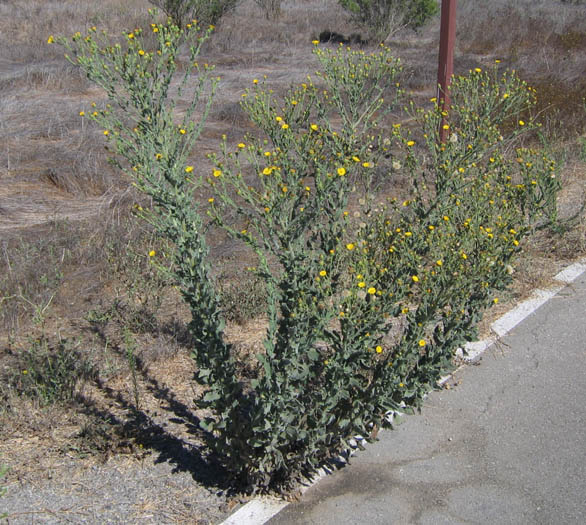
Heterotheca grandiflora is a stout annual or biennial herb in the daisy family, native to the southwestern United States and northwestern Mexico, growing 2-7 feet (0.6-2.1 m) tall on a single erect, branching stalk. The whole plant is gray-green, densely covered in soft hairs and sticky glands that give off a strong resinous, somewhat camphor-like scent and trap dust and small insects. The lower leaves are oblong, 2-5 inches (5-13 cm) long, and stalked, while the upper leaves are smaller and clasp the stem. From late spring into late fall the upper branches carry many yellow flower heads about 0.75-1 inch (2-2.5 cm) across, each with a ring of short ray florets around a yellow disc, followed by two kinds of bristly seeds. It grows in sandy and disturbed ground, roadsides, washes, and coastal bluffs, tolerating heat, drought, and poor soil. It establishes quickly on bare ground and self-sows heavily, so it often behaves as a pioneer weed of open sites.
Native Range
Native to the southwestern United States and northwestern Mexico, centered on California and extending into Arizona, Nevada, and Baja California, and naturalized more widely in the West and beyond. It grows in sandy soils, washes, roadsides, vacant lots, and coastal bluffs at low to middle elevations.Suggested Uses
Used in native, wildlife, and pollinator plantings, dry meadows, and erosion control on sandy, disturbed sites. Its size, stickiness, and heavy seeding make it less suited to small or tidy garden beds.How to Identify
Appearance
Size & Dimensions
Height2' - 7'
Width/Spread1' - 2'6"
Colors
Flower Colors
Foliage Colors
Bloom Information
Flowering is long, running from late spring well into fall and sometimes year-round in mild coastal areas. The branched top opens a steady succession of yellow heads over many weeks, drawing native bees and butterflies. Each head produces bristly seeds that disperse on the wind and on passing animals.
Detailed Descriptions
Foliage Description
gray-greenGrowing Conditions
Sun Requirements
Requires 6-12 hours of direct sunlight daily
• Full Sun: 6+ hours of direct sunlight
• Partial Shade: 3-6 hours of direct sunlight
• Full Shade: Less than 3 hours of direct sunlight
Water & Climate
Water Needs
Drought Tolerance
Drought tolerant when established
Care & Maintenance
Care Guide
Grows in full sun on dry, well-drained sandy or gravelly soils and tolerates heat, drought, wind, and poor, disturbed ground. It is suited to USDA zones 8-11 as a warm-season annual or biennial that dies after flowering and sets abundant seed. Rich, moist, or shaded soils produce soft, weak growth and shorten its life, and standing water is not tolerated. Little to no watering is needed once seedlings establish. It self-sows freely and can spread well beyond where it is planted, so removing seed heads before they ripen limits volunteers. Few pests trouble the sticky, aromatic foliage, which deer and rabbits avoid.Pruning
Deadheading the spent flower heads before seeds ripen is the main task and curbs heavy self-seeding. Whole plants can be pulled or cut at the base after flowering, since they die at the end of their cycle. No shaping is needed for this short-lived plant.Toxicity
Non-toxicPlanting Guide
Planting Methods & Timing
Planting Method
direct sow
Direct Sow Timing
fall or early spring
Plant Spacing
18 inches