Image 1 of 3
Plant Reference
1 / 3
×, Hybrid, Hesperocyparis, Genus, leylandii, Species,
- Hybrid
- Genus & species
leyland cypress
Intergeneric hybrid of garden origin; parent species {Hesperocyparis macrocarpa} (Monterey Peninsula, California) and {Callitropsis nootkatensis} (coastal Alaska to Oregon); first recorded at Leighton Hall, Wales, 1888
Overview
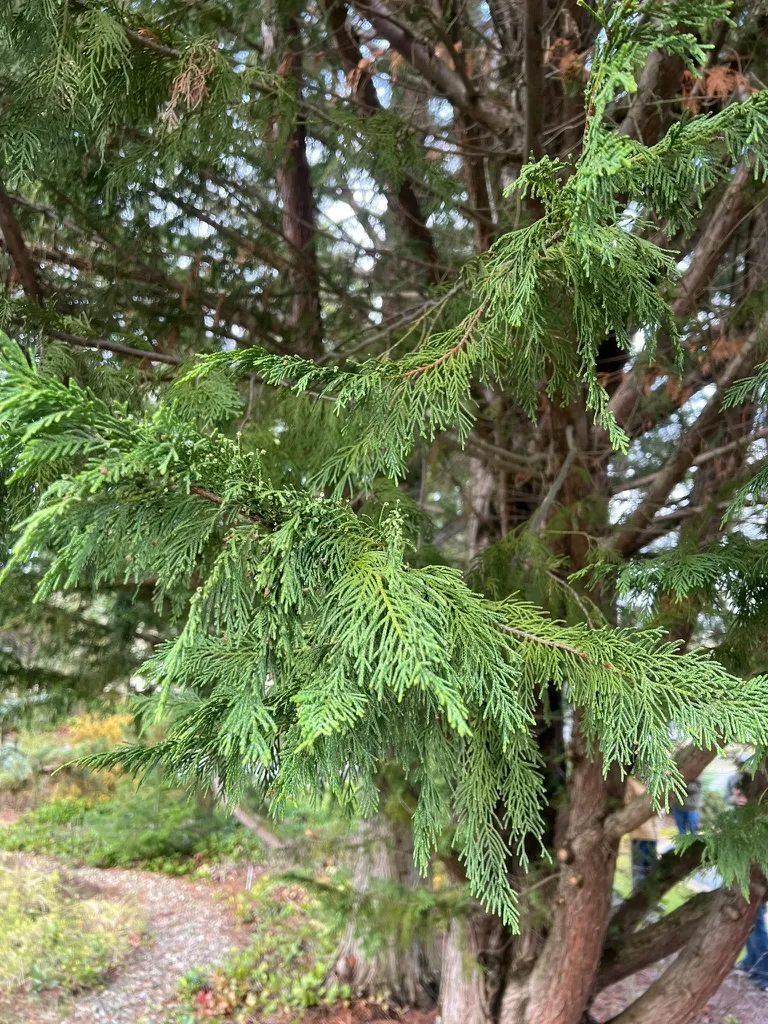
×Hesperocyparis leylandii is an upright columnar coniferous evergreen tree growing 60-100 feet (18-30 m) tall and 15-20 feet (4.6-6 m) wide. Blue-green to gray-green scale-like foliage is borne in dense flattened sprays on whip-like branches; the density is the primary screening feature. An intergeneric hybrid of Hesperocyparis macrocarpa × Callitropsis nootkatensis, first recorded at Leighton Hall, Wales, in 1888. Growth rate is very fast at 3-4 feet (0.9-1.2 m) per year — faster than most cultivated conifers. The combination of the rapid growth rate and the 60-100 foot (18-30 m) ultimate height means plantings frequently outgrow the intended space, which is the primary cultural limitation. Does not regenerate from old bare wood; cuts into brown leafless interior tissue will not re-foliate, so pruning must be restricted to the green outer shell. Susceptible to cypress canker (Seiridium cardinale) and Botryosphaeria canker, both of which cause branch dieback. Largely sterile — rarely sets viable seed. Drought-tolerant once established. Non-toxic. Deer-resistant.
Native Range
Intergeneric hybrid of garden origin. Parent species: Hesperocyparis macrocarpa (Monterey Peninsula, California) and Callitropsis nootkatensis (coastal Alaska to Oregon). First recorded at Leighton Hall, Wales, in 1888.Suggested Uses
Grown as a fast-growing evergreen hedge, screen, or windbreak, spaced 15-20 feet (4.6-6 m) apart for specimens or 4-6 feet (1.2-1.8 m) apart for hedging. Suits sites where rapid screening is needed and where adequate space exists for the 60-100 foot (18-30 m) ultimate height. Regular pruning is required to manage size, and cuts cannot be made into old bare wood. Non-toxic. Hardy in zones 6-10.How to Identify
Appearance
Size & Dimensions
Height60' - 100'
Width/Spread15' - 20'
Colors
Bloom Information
Spring (February-March). Yellow-brown male strobili release pollen; inconspicuous. Female cones are rare — the hybrid is largely sterile and seldom produces viable seed. Wind-pollinated.
Detailed Descriptions
Flower Description
yellow-brown male strobili in spring; inconspicuous; rarely produces viable cones — largely a sterile hybridFoliage Description
blue-green to gray-green scale-like foliage in flattened sprays on whip-like branches; dense year-round foliageGrowing Conditions
Sun Requirements
Requires 6-12 hours of direct sunlight daily
• Full Sun: 6+ hours of direct sunlight
• Partial Shade: 3-6 hours of direct sunlight
• Full Shade: Less than 3 hours of direct sunlight
Care & Maintenance
Care Guide
Site in full sun (6-12 hours) in well-drained soil with a pH of 5.5-7.5. Drought-tolerant once established. Very fast growth at 3-4 feet (0.9-1.2 m) per year requires regular pruning to maintain any chosen size. The hybrid does not regenerate from old bare wood; cuts into brown leafless interior tissue will not re-foliate, so pruning must be restricted to the green outer shell. Susceptible to cypress canker and Botryosphaeria canker; canker-affected branches should be removed by cutting well below the discolored tissue. Non-toxic. Deer-resistant. Hardy in zones 6-10.Pruning
Prune 2-3 times per year (late spring, summer, early fall) to maintain desired size. Cuts into old bare brown wood do not regenerate, so trimming must be confined to the current season's green growth — maintain a green outer shell. Regular hedging is required if plants are used as a formal hedge.Pruning Schedule
J
F
M
A
M
J
J
A
S
O
N
D
late springsummerfall