Image 1 of 12
1 / 12
Plant Reference
Hesperocyparis, Genus, arizonica, Species,
- Genus & species
Arizona cypress
Arizona, New Mexico, western Texas, northern Mexico
Overview
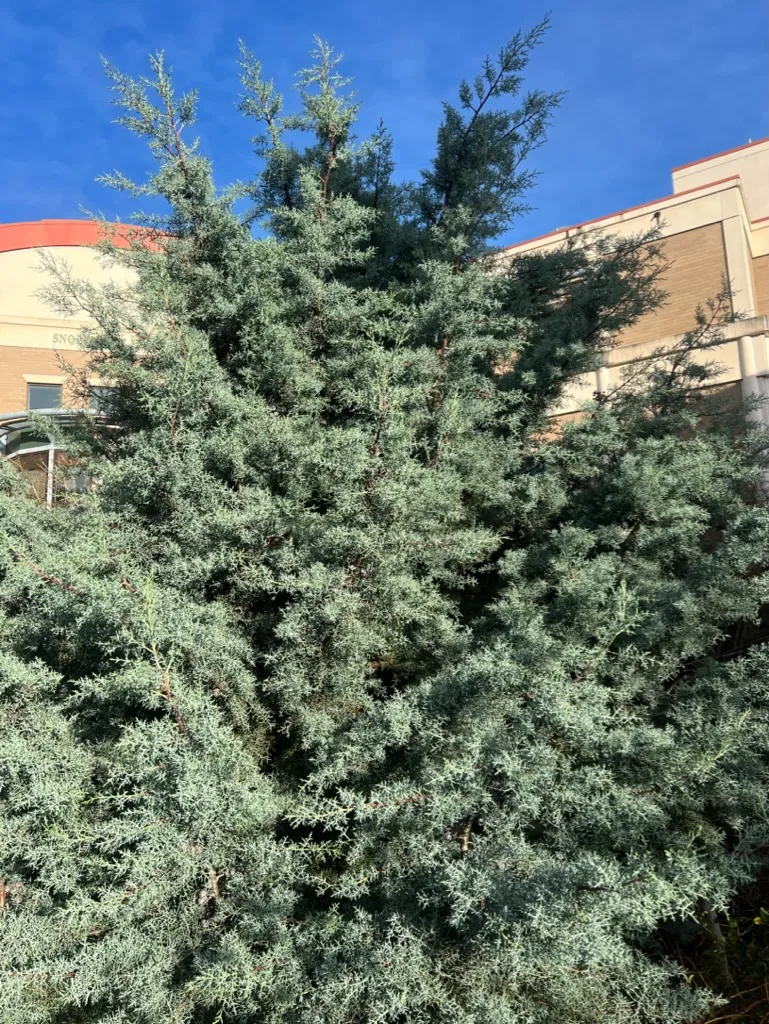
Hesperocyparis arizonica (formerly Cupressus arizonica) is a medium to large coniferous evergreen tree growing 40-70 feet (12-21 m) tall and 15-25 feet (4.5-7.5 m) wide with a broadly pyramidal to somewhat irregular crown. The genus name Hesperocyparis means western cypress (Greek: hesperos = western); arizonica means of Arizona. Foliage consists of tiny overlapping blue-gray to silvery-blue scale-like leaves with a whitish waxy bloom; the blue color is produced by the glaucous wax coating, which also reduces water loss in arid habitats. Bark is rough, stringy, and reddish-brown to gray-brown, peeling in thin elongated plates or strips and becoming deeply furrowed on old trunks — this texture separates it from the smooth cherry-like bark of other Hesperocyparis species. Globose cones, 0.75-1.25 inches (2-3 cm), bear 6-8 scales with prominent hooked or pointed bosses; cones ripen brown in the second year and persist on branches for several years. More cold-hardy and drought-tolerant than Mediterranean cypresses (Cupressus sempervirens). Native to mountain canyons and slopes of the southwestern United States and northern Mexico. Does not tolerate waterlogged soils; root rot develops rapidly in wet conditions. Non-toxic. Deer-resistant.
Native Range
Native to mountain canyons, rocky slopes, and dry creek beds in Arizona, New Mexico, western Texas, and northern Mexico at 3,500-8,000 feet (1,070-2,440 m) elevation. Found in chaparral, pinyon-juniper woodland, and open ponderosa pine forest.Suggested Uses
Grown as a specimen, screen, or windbreak on dry sites — particularly east of the Cascades — where drought tolerance and blue foliage color are priorities, spaced 15-25 feet (4.5-7.5 m) apart. Suits xeric and low-water landscapes. The 40-70 foot (12-21 m) mature height requires adequate space. Non-toxic. Hardy in zones 7-10.How to Identify
Appearance
Size & Dimensions
Height40' - 70'
Width/Spread15' - 25'
Colors
Bloom Information
Male and female cones are inconspicuous. Male pollen cones shed pollen in late winter to early spring (February-March). Female cones are globose, 0.75-1.25 inches (2-3 cm), ripen brown in the second year, and persist on the tree for several years.
Detailed Descriptions
Foliage Description
blue-gray to silvery-blue scale-like leaves with a glaucous waxy bloom; tiny overlapping scales; resinous when crushedGrowing Conditions
Sun Requirements
Requires 6-10 hours of direct sunlight daily
• Full Sun: 6+ hours of direct sunlight
• Partial Shade: 3-6 hours of direct sunlight
• Full Shade: Less than 3 hours of direct sunlight
Care & Maintenance
Care Guide
Site in full sun (6-10 hours direct sun) in well-drained to dry neutral to slightly alkaline soil with a pH of 6.0-8.0. Water needs are very low — drought-tolerant once established, with minimal irrigation required after the second growing season. Does not tolerate waterlogged or poorly drained soils; root rot develops rapidly in wet conditions. Tolerates poor, rocky, and alkaline soils. Cold-hardy to about -10°F (-23°C), USDA zone 7. Grows well on drier sites east of the Cascades and in hot, dry Pacific Northwest microclimates; wet poorly-drained maritime sites can cause foliage decline. Non-toxic. Deer-resistant. Hardy in zones 7-10.Pruning
No pruning is required to maintain the pyramidal form. Remove dead branches in late spring (May). Lower branches may be removed to expose the ornamental bark. Shearing damages the scale foliage and is not recommended.Pruning Schedule
Prune: May
late spring