Hesperocyparis, Genus, spp., Multiple species,
- Genus
- Multiple species
western cypresses
Overview
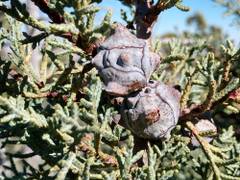
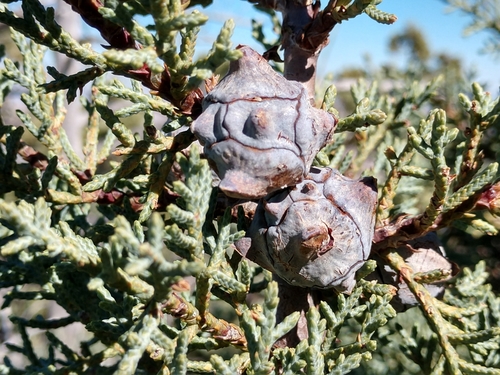
Hesperocyparis is a genus of evergreen coniferous trees in the cypress family, comprising the cypresses of western North America and Mexico that were formerly placed in Cupressus. Species form upright trees 30-130 feet (9-40 m) tall, conical when young and often broad, flat-topped, or irregular with age, on a single trunk with stringy or scaly gray-brown bark. Foliage consists of small, scale-like leaves pressed to slender, rounded (not flattened) branchlets, gray-green to blue-green, sometimes coated in white resin and aromatic when crushed. The spherical woody cones are 0.5-1.5 inches (1-4 cm) across with 6-12 shield-shaped scales, and in many species they stay closed on the tree for years, opening to release seed only after fire. Male cones are small and yellow, shedding pollen in late winter to spring. Trees are drought- and heat-tolerant and grow on poor, rocky soils, but many species occupy small, scattered wild groves. H. macrocarpa, the Monterey cypress, is widely planted in mild coastal climates and is a parent of the fast-growing Leyland hybrids. Several species are killed in cool, humid gardens by cypress canker. Growth is fast when young, slowing with age, and trees may live for centuries.
Native Range
The genus Hesperocyparis is native to western North America, from Oregon and California through the southwestern United States into Mexico and Guatemala. Plants grow on dry slopes, coastal headlands, chaparral, and montane sites, often on poor, rocky, or serpentine soils. Many species exist as small, isolated groves, such as H. macrocarpa on two native stands near Monterey, California, while H. arizonica is more widespread in the interior Southwest.Suggested Uses
Grown as specimen trees, windbreaks, screens, and coastal hedges in warm, dry, Mediterranean-type climates, spaced 6-20 feet (1.8-6 m) apart by use. H. arizonica is grown for timber, shelterbelts, and as a cut Christmas tree in the Southwest. Coastal and dwarf forms of H. macrocarpa are grown in containers and mild seaside gardens.How to Identify
Appearance
Size & Dimensions
Height30' - 130'
Width/Spread15' - 50'
Reproduction
As conifers, Hesperocyparis species bear cones rather than flowers. Small male cones release pollen from late winter into spring, generally February through April, and woody seed cones take about two years to mature. Many species hold closed cones on the branches for years, opening them after fire. Cone production rises with tree age and full sun.
Detailed Descriptions
Foliage Description
gray-green to blue-green scale-like foliageGrowing Conditions
Sun Requirements
Requires 6-12 hours of direct sunlight daily
• Full Sun: 6+ hours of direct sunlight
• Partial Shade: 3-6 hours of direct sunlight
• Full Shade: Less than 3 hours of direct sunlight
Care & Maintenance
Care Guide
Grows in full sun in well-drained soil of low to moderate fertility, tolerating heat, drought, wind, and coastal salt once established. Young trees are watered until rooted, after which most species need no irrigation. Wet, humid, or shaded conditions favor cypress canker, which kills branches and whole trees, especially H. macrocarpa away from the coast. Spider mites and bagworms occur in heat and dust. Trees need little feeding on reasonable soil. Established plants transplant poorly because of deep root systems and are set out young from containers.Pruning
Prune in spring to early summer, cutting only into green foliage, as branches cut to bare old wood do not regrow. Light shaping and removal of dead, diseased, or crossing branches maintain form, and prompt removal of canker-infected wood slows the spread of disease. Hedged forms such as Leyland cypress tolerate regular trimming. Lower limbs are removed to expose the trunk where a clear stem is wanted.Container Growing
Suitable for container growing
Minimum container size: 7 gallons