Hedera, Genus, helix, Species, 'Arborescens', Cultivar,
- Genus & species
- Cultivar
shrubby ivy
Overview
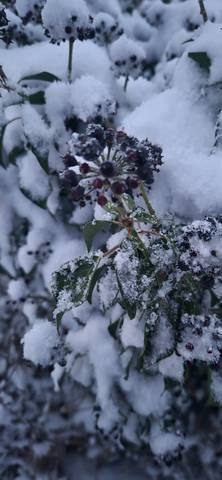
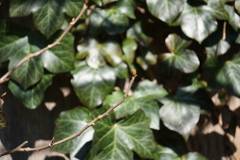
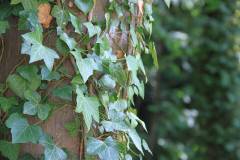
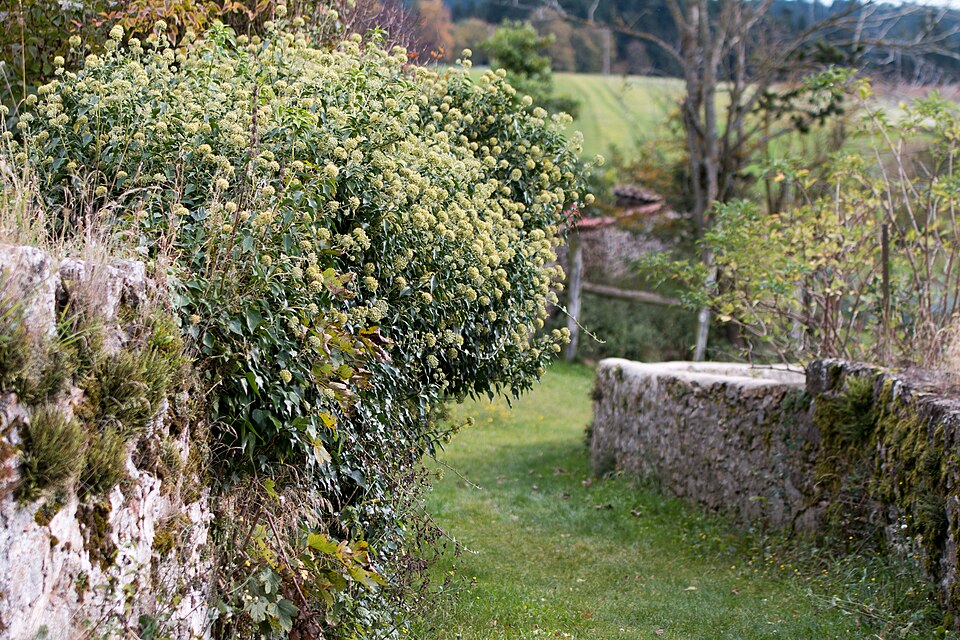
Hedera helix 'Arborescens' is the non-climbing, shrubby form of common ivy, a self-supporting evergreen shrub 3–4 feet (90–120 cm) tall and 4–5 feet (1.2–1.5 m) wide with a dense, rounded, mounding habit. Unlike the juvenile climbing form, it grows from adult-type stems: the leaves are oval to diamond-shaped, 2–3 inches (5–8 cm) long, dark green and unlobed, lacking the lobes of climbing ivy. Because it grows from adult wood it produces no clinging aerial roots and remains a free-standing bush. In autumn it carries rounded umbels of small yellow-green flowers, a late-season nectar and pollen source, followed in winter by clusters of black berries. The shrub tolerates deep shade, urban conditions, and a wide range of soils, though it grows slowly, can become open with age, and the berries and all plant parts are toxic if eaten. Hardiness covers USDA zones 5–9. The evergreen foliage holds through winter. It is grown as low evergreen structure in shade, in mixed borders, and for its autumn flowers and winter fruit, which support insects and birds.
Native Range
Hedera helix is native to Europe and western Asia, where it grows in woodland, on rocks, and over walls and tree trunks. The cultivar 'Arborescens' is the adult, shrubby phase propagated from mature flowering growth and arose in cultivation rather than the wild.Suggested Uses
Hedera helix 'Arborescens' is used as a low evergreen shrub in shade, as ground-level structure in mixed borders, and in wildlife gardens for its autumn flowers and winter berries. It suits difficult dry, shaded sites under trees and against north walls. It also grows in large containers.How to Identify
Appearance
Size & Dimensions
Height3' - 4'
Width/Spread4' - 5'
Bloom Information
Flowering occurs in autumn, usually September to November in the Northern Hemisphere, when rounded umbels of small yellow-green flowers open over several weeks. The late flowers draw bees, wasps, and hoverflies when little else blooms. Black berries follow through winter and are eaten by birds. The bloom period is later than that of most garden shrubs.
Detailed Descriptions
Foliage Description
Dark greenGrowing Conditions
Sun Requirements
Tolerates up to 8 hours of direct sunlight daily
• Full Sun: 6+ hours of direct sunlight
• Partial Shade: 3-6 hours of direct sunlight
• Full Shade: Less than 3 hours of direct sunlight
Care & Maintenance
Care Guide
Grow Hedera helix 'Arborescens' in full sun to deep shade in most soils, including dry, chalky, and poor ground. It tolerates urban pollution, exposure, and dry shade once established. Water during the first season; mature plants need little attention. Growth is slow, and old plants can grow open and may be cut back to thicken them. All parts are toxic if eaten, and the sap can irritate skin in sensitive people. The shrub is generally healthy, with only occasional leaf spot.Pruning
Hedera helix 'Arborescens' needs little pruning. It is trimmed in spring to keep a compact, rounded shape, and older open plants are cut back harder to encourage denser growth. Any vigorous climbing shoots are removed to stop the plant reverting to juvenile climbing growth.Pruning Schedule
Prune: April
early spring
Container Growing
Suitable for container growing
Minimum container size: 5 gallons