Image 1 of 3
1 / 3
© Rune Zakariassen|Kristina Emelianova|Pernille Fritheim|Jan Wesenberg|Tore Berg|Ole Magnus Hagen, some rights reserved (CC-BY) · GBIF
Gymnocarpium, Genus, spp., Multiple species,
- Genus
- Multiple species
oak ferns
Northern Hemisphere (Europe, northern Asia, North America)
Overview
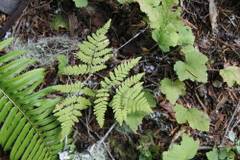
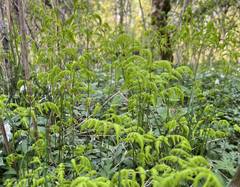
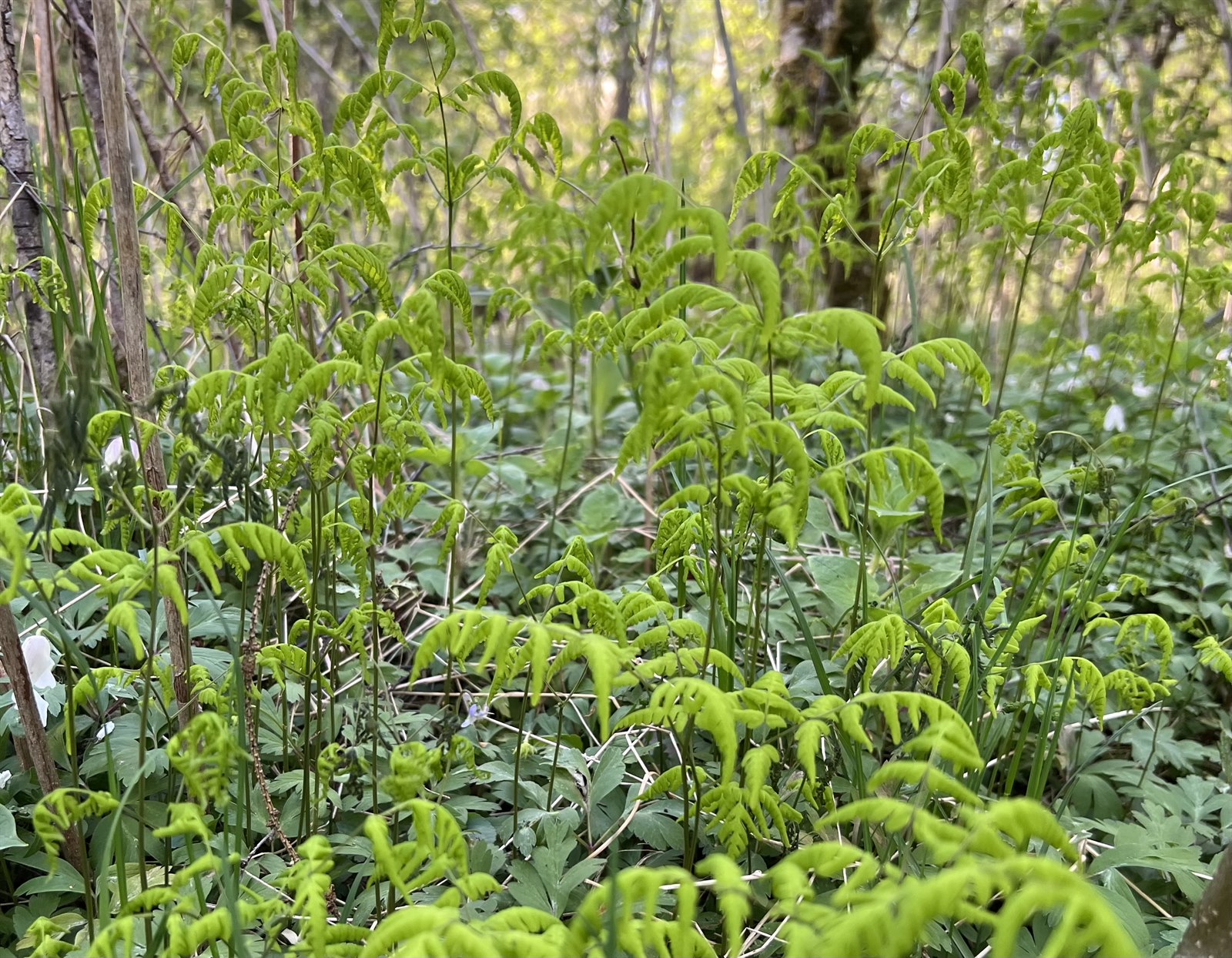
Gymnocarpium is a genus of about six to nine species of small, deciduous ferns in the family Cystopteridaceae, native to cool, shaded woodlands of the Northern Hemisphere. Plants grow from slender, far-creeping rhizomes that spread to form open colonies rather than tight clumps. Each frond is broadly triangular and ternate, divided into three main segments, and held nearly horizontal at the top of a thin, dark stipe; fronds are 6-16 inches (15-40 cm) tall overall, with the blade often as wide as it is long. The texture is thin and membranous, pale to mid green, turning yellow before dying back in autumn. Spore-bearing sori are small, round, and lack the membranous cover (indusium) found in many ferns, a feature reflected in the name. Species such as G. dryopteris, the common oak fern, grow in acidic forest soils, while G. robertianum, the limestone oak fern, favors basic rocky ground. The creeping habit can spread beyond its intended area, and the thin fronds scorch in sun or drying wind, the chief limitations in garden use.
Native Range
Native across the cool-temperate and boreal Northern Hemisphere, including northern and montane Europe, northern Asia, and North America. Plants grow in moist, shaded coniferous and mixed forest, on shaded rock, talus, and streambanks, from lowland to subalpine elevations.Suggested Uses
Used as a deciduous groundcover and edging in shaded woodland gardens, along the cool side of walls, and beneath shrubs, where the horizontal fronds form a low layer 6-10 inches (15-25 cm) high. It combines with other shade plants such as Tiarella and Hosta. The spreading rhizomes suit naturalizing in moist, shaded ground.How to Identify
Appearance
Size & Dimensions
Height6" - 1'4"
Width/Spread1' - 3'
Bloom Information
Ferns do not flower; Gymnocarpium reproduces by spores. New fronds unfurl in spring, and the small round sori ripen on the undersides through summer, releasing spores in mid- to late summer. Fronds die back with the first hard frosts of autumn.
Detailed Descriptions
Foliage Description
pale to mid greenGrowing Conditions
Sun Requirements
Tolerates up to 4 hours of direct sunlight daily
• Full Sun: 6+ hours of direct sunlight
• Partial Shade: 3-6 hours of direct sunlight
• Full Shade: Less than 3 hours of direct sunlight
Care & Maintenance
Care Guide
Gymnocarpium are grown in full to part shade in cool, consistently moist, humus-rich soil. G. dryopteris and most species favor acidic to neutral conditions, while G. robertianum accepts limy soils. Even moisture and shade are needed, as the thin fronds brown in direct sun, heat, or drying wind. Plants are cold-hardy, many to USDA zone 3, and need a winter chill. The creeping rhizomes spread to form a low groundcover and can be divided in spring to control or increase them. No feeding is needed in a leafy woodland soil.Pruning
No pruning is needed during the season. Dead fronds are cut or raked away in late autumn or early spring before the new crosiers emerge. Spread is curbed by lifting and dividing the rhizomes in spring.Container Growing
Suitable for container growing