Image 1 of 14
1 / 14
© Rune Zakariassen|Kristina Emelianova|Pernille Fritheim|Jan Wesenberg|Tore Berg|Ole Magnus Hagen, some rights reserved (CC-BY) · GBIF
Gymnocarpium, Genus, dryopteris, Species,
- Genus & species
northern oak fern
Overview
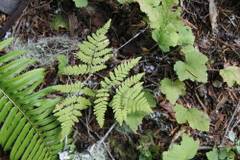
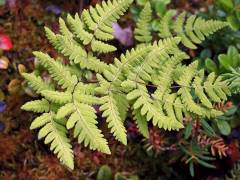
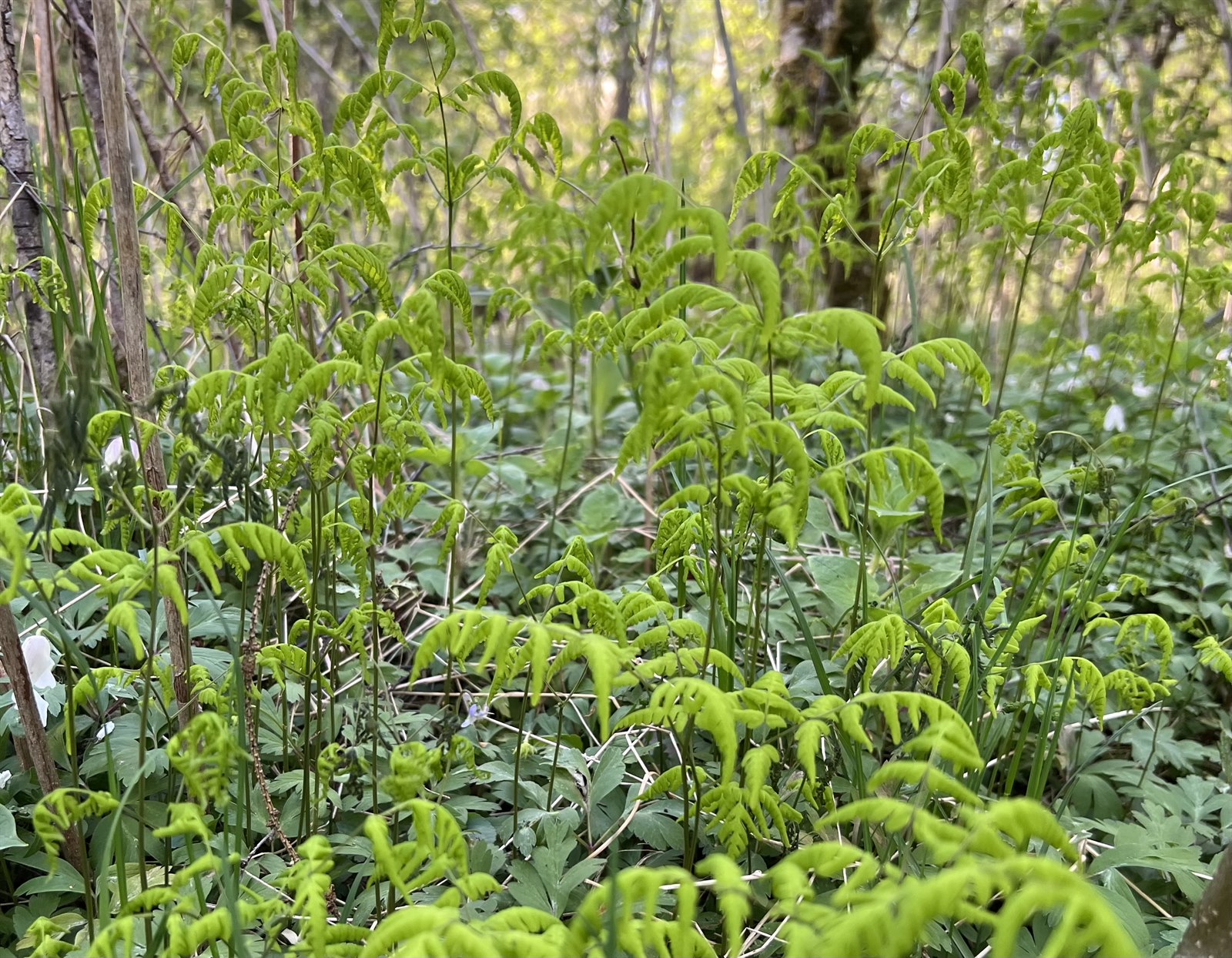
Gymnocarpium dryopteris is a small deciduous rhizomatous fern reaching 6-12 inches (15-30 cm) tall and spreading slowly to form colonies 12-36 inches (30-90 cm) wide via thin creeping rhizomes. Fronds are deciduous, triangular in outline, 4-8 inches (10-20 cm) long and equally wide, with a stipe (stalk) longer than the blade. The blade is divided into three equal-sized segments, each segment further divided 2-3 times; the lowest pinna pair is held nearly horizontal, separating it from Dryopteris ferns. Frond color is bright yellow-green when young, deepening to medium green by midsummer. Stipes are slender, dark at the base, and 0.04-0.08 inch (1-2 mm) thick. Sori (spore clusters) form along the underside of pinnules without indusia, appearing in July and ripening through August. Plants persist 10-30 years in stable shaded sites and form groundcover colonies that yellow uniformly in early autumn before dying back. New fronds emerge in late spring as soil warms above 50°F (10°C). The species hybridizes with G. disjunctum and G. continentale where ranges overlap.
Native Range
Native circumboreal - across northern North America from Alaska and the Aleutians east to Newfoundland and south through the northern U.S. into the southern Rockies, the Sierra Nevada, the Appalachians, and the Great Lakes; also throughout northern Europe and northern Asia. Found in shaded coniferous and mixed forest understory, often on old logs, mossy rocks, and humus-rich slopes at 0-9,000 feet (0-2,750 m) elevation.Suggested Uses
Used as a groundcover in deeply shaded woodland gardens, beneath conifers, on north-facing slopes, and in rock garden shaded crevices at 8-12 inch (20-30 cm) spacing. Suited to native plant gardens in cool, moist climates and naturalized shade plantings with consistent leaf-litter cover. Performs poorly in sunny exposure, dry sites, and warm-summer climates south of zone 7.How to Identify
Appearance
Size & Dimensions
Height6" - 1'
Width/Spread1' - 3'
Bloom Information
Ferns do not flower; sporulation replaces bloom in this group. Sori (spore clusters) develop on frond undersides through July and release spores from August through September. Spore release is most active during dry periods following morning dew. Reproduction by spore is supplemented by extensive rhizomatous spread.
Detailed Descriptions
Foliage Description
bright yellow-green deepening to medium green; triangular frondsGrowing Conditions
Sun Requirements
Tolerates up to 3 hours of direct sunlight daily
• Full Sun: 6+ hours of direct sunlight
• Partial Shade: 3-6 hours of direct sunlight
• Full Shade: Less than 3 hours of direct sunlight
Care & Maintenance
Care Guide
Plants require consistent moisture and shaded, organically rich, slightly acidic soil; the rhizome system sits 1-2 inches (2.5-5 cm) below the surface and dries out in exposed sunny sites within 1-2 weeks. Slugs feed on emerging croziers in spring and can defoliate young colonies in cool wet seasons. No fertilizer is needed; supplemental nitrogen produces lax fronds susceptible to wind tearing. Plants require 2-3 years to establish before colonies expand at 4-8 inches (10-20 cm) per year. Replace plants when individual rhizome systems decline, typically after 10-30 years.Pruning
Fronds yellow and collapse naturally after the first hard frost; dead fronds may be left as winter mulch and removed in early spring before new croziers emerge. No active pruning is required during the growing season. Damaged fronds can be removed at the base without affecting plant vigor.Pruning Schedule
Prune: March–April
early spring
Container Growing
Suitable for container growing
Minimum container size: 2 gallons