Gymnocarpium, Genus, disjunctum, Species,
- Genus & species
oak fern
Circumboreal: Alaska south through British Columbia, Washington, and Oregon to California; Rocky Mountains; northern North America, Europe, and Asia
Overview
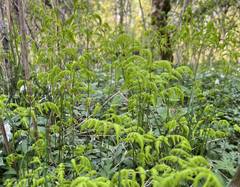
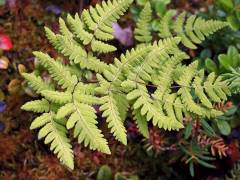
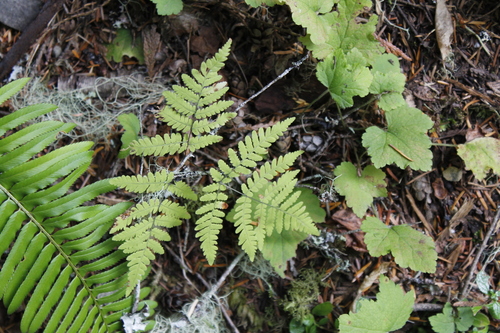
Gymnocarpium disjunctum is a deciduous, long-creeping rhizomatous fern in the family Cystopteridaceae. It occurs across the circumboreal zone in moist conifer forests, streambanks, and rocky slopes from Alaska south through British Columbia, Washington, and Oregon to California, east through the Rocky Mountains, and across northern Europe and Asia. Plants form low, spreading colonies 4–12 inches (10–30 cm) tall and 12–24 inches (30–60 cm) wide from slender, blackish, creeping rhizomes. Fronds arise individually at intervals along the rhizome on long, wiry, hairless stipes typically 4–10 inches (10–25 cm) long, often exceeding the length of the blade. The blade is broadly triangular (deltate) and tripinnate, with the lowest pair of pinnae larger than the upper pinnae and angled outward, producing a three-part frond outline that is the source of the common name oak fern. The genus name Gymnocarpium translates as naked fruit, referring to the small round sori on the pinnule undersides which lack indusia (the protective covering present in Dryopteris and Polystichum). Foliage yellows in fall and dies back with the first hard frost. Limitation: requires cool, moist, shaded conditions and does not tolerate summer drought, heat, or alkaline soils; establishes slowly and resents root disturbance.
Native Range
Native to moist conifer forests, streambanks, and rocky slopes across the circumboreal zone, from Alaska south through British Columbia, Washington, and Oregon to California, east through the Rocky Mountains, and across northern North America, Europe, and Asia.Suggested Uses
Used as a low groundcover fern in cool, moist Pacific Northwest woodland and shade gardens at 12–18 inch (30–45 cm) spacing. Combines with Oxalis oregana, Achlys triphylla, Cornus unalaschkensis, Clintonia uniflora, and Maianthemum dilatatum in moist conifer forest understory plantings. Establishment is difficult in warm, dry lowland gardens.How to Identify
Appearance
Size & Dimensions
Height4" - 1'
Width/Spread1' - 2'
Bloom Information
Ferns do not flower. Spores ripen in small round sori without indusia on the pinnule undersides from July through September. New fronds emerge in spring (April through May) from creeping blackish rhizomes as small fiddleheads. Fronds die back with the first hard frost.
Detailed Descriptions
Foliage Description
bright to yellow-green; broadly triangular (deltate), tripinnate fronds with the lowest pinna pair larger than the upper pinnae and angled outward; long wiry hairless stipes typically 4-10 inches (10-25 cm), often longer than the bladeGrowing Conditions
Sun Requirements
Tolerates up to 2 hours of direct sunlight daily
• Full Sun: 6+ hours of direct sunlight
• Partial Shade: 3-6 hours of direct sunlight
• Full Shade: Less than 3 hours of direct sunlight
Care & Maintenance
Care Guide
Site in partial to full shade with 0–2 hours of direct sun per day in humus-rich, acidic soil with a pH of 4.5–6.5. Soil moisture should remain consistent through the growing season; the species does not tolerate drought, heat, or alkaline soils. A 2–3 inch (5–7.5 cm) leaf litter mulch retains moisture and replicates forest floor conditions. Hardy in USDA zones 3–8 and requires cool summer temperatures. Fertilizer is not required. Spread is slow by creeping rhizomes; established colonies expand by a few inches per year.Pruning
Cut dead fronds to ground level in late winter or early spring before new fiddleheads emerge. No other pruning is required. Rhizomes should be left undisturbed; colonies establish slowly and decline after root disturbance.Pruning Schedule
Prune: February–March
early spring