Paeonia, Genus, lactiflora, Species, 'Green Halo', Cultivar,
- Genus & species
- Cultivar
green halo peony
Northern Asia — China, Mongolia, eastern Russia (Siberia and Russian Far East), Korea, and northern Japan; moist meadows and woodland margins; cultivar of horticultural origin
Overview
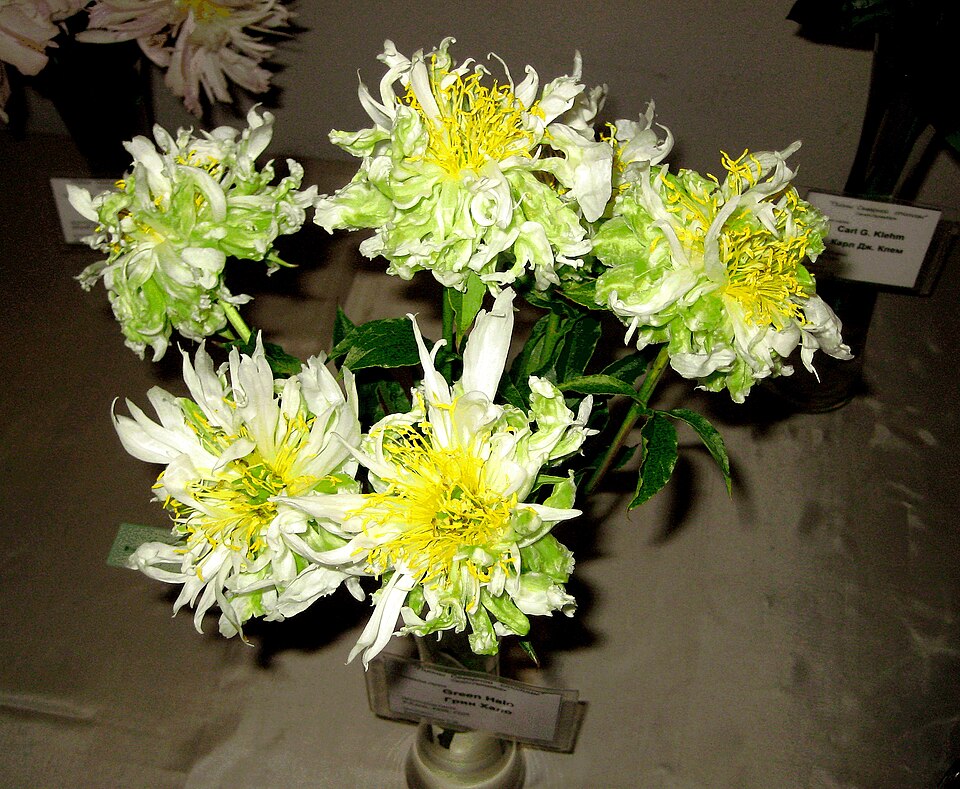
Paeonia lactiflora 'Green Halo' is an upright clump-forming herbaceous perennial reaching 28-32 inches (70-80 cm) tall and 28-32 inches (70-80 cm) wide at maturity. Single white flowers 4-5 inches (10-13 cm) across show a ring of green-tipped outer petals surrounding a central boss of golden-yellow stamens — the green-tinged outer petals are the source of the cultivar name. Flowers open from late May through mid-June, with each plant producing 8-12 flowers over 2-3 weeks; individual flowers last 5-7 days in cool weather and 3-4 days in heat above 80°F (27°C). Compound dark green leaves with multiple lance-shaped leaflets emerge with bronze tinting in early spring, mature to medium green, and fade to bronze and burgundy in autumn. Stems are upright and largely self-supporting in the cultivar — flopping is reduced compared to the heavier double-flowered P. lactiflora cultivars. Parent species Paeonia lactiflora is native to northern Asia and has been cultivated in China for over 2,000 years; the species is the parent of the majority of modern garden peonies. All parts may cause mild gastrointestinal upset in humans and pets if ingested in quantity. Goes fully dormant in winter, returning from underground rhizomes. Hardy in USDA zones 3-8.
Native Range
Parent species Paeonia lactiflora is native to northern Asia, including China, Mongolia, eastern Russia (Siberia and the Russian Far East), Korea, and northern Japan. Found in moist meadows and at woodland margins. Cultivated in China for over 2,000 years; the cultivar 'Green Halo' originates from modern commercial breeding.Suggested Uses
Used in mixed perennial borders, cottage gardens, and as a cut flower (single forms last 5-7 days in water). Spaced 28-36 inches (70-90 cm) apart for air circulation that limits botrytis pressure. The green-tipped sepals make the cultivar useful in green-and-white themed borders.How to Identify
Appearance
Size & Dimensions
Height2'4" - 2'8"
Width/Spread2'4" - 2'8"
Bloom Information
Single white flowers 4-5 inches (10-13 cm) across with green-tipped outer petals open from late May through mid-June. Each plant produces 8-12 flowers over 2-3 weeks; individual flowers last 5-7 days in cool weather and 3-4 days when temperatures exceed 80°F (27°C). Bloom timing varies with chilling: zone 3-4 plants flower in early June while zone 7-8 plants flower in mid May.
Detailed Descriptions
Flower Description
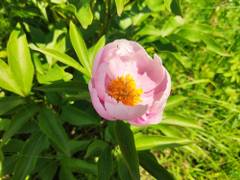
Pure white single flowers 4-5 inches (10-13 cm) across with a ring of green-tipped outer petals surrounding a central boss of golden-yellow stamens — the green-tinged outer petals are the source of the cultivar name 'Green Halo'; faintly fragrant in warm weather; late May through mid-JuneFoliage Description
Dark green; compound leaves with multiple lance-shaped to elliptic leaflets, each 3-5 inches (7.5-13 cm) long; emerges with bronze-red tinting in early spring; turns bronze and burgundy in autumn before going fully dormantGrowing Conditions
Sun Requirements
Requires 4-8 hours of direct sunlight daily
• Full Sun: 6+ hours of direct sunlight
• Partial Shade: 3-6 hours of direct sunlight
• Full Shade: Less than 3 hours of direct sunlight
Care & Maintenance
Care Guide
Grows in full sun to part sun with 4-8 hours direct light. Tolerates loam and clay at pH 6.0-7.5 with consistent moisture during the growing season; flowering decreases with drought. Hardy in USDA zones 3-8 — the species requires winter chilling and performs poorly south of zone 8 because of insufficient cold accumulation. Botrytis blight may develop in cool wet springs, causing collapse of new shoots and flower stems; affected stems are removed and discarded to limit spread. The eyes (growth buds) sit no more than 1-2 inches (2.5-5 cm) below the soil surface at planting; deeper placement is the most common cause of failure to bloom. All parts may cause mild gastrointestinal upset in humans and pets if ingested in quantity.Pruning
Cut foliage to ground level in late fall (October-November) after the first hard frost, when the leaves yellow and die back. Discard cut foliage rather than composting in place because botrytis spores overwinter on dead tissue. Spent flower heads can be removed during bloom to redirect energy back to the rhizome, though deadheading does not extend bloom on individual stems.Pruning Schedule
Prune: October–November
fall