Galanthus, Genus,
- Genus
snowdrop
Europe and western Asia from France across central and southern Europe through the Balkans and the Caucasus to Turkey and the Middle East; deciduous woodlands, meadows, and stream banks at low to middle elevations
Overview
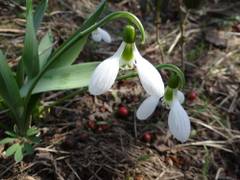
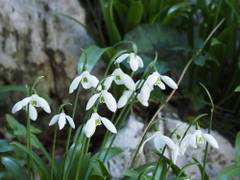
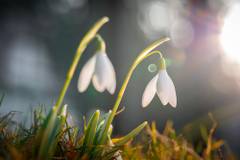
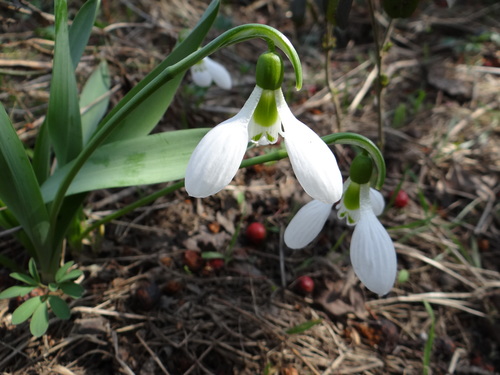
Galanthus spp. (snowdrop) is a genus of about 20 small bulbous perennials in the family Amaryllidaceae growing 3–9 inches (7–23 cm) tall and 2–4 inches (5–10 cm) wide from a small white bulb. Each bulb produces 2–3 narrow strap-shaped gray-green leaves 4–8 inches (10–20 cm) long and a single nodding flower stalk that opens in late winter or very early spring, often pushing through frozen soil or the last of the winter snow. Flowers are white, nodding, solitary, 0.5–1 inch (1.3–2.5 cm) long, and carry a structure of three longer outer tepals that flare outward and three shorter inner tepals that are marked with green at the tips or at the base depending on the species; this 3+3 tepal structure with green inner markings is the main field character that identifies the genus. Most plants in cultivation belong to two species: G. nivalis (common snowdrop, 3–4 inches / 7–10 cm tall) is widely planted across European gardens and naturalizes in woodlands over many decades, and G. elwesii (giant snowdrop, 6–9 inches / 15–23 cm tall) is larger in all parts with broader leaves and larger flowers and is commonly planted for a more visible display in border positions. Flowers carry a light honey scent on warm winter days and are worked by honeybees and early-emerging bumblebees as one of the earliest nectar sources of the year. Limitation: snowdrops establish poorly from dry dormant bulbs sold in packaged form because the small bulbs desiccate quickly out of the soil and lose viability within weeks of lifting; reliable establishment calls for transplanting 'in the green' — dug, divided, and replanted while the foliage is still actively growing after flowering in late winter or early spring rather than from dry summer-dormant bulbs. Specialist bulb nurseries sell snowdrops 'in the green' by mail order during the January-through-April window, and galanthophiles (snowdrop collectors) have driven prices for rare named cultivars to hundreds of US dollars per bulb at specialist auctions. All parts of the plant contain galantamine and lycorine, alkaloids that cause vomiting, drowsiness, and cardiac effects if the bulbs or foliage are ingested by humans or pets, and the genus is deer-resistant and rodent-resistant because of the alkaloid content.
Native Range
Native to Europe and western Asia from France across central and southern Europe through the Balkans and the Caucasus to Turkey and the Middle East. Grows in deciduous woodlands, meadows, stream banks, and at the base of old walls at low to middle elevations. The genus contains about 20 species, with G. nivalis (common snowdrop) native across most of the European range and G. elwesii (giant snowdrop) native to southeastern Europe, the Aegean, and western Turkey.Suggested Uses
Used for naturalizing under deciduous trees, in woodland gardens, at the base of shrub plantings, along woodland paths, and in containers of at least 2 gallons (7.5 L) at 2–4 inch (5–10 cm) spacing between bulbs. The late-winter bloom opens ahead of most other spring bulbs and supplies color during the January-through-March period when few other flowers are in bloom, and established colonies naturalize and spread over many decades to produce drifts of thousands of bulbs in suitable positions. G. nivalis is used for large-scale naturalizing because of the smaller size and lower unit cost, and G. elwesii is used in border positions where a more visible display is the design goal. Summer-dry sites without shade from deciduous trees and gardens where pet or child access to the bulbs is a concern are unsuitable because of the drought sensitivity during the growing season and the galantamine toxicity.How to Identify
Appearance
Size & Dimensions
Height3" - 9"
Width/Spread2" - 4"
Colors
Bloom Information
White nodding solitary flowers 0.5–1 inch (1.3–2.5 cm) long open from January through March across a 5-week bloom period, with the bloom opening 2–4 weeks earlier in mild coastal climates and later in interior continental winters. The flowers carry a light honey scent on warm winter days and are worked by honeybees and early-emerging bumblebees as one of the earliest nectar sources of the year, which supports overwintering bee populations during the late-winter period when few other flowers are open. Foliage dies back by late spring (May) as the plant enters summer dormancy, and the seed heads drop small black seeds that establish new seedlings around the parent colony over several years.
Detailed Descriptions
Flower Description
white nodding solitary flowers 0.5-1 inch (1.3-2.5 cm) long with three longer outer tepals and three shorter inner tepals; the inner tepals are marked with green at the tips or at the base depending on the speciesFoliage Description
narrow strap-shaped gray-green leaves 4-8 inches (10-20 cm) long, borne 2-3 per bulb; the foliage emerges with or just before the flowers in late winter, persists through early spring, and dies back by late spring (May) before the plant enters summer dormancyGrowing Conditions
Sun Requirements
Requires 1-4 hours of direct sunlight daily
• Full Sun: 6+ hours of direct sunlight
• Partial Shade: 3-6 hours of direct sunlight
• Full Shade: Less than 3 hours of direct sunlight
Care & Maintenance
Care Guide
Site in part shade to full shade with 1–4 hours of direct sun per day, typically under deciduous trees where the canopy is open during the January-through-March bloom period and closed during the summer dormancy period. Soil should be moist and humus-rich with a pH of 6.0–7.5, and the species tolerates clay, loam, and peat substrates as long as the soil does not dry out during the fall-through-spring growing season. Reliable establishment calls for transplanting 'in the green' — dug, divided, and replanted while the foliage is still actively growing after flowering in late winter or early spring — rather than from dry summer-dormant bulbs, which desiccate and lose viability quickly out of the soil. Specialist bulb nurseries sell snowdrops 'in the green' by mail order during the January-through-April window. Foliage yellows and dies back naturally in late spring (May) and the dead leaves are left in place rather than cut or braided so that the bulb continues to draw nutrients from the foliage until dormancy. The genus is deer-resistant and rodent-resistant because all parts contain galantamine and lycorine alkaloids, and the same alkaloids make the plant toxic to humans and pets if ingested. Hardy in USDA zones 3–9.Pruning
No pruning is needed for Galanthus. Foliage is allowed to yellow and die back naturally in late spring (May or June) as the plant enters summer dormancy, and the dead leaves are left in place rather than cut, braided, or tied so that the bulb continues to draw nutrients from the foliage through the die-back period. Division of established colonies is done 'in the green' after flowering while the foliage is still actively growing, rather than during summer dormancy, because the small bulbs desiccate quickly once lifted and dried bulbs establish poorly.Pruning Schedule
Prune: May
late spring
Container Growing
Suitable for container growing
Minimum container size: 2 gallons