Image 1 of 12
1 / 12
Plant Reference
Frangula, Genus, purshiana, Species,
- Genus & species
cascara
Pacific Northwest — British Columbia south through Washington, Oregon, and California; east to Idaho and Montana; moist to mesic forests, stream banks, and forest margins
Overview
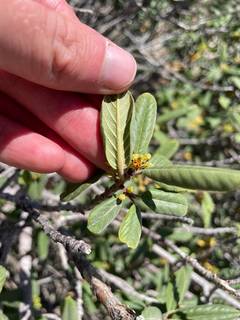
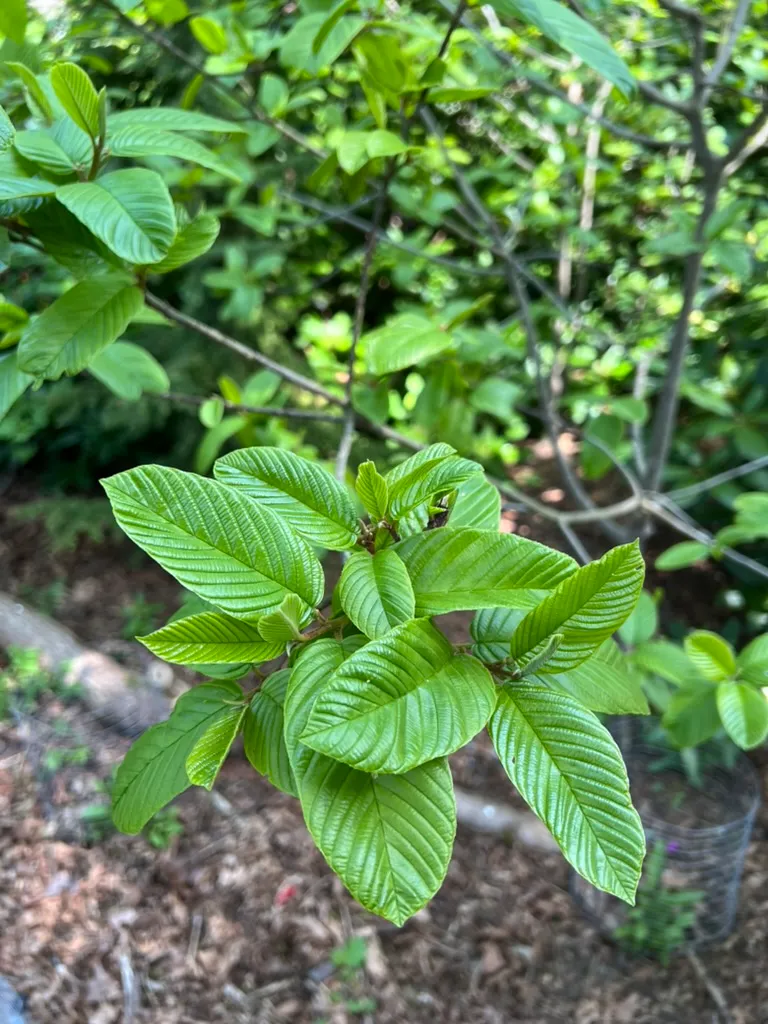
Frangula purshiana is cascara (cascara buckthorn), an upright deciduous tree growing 15-40 feet (4.5-12 m) tall and 10-20 feet (3-6 m) wide. Medium green broadly oval to elliptic leaves 2-6 inches (5-15 cm) with 10-15 pairs of prominent straight parallel secondary veins running from midrib to margin — this venation pattern is the most diagnostic feature. Tiny greenish-yellow 5-petaled flowers 0.15 inch (4 mm) in leaf axils in May-June. Small berries 0.3-0.4 inch (8-10 mm) ripen from green to red to purplish-black (July-September) — the multi-color progression on the same cluster is characteristic. In Rhamnaceae. Formerly classified as Rhamnus purshiana. Native to the Pacific Northwest. The bark (cascara sagrada) was historically harvested as a laxative — over-harvesting depleted some wild populations. The bark, berries, and leaves are toxic if ingested (anthraquinone compounds). This toxicity is the primary safety limitation. Highly shade-tolerant — grows in deep forest understory. Tolerates a wide range of soils. Drought-tolerant once established. Zones 5-9. Part shade to full shade. Growth rate is moderate.
Native Range
Native to the Pacific Northwest — British Columbia south through Washington, Oregon, and California, east to Idaho and Montana. Found in moist to mesic forests, stream banks, and forest margins.Suggested Uses
Grown in native plant gardens, woodland restoration, and as an understory tree in Pacific Northwest landscapes spaced 10-20 feet (3-6 m). Highly shade-tolerant. Multi-color berry display. Bark, berries, and leaves toxic if ingested. Native to Pacific Northwest. Zones 5-9.How to Identify
Appearance
Size & Dimensions
Height15' - 40'
Width/Spread10' - 20'
Bloom Information
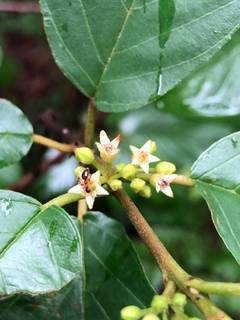
Late spring (May-June). Greenish-yellow tiny 5-petaled flowers 0.15 inch (4 mm) in small clusters in leaf axils. 4 weeks of bloom. Bee-pollinated. Berries ripen green to red to purplish-black (July-September).
Detailed Descriptions
Flower Description
Greenish-yellow, tiny, 0.15 inch (4 mm), 5-petaled, in small clusters in leaf axilsFoliage Description
Medium green, broadly oval to elliptic, 2-6 inches (5-15 cm) long with 10-15 pairs of prominent straight parallel secondary veins running from midrib to margin; turns yellow-green to yellow and sometimes purple in fallGrowing Conditions
Sun Requirements
Requires 1-8 hours of direct sunlight daily
• Full Sun: 6+ hours of direct sunlight
• Partial Shade: 3-6 hours of direct sunlight
• Full Shade: Less than 3 hours of direct sunlight
Care & Maintenance
Care Guide
Part shade to full shade (1-8 hours — highly shade-tolerant). Any well-drained soil pH 5.0-7.5 — tolerates clay and sand. Drought-tolerant once established. No significant diseases. Bark, berries, and leaves toxic if ingested (anthraquinone compounds). Prune in late winter (February-March) if needed. Deer browse foliage. Zones 5-9.Pruning
Prune in late winter (February-March) if shaping is needed. Can be grown as a single-trunk tree or multi-stemmed large shrub. The upright form is natural. Minimal pruning needed on established trees.Pruning Schedule
Prune: February–March
early spring