Frangula, Genus, alnus, Species,
- Genus & species
alder buckthorn
Europe, western Asia, and North Africa
Overview
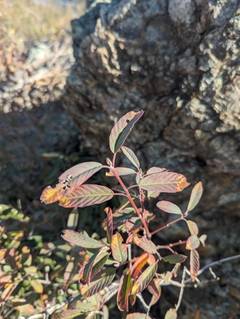
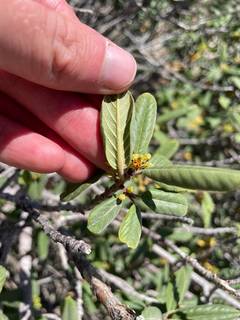
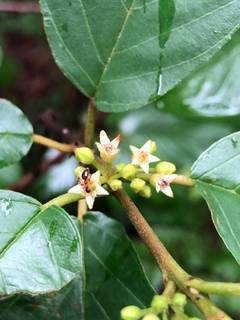
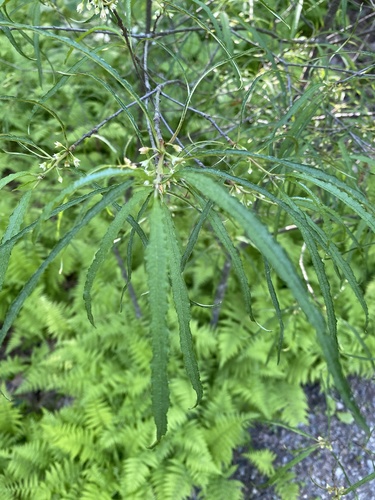
Frangula alnus is a deciduous shrub or small tree in the buckthorn family, growing 10-20 feet (3-6 m) tall with a spreading, often multi-stemmed crown. Unlike many buckthorns, its branches are thornless. The alternate leaves are oval, 1.5-3 inches (4-7 cm) long, glossy dark green with entire untoothed margins and 7-9 pairs of parallel veins, turning yellow before falling. Small greenish-white flowers about 0.2 inch (5 mm) across appear in the leaf axils from late spring through summer. The fruit is a rounded berry 0.25-0.4 inch (6-10 mm) wide that ripens from green through red to purple-black, with staggered ripening so several colors appear at once. Birds eat the berries and disperse the seed widely, which has made the species an aggressive invader of wetlands and woodlands in northeastern North America. The bark and fruit contain anthraquinone compounds that act as a strong purgative and are poisonous if eaten in quantity. It grows in a wide range of soils and tolerates wet ground, shade, and disturbed sites, traits that aid its spread outside its native range.
Native Range
Native to Europe, western Asia, and North Africa, where it grows in damp woodlands, hedgerows, bogs, and fen margins. It has naturalized across much of northeastern and north-central North America.Suggested Uses
Historically grown for its bark, which yielded charcoal once used in gunpowder, and as a dye source. In its native range it is grown in damp hedgerows and as a larval host for the brimstone butterfly. It is no longer planted in North America, where its spread is managed as a weed.How to Identify
Appearance
Size & Dimensions
Height10' - 20'
Width/Spread8' - 12'
Bloom Information
Flowers from late spring into summer, roughly May to July, with blooms produced in the leaf axils over an extended period. Because flowering is staggered, fruit at several ripening stages is present through summer and autumn. The small flowers are visited by bees and other insects.
Detailed Descriptions
Foliage Description
Glossy dark green, turning yellow in autumnGrowing Conditions
Sun Requirements
Requires 4-8 hours of direct sunlight daily
• Full Sun: 6+ hours of direct sunlight
• Partial Shade: 3-6 hours of direct sunlight
• Full Shade: Less than 3 hours of direct sunlight