Frangula, Genus, caroliniana, Species,
- Genus & species
Carolina buckthorn
Southeastern and south-central United States
Overview
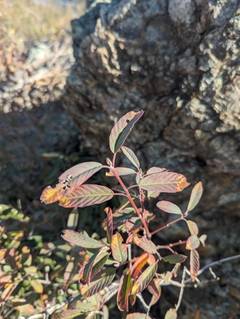
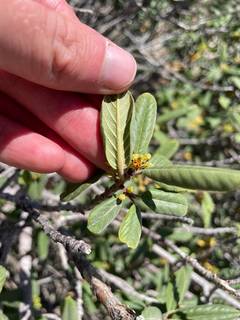
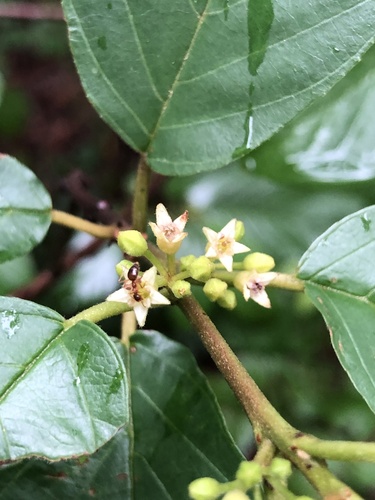
Frangula caroliniana, the Carolina buckthorn, is a deciduous large shrub or small tree in the Rhamnaceae, typically 10-30 feet (3-9 m) tall and 10-15 feet (3-4.5 m) wide, with an open, often multi-stemmed form and slender, arching branches. The alternate leaves are elliptic to oblong, 2-6 inches (5-15 cm) long, glossy green, with 8-12 pairs of straight, parallel side veins, and they turn yellow to orange-red in autumn. Small greenish-white five-petalled flowers open in late spring to early summer in clusters along the new growth. These are followed by round drupes about 0.3 inch (8 mm) wide that ripen from red to black in late summer and autumn, often showing both colours on the same branch. Birds eat the fruit and spread the seed. It grows in moist woodland, on streambanks, bluffs, and limestone soils, tolerating both sun and shade. Unlike the invasive common buckthorn, it spreads modestly. The bark and fruit contain anthraquinone compounds that act as a strong laxative and cause stomach upset if eaten.
Native Range
Native to the southeastern and south-central United States, from Virginia and the Ohio valley south to Florida and west to Texas. It grows in moist woods, along streams and bluffs, and on limestone and other base-rich soils, in both bottomlands and upland slopes.Suggested Uses
Used as a small specimen tree, screen, or large shrub in native and woodland gardens and wildlife plantings, spaced 10-15 feet (3-4.5 m) apart. The glossy foliage, two-tone fruit, and autumn colour suit naturalistic and bird-friendly borders. The laxative fruit makes it less suited to areas used by young children or pets.How to Identify
Appearance
Size & Dimensions
Height10' - 30'
Width/Spread10' - 15'
Bloom Information
Greenish-white flowers open in late spring to early summer, mainly May and June, in small clusters among the new leaves. The flowers are inconspicuous and last two to three weeks. Fruit follows through summer, colouring red and then black into autumn.
Detailed Descriptions
Foliage Description
glossy greenGrowing Conditions
Sun Requirements
Requires 4-8 hours of direct sunlight daily
• Full Sun: 6+ hours of direct sunlight
• Partial Shade: 3-6 hours of direct sunlight
• Full Shade: Less than 3 hours of direct sunlight
Care & Maintenance
Care Guide
Grows in full sun to partial shade in moist, well-drained soil over a wide pH range of about 6.0-8.0, including limestone and clay soils. Established plants tolerate short drought and a range of light, flowering and fruiting more heavily in sun. It needs little feeding and is generally free of serious pests. Propagation is from cleaned seed sown after cold stratification or from softwood cuttings. Hardy in USDA zones 5-9.Pruning
Pruned in late winter while dormant to remove dead or crossing branches and to lift or shape the crown. It tolerates renewal pruning and can be cut back hard to keep it shrubby. Suckers and low growth are removed to train a single-trunk small tree.Pruning Schedule
Prune: February–March
winter