Frangula, Genus, californica, Species,
- Genus & species
coffeeberry
California and western United States
Overview
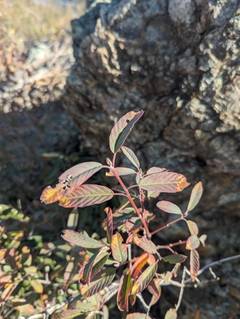
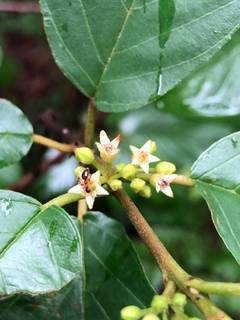
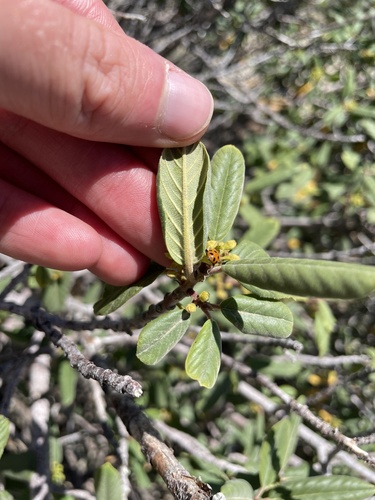
Frangula californica is an evergreen shrub native to California and adjacent parts of the western United States, common in chaparral, oak woodland, and coastal scrub. It grows 3-15 feet (0.9-4.5 m) tall and wide, with a rounded, densely branched form that varies from low and compact near the coast to tall and open inland. The leathery leaves are 1-3 inches (2.5-7.5 cm) long, elliptic, and glossy dark green above, often with reddish stalks and paler undersides. Small greenish-white flowers cluster in the leaf axils from spring into summer, drawing many bees and other insects. The flowers form round berries about 0.3-0.5 inch (8-12 mm) across that ripen from green through red to black, the multi-colored fruit behind the common name coffeeberry. The berries feed birds and mammals, and the seeds resemble coffee beans, though the plant is unrelated to true coffee. It grows in full sun to part shade on a wide range of well-drained soils and tolerates drought once established, needing no summer water in its native climate. It takes pruning and shaping readily. Poor drainage and heavy summer irrigation are the main causes of decline.
Native Range
Native to California and into Oregon, Arizona, Nevada, and Baja California. It grows in chaparral, oak and mixed woodland, coastal sage scrub, and canyon slopes, from the coast into the foothills and mountains.Suggested Uses
Used as an evergreen screen, hedge, informal shrub, and wildlife planting in dry gardens. It suits chaparral and native plant gardens, slopes, and low-water landscapes, with compact selections grown in smaller spaces.How to Identify
Appearance
Size & Dimensions
Height3' - 15'
Width/Spread4' - 12'
Bloom Information
Detailed Descriptions
Foliage Description
Dark greenGrowing Conditions
Sun Requirements
Requires 4-10 hours of direct sunlight daily
• Full Sun: 6+ hours of direct sunlight
• Partial Shade: 3-6 hours of direct sunlight
• Full Shade: Less than 3 hours of direct sunlight
Care & Maintenance
Care Guide
Grows in full sun to part shade on well-drained soils, including poor and rocky ground, and tolerates clay where drainage is adequate. It is hardy in USDA zones 7-10 and survives long summer drought once established, asking for no irrigation in a Mediterranean climate. Summer water on heavy soil causes root rot, the main cause of failure in gardens. It takes shearing and renewal pruning, so it adapts to hedging or a natural form. A spring mulch conserves moisture while the shrub establishes. Coastal forms stay lower and denser than the taller inland plants.Pruning
Prune in late winter or early spring to shape the shrub or maintain a hedge, since it resprouts readily from cuts. Dead or crossing branches can be removed at any time. Shearing creates a formal outline, while light thinning keeps the natural rounded habit.Container Growing
Suitable for container growing
Minimum container size: 5 gallons