Eupatorium, Genus, serotinum, Species,
- Genus & species
late boneset
Overview
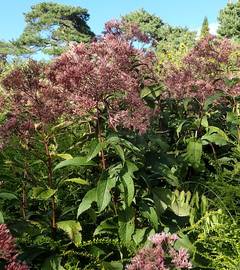
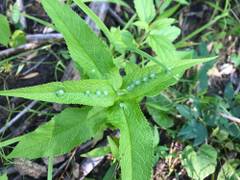
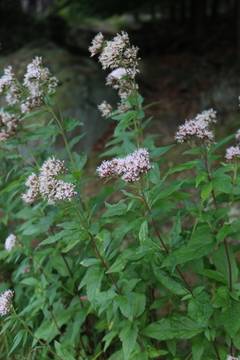
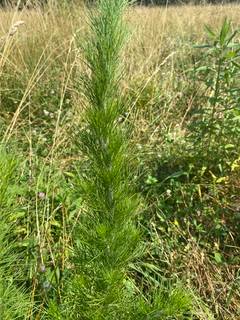
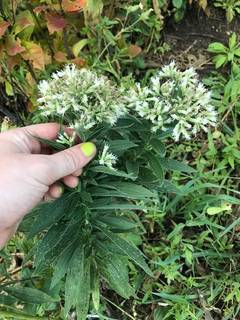
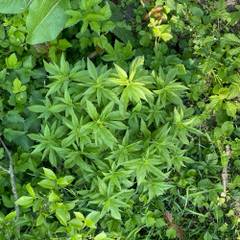
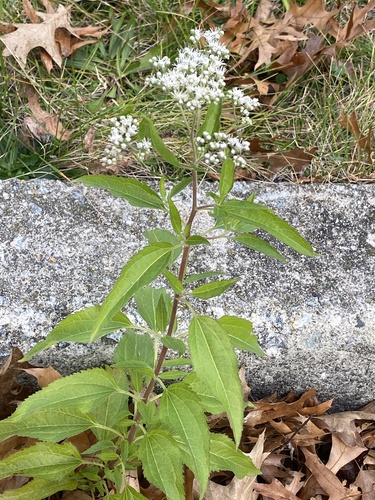
Eupatorium serotinum is a clump-forming perennial in the aster family, growing 3 to 6 feet (0.9-1.8 m) tall on stout, branched, finely hairy stems. The opposite leaves are lance-shaped, 3-8 inches (8-20 cm) long, sharply toothed, long-stalked, and prominently three-veined. From late summer into autumn the branched stem tips carry broad, flat-topped clusters of many small dull-white flower heads, each made of about 9 to 15 tubular disc florets without rays. The clusters draw large numbers of bees, wasps, butterflies, and other late-season insects. The plant spreads by short rhizomes and abundant wind-borne seed, forming colonies in moist, open ground, floodplains, and disturbed sites. It self-sows freely and can spread beyond where it is wanted in fertile soil. The foliage contains compounds that make it bitter and unpalatable to deer and livestock.
Native Range
Native to the eastern and central United States and parts of northeastern Mexico, from New York and Iowa south to Florida and Texas. It grows in moist meadows, floodplains, ditches, woodland edges, and disturbed open ground.Suggested Uses
Used in rain gardens, moist meadows, pond margins, and the back of large borders for late-season bloom and pollinator support, spaced 24-36 inches (60-90 cm) apart. Its autumn flowers feed bees, wasps, and migrating butterflies when little else blooms. Because of its size and spread, it suits naturalistic plantings more than small formal beds.How to Identify
Appearance
Size & Dimensions
Height3' - 6'
Width/Spread2' - 3'
Bloom Information
Detailed Descriptions
Foliage Description
GreenGrowing Conditions
Sun Requirements
Requires 5-12 hours of direct sunlight daily
• Full Sun: 6+ hours of direct sunlight
• Partial Shade: 3-6 hours of direct sunlight
• Full Shade: Less than 3 hours of direct sunlight