Eupatorium, Genus, perfoliatum, Species,
- Genus & species
boneset
Eastern North America (from Nova Scotia south through the Atlantic and Gulf coastal plains to Florida and west to Texas, Oklahoma, the Dakotas, and Manitoba); wet meadows, swamps, marsh edges, streambanks, and low-prairie habitats with consistent soil moisture.
Overview
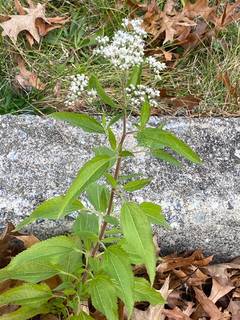
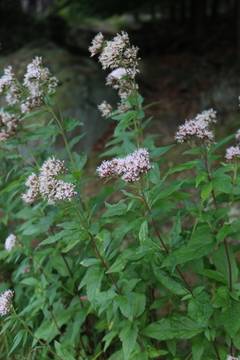
Eupatorium perfoliatum is boneset (also called common boneset), a native eastern North American perennial in the daisy family (Asteraceae, tribe Eupatorieae) growing 36-60 inches (90-150 cm) tall and 24-36 inches (60-90 cm) wide. The species name 'perfoliatum' is Latin for 'through-leafed' and references the species' diagnostic perfoliate leaf arrangement: opposite leaves are joined at the base across the stem so that the stem appears to pierce directly through fused leaf tissue, producing the visually memorable through-leafed character that supplies the species' principal field-identification trait at the foliage level. The perfoliate leaf form is a teaching example for the botanical term 'perfoliate' — no other commonly cultivated North American native perennial produces the same fully-fused opposite-leaf-base arrangement, and the trait is recognizable at viewing distance. The common name 'boneset' derives from historical 19th-century medicinal use treating 'break-bone fever' (the colonial-era name for dengue fever and severe influenza), where the plant was used as a febrifuge and diaphoretic in herbal medicine across the eastern North American native range; the medicinal use has been discontinued in modern herbal practice because the species is now recognized as containing pyrrolizidine alkaloid compounds that are hepatotoxic with cumulative or prolonged exposure, and the species is no longer recommended for internal use despite the historical applications. Off-white flat-topped fuzzy flower clusters open from July through September across a 6-week active flowering window — the dense aggregation of small rayless composite flower heads produces the fuzzy cluster appearance, and each individual flower head is composed of 9-23 disc florets with no ray florets in the typical Eupatorieae rayless-composite pattern. The bloom timing places the species among the principal late-summer pollinator-support native perennials in the eastern North American flora, and the flat-topped cluster architecture gives accessible landing platforms for diverse insect pollinators including bees (Apis, Bombus, native solitary bees), butterflies (skippers, swallowtails, painted ladies, monarchs during fall migration), beneficial wasps, and flies; the broad pollinator support is one of the species' principal ecological contributions to native-plant gardens. The species is the type species of the genus Eupatorium sensu stricto — the late-20th-century molecular phylogeny revision of the Eupatorium sensu lato complex split the broader genus into Eupatorium, Conoclinium, Eutrochium, and several other genera, and E. perfoliatum retained the Eupatorium name as the type species. The species is native to wet-meadow, swamp, and marsh-edge habitats across the eastern North American range and the wet-soil cultivation requirement reflects the riparian native habitat: the species performs reliably in consistently moist to waterlogged soil and struggles in dry exposed positions where the soil dries between waterings. Hardy to zone 3 with reliable performance across zones 3-8. Deer avoid the foliage from the alkaloid-deterrent chemistry. The species is toxic to humans and pets if ingested in quantity, with the cumulative-exposure hepatotoxicity being the principal concern for both medicinal-history and accidental-ingestion contexts.
Native Range
Eupatorium perfoliatum is native to eastern North America with a continuous native range from Nova Scotia and Quebec south through New England, the Atlantic and Gulf coastal plains to Florida, and west through Tennessee, the Ohio River Valley, and the central plains to Texas, Oklahoma, eastern Kansas, the Dakotas, and southern Manitoba. The species occurs in wet meadows, swamps, marsh edges, streambank habitats, lowland prairie positions, ditch margins, and other consistently moist-substrate habitats across the eastern and central North American native range. The species is a foundational perennial for native-plant gardens, prairie-restoration plantings, pollinator-meadow plantings, rain-garden plantings, and wet-meadow restoration projects across the eastern and central United States, with the species' wet-substrate physiology and the late-summer pollinator-support role together placing the species at the top of native-perennial recommendations for moist-soil pollinator gardens.Suggested Uses
Used in rain gardens, wet meadows, prairie-restoration plantings, pollinator-meadow plantings, streambank and pond-margin positions, native-plant gardens, and moist-substrate naturalized plantings where the wet-soil cultivation requirement matches the planting position. The species is among the principal late-summer pollinator-support native perennials in the eastern North American flora and the species' broad pollinator-attraction profile (bees, butterflies, wasps, flies) places it at the top of native-perennial recommendations for late-season pollinator gardens. The perfoliate leaf form is a standard botanical-teaching example for the term 'perfoliate' and the species is grown in educational and teaching gardens specifically for the morphology demonstration. The species pairs with companion late-season wet-soil native perennials including Conoclinium coelestinum (blue mistflower), Eutrochium (Joe-Pye weed), Lobelia cardinalis (cardinal flower), Hibiscus moscheutos (rose mallow), and warm-season ornamental grasses (Panicum virgatum, Andropogon gerardii) for a multi-species wet-meadow native composition where the Eupatorium white flat-topped clusters contribute a color contrast against the warm-yellow goldenrods, the magenta-purple Joe-Pye weed, and the lavender-blue mistflower companion blooms. The species is toxic if ingested and is sited away from grazing pasture positions where livestock might consume the foliage.How to Identify
Appearance
Size & Dimensions
Height3' - 5'
Width/Spread2' - 3'
Colors
Bloom Information
Off-white flat-topped fuzzy flower clusters open from July through September across a 6-week active flowering window. Each individual flower head is composed of 9-23 disc florets with no ray florets — a rayless composite flower head architecture typical of the Eupatorieae tribe within the Asteraceae family that the species shares with Conoclinium (blue mistflower), Eutrochium (Joe-Pye weed), and other Eupatorieae genera. Pollination is by bees (Apis, Bombus, native solitary bees), butterflies (skippers, swallowtails, painted ladies, fall-migrating monarchs), beneficial wasps, and flies; the broad pollinator support is one of the species' principal ecological contributions to native-plant gardens. The species produces wind-dispersed achene seeds following bloom that support self-sowing recolonization in suitable wet-substrate habitats.
Detailed Descriptions
Flower Description
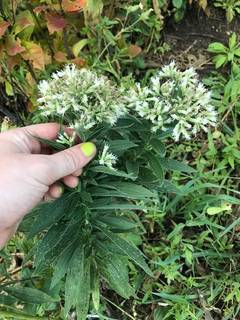
Off-white to dull white in dense flat-topped fuzzy flower clusters 4-6 inches (10-15 cm) across; each individual flower head is composed of 9-23 disc florets with no ray florets — a rayless composite flower head architecture typical of the Eupatorieae tribe within the Asteraceae family — and the dense aggregation of small white flower heads produces the fuzzy flat-topped cluster that is the species' principal floral displayFoliage Description
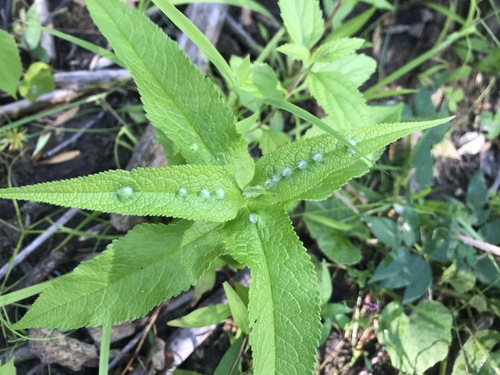
Dark green; large lance-shaped opposite leaves with the species' diagnostic perfoliate trait — opposite leaves are joined at the base across the stem so that the stem appears to pierce directly through fused leaf tissue, producing the perfoliate (literally 'through-leafed') leaf arrangement that the species name 'perfoliatum' references and that supplies the species' principal field-identification characterGrowing Conditions
Sun Requirements
Requires 5-10 hours of direct sunlight daily
• Full Sun: 6+ hours of direct sunlight
• Partial Shade: 3-6 hours of direct sunlight
• Full Shade: Less than 3 hours of direct sunlight
Care & Maintenance
Care Guide
Plant in full sun to partial shade with 5-10 hours of direct light. Wet to consistently moist soil at pH 5.5-7.5 supports the species reliably; the species' wet-meadow and marsh-edge native habitat reflects a strong physiological preference for consistent moisture, and the species performs poorly in dry exposed positions where the soil dries between waterings. Watering is essentially continuous because the species' wet-substrate physiology depends on consistent soil moisture; the species tolerates standing water seasonally and grows well in pond-margin, streambank, and rain-garden positions where wet conditions are the planting-site default. Fertilization is generally not needed because the species is adapted to lean wet-meadow substrate. Maintenance is essentially limited to early-spring cleanup of standing dead stems in March before new spring growth emerges; the species can be cut to ground level after frost in fall if the standing-stem winter habit is not desired, but most gardeners leave the seed heads standing for bird-feeding value across the dormant season. The species is hardy to zone 3 with reliable performance across zones 3-8. The species is toxic to humans and pets if ingested in quantity from the pyrrolizidine alkaloid hepatotoxicity, and the species is no longer recommended for internal medicinal use despite the historical 19th-century herbal applications.Pruning
Cut all stems to ground level either after frost in fall (if the standing-stem winter habit is not desired) or in early spring (March) before new spring growth emerges. Most gardeners leave the seed heads standing through fall and winter for bird-feeding value across the dormant season — finches, sparrows, and other small seed-eating birds work the dried flower heads through the cold months.Pruning Schedule
Prune: March
early spring