Erythranthe, Genus, lewisii, Species,
- Genus & species
great purple monkeyflower
Mountains of western North America from British Columbia to Wyoming
Overview
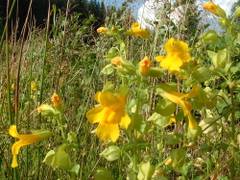
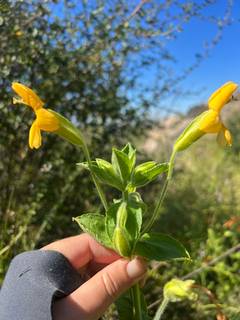
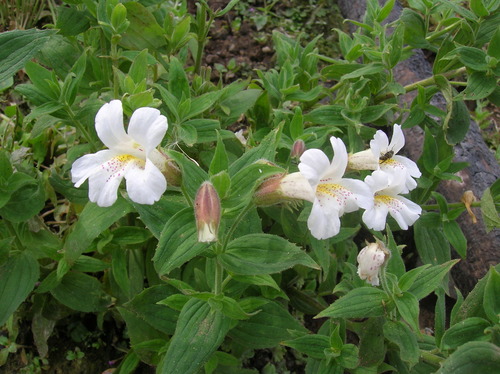
A clump-forming herbaceous perennial reaching 16-32 inches (40-80 cm) tall and 12-18 inches (30-45 cm) wide, growing from short slender rhizomes that spread to form patches in moist soil. Stems erect, square in cross-section, sticky-glandular. Leaves opposite, ovate to elliptic, 1-3 inches (2.5-7.5 cm) long, with toothed margins, mid-green and slightly glandular on both surfaces. Flowers tubular at the base and flaring into five lobes (two upper, three lower), 1.25-1.75 inches (3-4.5 cm) across, deep pink to magenta-purple with two yellow ridges in the throat. Flowers borne in pairs in upper leaf axils; total 2-15 flowers per stem. Plants flower June through August at montane sites, with peak flowering July. Stands die back to the rhizome with first hard frost and resprout from the underground network in late spring. Plants spread 6-12 inches (15-30 cm) per year on consistently moist sites and can be invasive in irrigated borders.
Native Range
Native to the mountains of western North America from southern British Columbia through the Cascades, Sierra Nevada, and northern Rocky Mountains to Wyoming and northern Utah. Found along streambanks, wet meadows, seeps, and snowmelt channels at 4,000-10,000 feet (1,200-3,050 m).Suggested Uses
Planted in moist meadow plantings, streamside borders, and bog gardens within zones 5-8 at 12-18 inch (30-45 cm) spacing. Pairs with Caltha and Carex in saturated-soil plantings. Container culture is sustained 2-3 years in pots of at least 3 gallons (11 L) with consistent moisture, but rhizomes circle and decline in pot constraint.How to Identify
Appearance
Size & Dimensions
Height1'4" - 2'8"
Width/Spread1' - 1'6"
Bloom Information
June through August across the species' range, with peak flowering in July. Snowmelt timing controls bloom onset; mid-elevation stands flower 4-8 weeks after snow exits the site. Each flower lasts 4-6 days; total bloom per stand 5-8 weeks. Cool, moist summers extend bloom by 1-2 weeks; warm, dry summers reduce flower count.
Detailed Descriptions
Flower Description
Deep pink to magenta-purple with yellow throat ridgesFoliage Description
Mid-greenGrowing Conditions
Sun Requirements
Requires 4-8 hours of direct sunlight daily
• Full Sun: 6+ hours of direct sunlight
• Partial Shade: 3-6 hours of direct sunlight
• Full Shade: Less than 3 hours of direct sunlight
Care & Maintenance
Care Guide
Plants require consistent soil moisture during growth and flowering; on natural sites the rhizome relies on snowmelt or stream seepage that persists into August. Garden plants in zones 5-8 benefit from weekly irrigation in summer; on heavy soils, raised beds with high organic matter retain moisture without waterlogging. Slugs damage emerging shoots in early spring along the coast. Powdery mildew develops on plants in dry, sunny exposures and is reduced by morning watering. Aphids cluster on stem tips in some seasons. Stands persist 5-8 years on suitable sites and spread by rhizome to fill 3-4 square feet (0.3-0.4 m²) over that period.Pruning
Spent flower stems can be cut at the base after seed dispersal in late August. Old stems left in place collapse with first frost and pull free easily in autumn. Hard cutback in spring before new shoots emerge removes winter debris without affecting flowering. Rhizome thinning every 4-5 years controls patch spread in confined plantings.Pruning Schedule
Prune: March & August
summerearly spring
Container Growing
Suitable for container growing
Minimum container size: 3 gallons