Erythranthe, Genus, spp., Multiple species,
- Genus
- Multiple species
monkeyflowers
Western North America, with species in Asia, South America, and Australasia
Overview
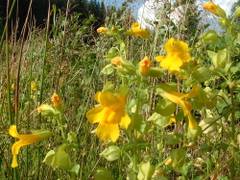
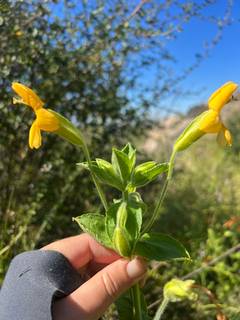
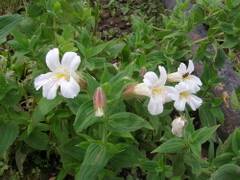
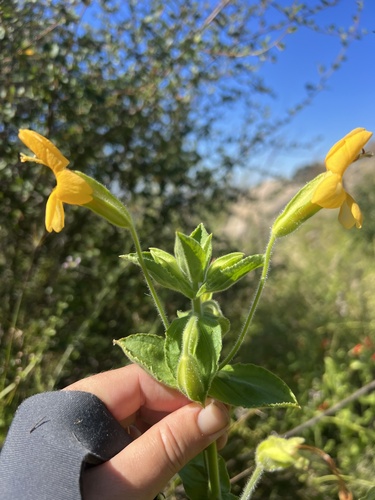
Erythranthe is a genus of about 110 species of annual and perennial herbs called monkeyflowers, segregated from Mimulus and placed in the family Phrymaceae. The genus is centered in western North America, with additional species in temperate Asia, South America, and Australasia. Most species grow in consistently moist ground along streams, seeps, and wet meadows. Plants range from low, stolon-forming mats to upright stems 4-36 inches (10-90 cm) tall, with soft, opposite, often toothed leaves. The flowers are tubular and two-lipped in a snapdragon-like form, 0.5-2 inches (1-5 cm) long, in yellow, red, pink, or magenta, and many are marked with contrasting spots or blotches in the throat. Bloom continues over a long season from spring into late summer where moisture is steady. The genus includes seep monkeyflower (E. guttata) with yellow red-dotted flowers, scarlet monkeyflower (E. cardinalis) pollinated by hummingbirds, and Lewis's monkeyflower (E. lewisii) with pink to magenta flowers. Most species need wet soil and decline quickly under drought, which limits their use to bog gardens, pond margins, and irrigated beds. Some short-lived perennials are grown as annuals in colder regions.
Native Range
The genus is centered in western North America, from Alaska south to Mexico, with its greatest diversity in California and the Pacific states. Additional species occur in temperate eastern Asia, the Andes of South America, and parts of Australia and New Zealand.Suggested Uses
Monkeyflowers are planted along pond and stream margins, in bog and rain gardens, and in moist borders, spaced 8-18 inches (20-45 cm) apart. Red-flowered species are grown in hummingbird and pollinator plantings. Low, spreading species are used as seasonal groundcover in wet ground and in containers kept consistently moist.How to Identify
Appearance
Size & Dimensions
Height4" - 3'
Width/Spread6" - 2'
Bloom Information
Flowering runs from spring through late summer, often for two to four months where soil stays moist. Individual flowers last a few days, but plants produce a long succession of blooms along the stems. In dry conditions the flowering period shortens and plants may set seed early and die back.
Detailed Descriptions
Flower Description
yellow, red, pink, or magenta, often spottedFoliage Description
greenGrowing Conditions
Sun Requirements
Requires 4-8 hours of direct sunlight daily
• Full Sun: 6+ hours of direct sunlight
• Partial Shade: 3-6 hours of direct sunlight
• Full Shade: Less than 3 hours of direct sunlight
Care & Maintenance
Care Guide
Erythranthe species grow in full sun to part shade in wet to consistently moist soils with a pH of 5.5-7.5 and tolerate standing water at the margins of ponds and streams. They decline rapidly if the soil dries, so they suit bog gardens, rain gardens, and pondside plantings rather than ordinary borders. Perennial species are hardy in USDA zones 6-9, while annual and tender species are grown for a single season in colder areas. Plants self-sow readily and can spread by creeping stems to form colonies. Aphids, spider mites, and powdery mildew occur, the last more often when air is still. Cutting plants back after the first flush of bloom renews growth and flowering.Pruning
Monkeyflowers are cut back by about half after the first flush of bloom to remove leggy growth and prompt a second flowering. Spent stems and seed capsules are trimmed to limit self-sowing where it is not wanted. Perennial species are cleared to the base in late winter before new growth begins.Pruning Schedule
Prune: February & July
summerwinter
Container Growing
Suitable for container growing
Minimum container size: 2 gallons