Erica, Genus, tetralix, Species,
- Genus & species
cross-leaved heath
Overview
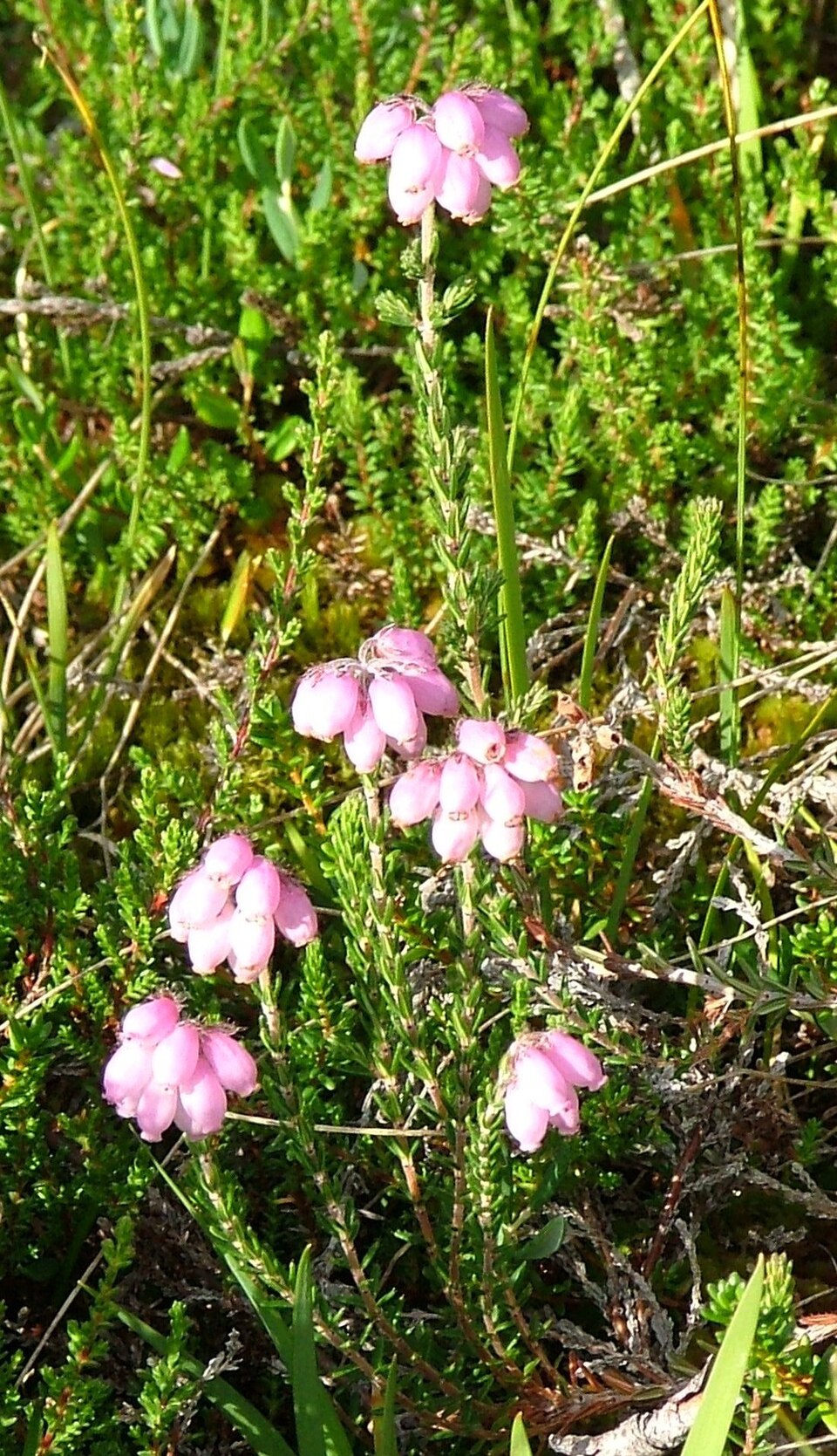
Erica tetralix is a low, evergreen dwarf shrub of wet heath and bog, 6-16 inches (15-40 cm) tall and spreading to 8-20 inches (20-50 cm), with wiry, ascending stems. The narrow, grey-green leaves are 0.1-0.2 inch (3-5 mm) long, arranged in whorls of four that form a neat cross when viewed from above, and edged with short hairs that trap moisture. From summer into early autumn the shoots are tipped with drooping clusters of rose-pink, urn-shaped flowers about 0.25 inch (6-7 mm) long, all turned to one side of the stem. The foliage stays greyish through the year, and the dead flower heads bleach to pale brown and persist. It grows only on damp to wet, acidic, peaty ground such as bog, wet heath, and moorland, and fails on dry or limy soils. The plant is slow-growing and compact, and it declines if the ground dries out or is shaded by taller growth. Bees and other insects work the pink bells through late summer.
Native Range
Erica tetralix is native to western Europe, from Scandinavia and the British Isles south to Iberia. It grows on wet heath, blanket bog, valley mire, and damp moorland on acidic peat.Suggested Uses
Grown in bog gardens, damp acid heath and moorland plantings, and the wet margins of pools on lime-free ground. Massed as low ground cover, it gives summer pink colour to wet, acidic sites where few shrubs grow.How to Identify
Appearance
Size & Dimensions
Height6" - 1'4"
Width/Spread8" - 1'8"
Bloom Information
Rose-pink urn-shaped flowers open from June to September in nodding terminal clusters, the bloom lasting through late summer. Faded heads bleach and hold on the shoots into autumn. Bees and other insects visit the pink bells for nectar.
Detailed Descriptions
Foliage Description
grey-greenGrowing Conditions
Sun Requirements
Requires 5-12 hours of direct sunlight daily
• Full Sun: 6+ hours of direct sunlight
• Partial Shade: 3-6 hours of direct sunlight
• Full Shade: Less than 3 hours of direct sunlight
Care & Maintenance
Care Guide
Grow in full sun on permanently moist to wet, acidic, lime-free soil such as peat or a peaty sand, where the roots stay damp. It suits bog gardens, the wet margins of ponds, and damp acid heath plantings, and fails on dry or alkaline ground. No lime or rich feeding is given, as it is adapted to poor, acidic peat. A light trim after flowering keeps the plant compact and slows the bare, woody legginess that comes with age. It needs little else once established in the right damp, acid site.Pruning
Trim lightly after flowering, cutting the faded shoots back to just below the spent heads to keep growth dense. Old, leafless wood is slow to resprout, so cuts are kept to leafy growth. Older, leggy plants are usually replaced rather than hard-pruned.Container Growing
Suitable for container growing
Minimum container size: 2 gallons


