Erica, Genus, carnea, Species,
- Genus & species
heath
Native to the mountains of central and southern Europe — the Alps, Apennines, and Balkans — growing on rocky calcareous slopes and subalpine meadows at 650-7,500 feet (200-2,300 m) elevation, typically on limestone-derived substrates that support the species' tolerance of neutral to slightly alkaline soil pH
Overview
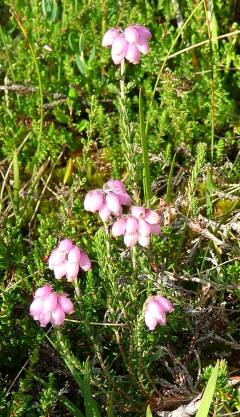
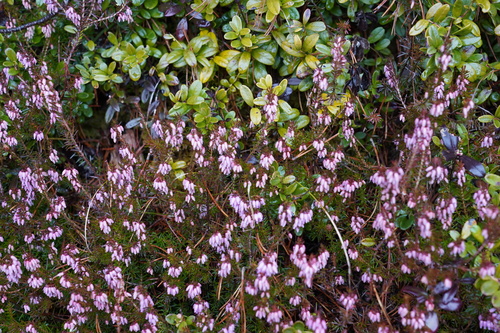
Erica carnea is winter heath (also called spring heath), a low spreading evergreen subshrub in the heath family Ericaceae growing 6-12 inches (15-30 cm) tall and 12-24 inches (30-60 cm) wide and forming a dense prostrate evergreen mat across the ground surface. The specific epithet carnea is from Latin carneus meaning flesh-colored and refers to the pink flower tone of the type specimen, though modern cultivars span white through pink to deep red. Small urn-shaped (urceolate) flowers approximately 0.2 inch (5 mm) long are carried in dense one-sided racemes 1-2 inches (2.5-5 cm) long along the wiry stem tips in winter through mid-spring (December through April) across a 16-week extended bloom period — the 16-week bloom duration extends well beyond the 2-4 week bloom typical of most flowering shrubs and constitutes the species' primary ornamental character. The species' most significant cultural distinction within the genus Erica and the related genus Calluna (heather) is lime tolerance: E. carnea tolerates neutral to slightly alkaline soil conditions to pH 7.0, whereas most other heaths and heathers in cultivation call for strict acid soil at pH 4.5-5.5 and decline rapidly on calcareous or neutral substrates — the lime tolerance reflects the species' native habitat on calcareous limestone-derived substrates in the Alps, Apennines, and Balkans. Needle-like (linear) leaves approximately 0.25 inch (6 mm) long are arranged in dense whorls of four around the wiry stems, and the dense whorled needle-like foliage forms the low compact evergreen mat that is the species' year-round structural character between the winter-spring bloom seasons. The species is an early-season nectar source for winter-active bumblebees and honeybees across the December-April bloom when few other woody plants supply foraging resources. Limitation: without annual post-bloom shearing, plants become open and woody at the base within 3-5 years and lose the dense compact mat habit that is the species' structural value — the annual shearing requirement is the primary maintenance commitment. Non-toxic. Deer-resistant. Drought-tolerant once established.
Native Range
Native to the mountains of central and southern Europe — the Alps, Apennines, and Balkans — growing on rocky calcareous slopes and subalpine meadows at 650-7,500 feet (200-2,300 m) elevation, typically on limestone-derived substrates that support the species' lime tolerance and separate the species from the strict acid-soil habitat of most other heaths and heathers. The specific epithet carnea is from Latin carneus meaning flesh-colored and records the pink flower tone of the type specimen.Suggested Uses
Used as a winter-blooming evergreen ground cover in full-sun positions across open slopes and rock garden settings, in mixed heath and heather beds where the species' December-April bloom extends the flowering season well beyond the summer-blooming Calluna and Erica cinerea companions, as a low evergreen edge planting along paths and driveways, and in containers of at least 3 gallons (11 L) at 12-24 inch (30-60 cm) spacing between plants in USDA zones 5 through 7. The 16-week winter through mid-spring bloom across the months when most other flowering shrubs are dormant, the dense needle-like evergreen mat habit that supplies year-round ground-plane structure, the lime tolerance that permits siting on neutral to slightly alkaline soils where other heaths and heathers fail, the winter pollinator-food-source value for bumblebees and honeybees, and the drought tolerance once established combine to make Erica carnea a foundation winter-blooming ground cover for full-sun positions in temperate gardens. Wet waterlogged positions are unsuitable (the species calls for well-drained substrates), full-shade positions reduce bloom density, and hot-summer climates in zones 8 and warmer produce the heat stress that shortens the species' garden lifespan.How to Identify
Appearance
Size & Dimensions
Height6" - 1'
Width/Spread1' - 2'
Bloom Information
Winter through mid-spring (December through April) across a 16-week extended bloom period that spans the months when most other flowering shrubs are dormant. Small urn-shaped (urceolate) flowers approximately 0.2 inch (5 mm) long in white, pink, rose, magenta, or deep red (cultivar-dependent) carried in dense one-sided racemes 1-2 inches (2.5-5 cm) along the wiry stem tips. The bloom progresses from the base of each raceme toward the tip across the 16-week season, so individual racemes carry fading flowers at the base and newly opening flowers at the tip simultaneously. Winter-active bumblebees and honeybees work the flowers for nectar and pollen across the bloom period when few other woody plants supply foraging resources — the species is an early-season pollinator food source in temperate gardens.
Detailed Descriptions
Flower Description
small urn-shaped (urceolate) flowers approximately 0.2 inch (5 mm) long in white, pink, rose, magenta, or deep red (cultivar-dependent), carried in dense one-sided racemes 1-2 inches (2.5-5 cm) long along the wiry stem tips in winter through mid-spring (December through April) across a 16-week extended bloom period — the 16-week bloom duration is extended well beyond the 2-4 week bloom typical of most flowering shrubsFoliage Description
needle-like (linear) leaves approximately 0.25 inch (6 mm) long arranged in dense whorls of four around the wiry stems, dark green to yellow-green depending on cultivar, and the dense whorled needle-like foliage forms a low compact evergreen mat that is the species' year-round structural character; evergreen year-round with individual leaves retained 2-3 years before sheddingGrowing Conditions
Sun Requirements
Requires 4-8 hours of direct sunlight daily
• Full Sun: 6+ hours of direct sunlight
• Partial Shade: 3-6 hours of direct sunlight
• Full Shade: Less than 3 hours of direct sunlight
Care & Maintenance
Care Guide
Site in full sun to partial shade with 4-8 hours of direct sun per day in well-drained loam, sand, or rocky soil with a pH of 5.5-7.0 — the species is the most lime-tolerant of the cultivated heaths and tolerates neutral to slightly alkaline soil conditions that exclude most other species and cultivars in the genus Erica and the related genus Calluna, though the species also grows well in the acid range of pH 5.5-6.0 if the soil is well-drained. Water weekly during the first growing season to establish the root system; established plants tolerate moderate drought. Annual post-bloom shearing in April or May is the primary maintenance commitment: the spent flower stems are sheared back to the foliage mat to maintain the dense compact form — without this annual shearing, plants become open and woody at the base within 3-5 years and lose the compact mat habit. Shearing is done immediately after the bloom finishes and never cuts into old bare wood below the green foliage line (bare-wood cuts do not regenerate on heaths). The species has no significant pest or disease concerns in cultivation. Non-toxic. Deer-resistant. Hardy in USDA zones 5-7.Pruning
Annual post-bloom shearing in late spring (April or May) is the primary maintenance commitment for the species. The spent flower stems are sheared back lightly to the foliage mat surface using hand shears or powered hedge trimmers set to a shallow cutting depth — the shearing removes the spent flower racemes and the top 0.5-1 inch (12-25 mm) of stem growth, leaving the dense whorled needle-like foliage intact below the cut line. The shearing promotes lateral branching that fills in the mat surface and prevents the open, leggy, woody-based habit that develops within 3-5 years on unsheared plants. Bare-wood cuts below the green foliage line do not regenerate — the species cannot be renovated from old leafless stems, and severely neglected plants that have opened up at the base are replaced rather than hard-pruned.Pruning Schedule
Prune: April–May
late spring
Container Growing
Suitable for container growing
Minimum container size: 3 gallons