Perennials
Epimedium, Genus, grandiflorum, Species,
- Genus & species
Bishop's hat
Japan, Korea, and northeastern China
Overview
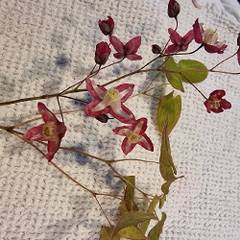
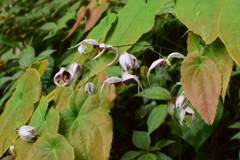
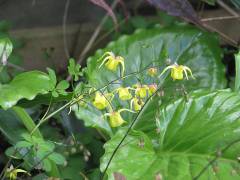
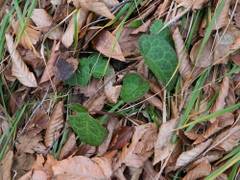
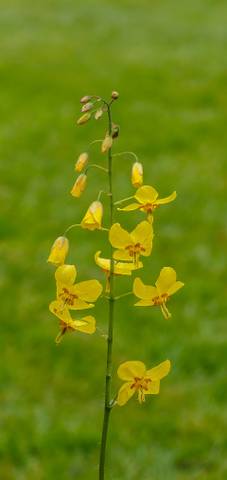
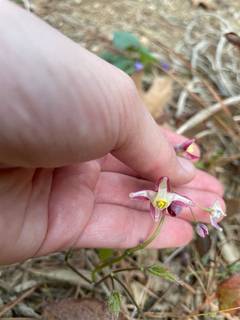
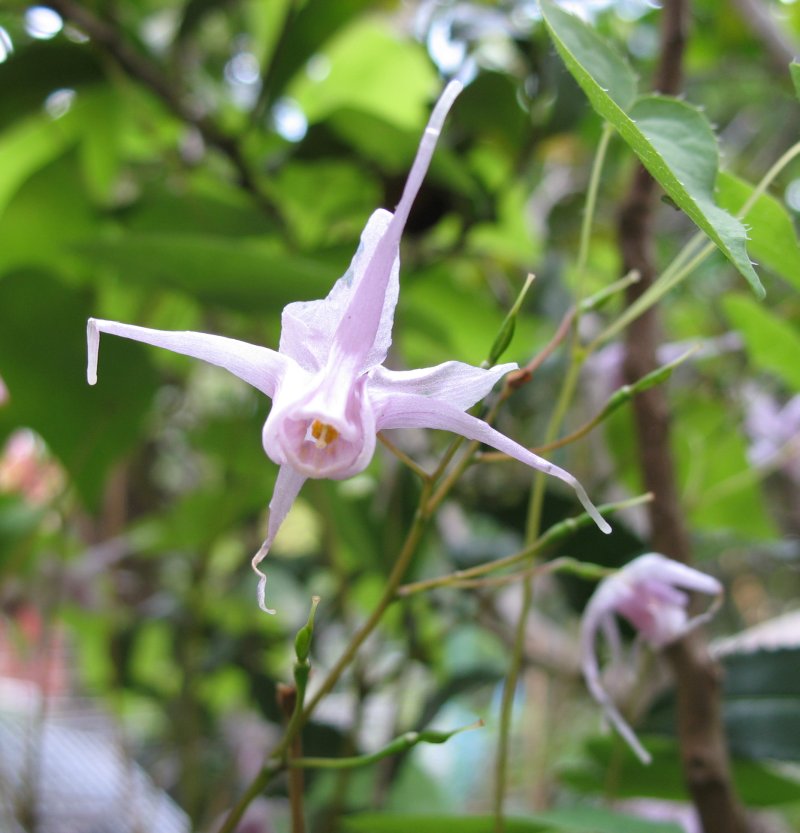
Epimedium grandiflorum is a rhizomatous, deciduous to semi-evergreen perennial in the barberry family (Berberidaceae), forming slowly expanding clumps 8–18 inches (20–45 cm) tall and 12–24 inches (30–60 cm) wide. Leaves are compound, divided into three groups of three leaflets on wiry stalks. Each leaflet is heart-shaped to ovate, 2–4 inches (5–10 cm) long, with a bristle-edged margin and a pointed tip. New growth emerges bronze to red-tinged in spring and turns green by early summer, then bronze or russet in autumn. Flowers appear in loose, nodding racemes of 4–20 just above or among the new leaves. Each flower is 1–2 inches (2.5–5 cm) across, with four inner sepals and four spurred petals, in white, pale yellow, pink, rose, or violet depending on the cultivar. Rhizomes extend 2–4 inches (5–10 cm) per year and form a dense, shallow mat. Established plants tolerate dry shade under tree roots but expand more slowly there. Plants establish over 2–3 years, so mass plantings fill in gradually. Flower display is brief, lasting about 3 weeks, and flowers can be hidden if old foliage is not removed before spring growth.
Native Range
Epimedium grandiflorum is native to Japan, Korea, and northeastern China. It grows in the understory of deciduous and mixed woodland and on shaded mountain slopes, in humus-rich soils.Suggested Uses
Used as a ground cover beneath deciduous trees and shrubs in shade, spaced 12–15 inches (30–38 cm) apart. Also grown along the edges of woodland paths and in shaded rock gardens. Plants form a dense mat that reduces weed germination once established.How to Identify
Appearance
Size & Dimensions
Height8" - 1'6"
Width/Spread1' - 2'
Bloom Information
Flowers open in mid to late spring, April–May, and remain for about 3 weeks. Flowers are borne in loose racemes of 4–20 on wiry stems 8–15 inches (20–38 cm) tall. Colors range from white and pale yellow to pink, rose, and violet.
Detailed Descriptions
Flower Description
White, pale yellow, pink, rose, or violetFoliage Description
Bronze-red when new, green in summer, bronze in autumnGrowing Conditions
Sun Requirements
Requires 2-4 hours of direct sunlight daily
• Full Sun: 6+ hours of direct sunlight
• Partial Shade: 3-6 hours of direct sunlight
• Full Shade: Less than 3 hours of direct sunlight
Care & Maintenance
Care Guide
Grows in part shade to full shade, with 2–4 hours of direct sun or less, on humus-rich, moist, well-drained soil at pH 5.5–7.0. Water needs are medium during the first two years, about 1 inch (2.5 cm) weekly, and become low once established. Hardiness is USDA zones 4–8, and leaves are damaged by late spring frosts after emergence. Mulch of 2 inches (5 cm) of leaf mold or shredded bark conserves moisture. Plants may be divided in early autumn or after flowering, with sections replanted at the same depth. Slugs and vine weevil feed on foliage and roots.Pruning
Old foliage is cut to within 1–2 inches (2.5–5 cm) of the ground in late winter, before flower stems emerge in March. Shearing is done with a mower set at 3 inches (7.5 cm) or with hand shears. New leaves expand after flowering.Pruning Schedule
Prune: February–March
winterearly spring
Container Growing
Suitable for container growing
Minimum container size: 1 gallons