Image 1 of 25
1 / 25
Plant Reference
Epimedium, Genus, spp., Multiple species,
- Genus
- Multiple species
barrenworts
Eastern Asia (China, Japan, and Korea, where the majority of the 70+ species in the genus occur) and southern Europe (the Mediterranean basin, with {E. alpinum} and {E. perralderianum}); deciduous woodland floors, forest edges, and limestone outcrops at low to mid elevations
Overview
Epimedium spp. covers a genus of roughly 70 spreading semi-evergreen perennials in the family Berberidaceae, most cultivated species growing 8-18 inches (20-45 cm) tall and spreading by short creeping rhizomes to 12-24 inches (30-60 cm) wide. Leaves are compound with 3-15 heart-shaped to ovate leaflets each 1-3 inches (2.5-7 cm) long carried on thin wiry dark stems, bronze-red as they emerge in early spring, maturing to medium green through summer, and developing red to bronze to purple autumn tints in many species and hybrids. Foliage is semi-evergreen to evergreen depending on species and climate, persisting through winter in zones 7-9 and partially dying back in colder zones. Small spurred or cup-shaped flowers 0.5-1 inch (1.3-2.5 cm) across open in loose airy panicles or racemes during March through May for approximately 4 weeks, with flower color ranging across white, pale yellow, sulfur-yellow, pink, rose, red, orange, purple, and bicolored combinations depending on species and hybrid — the spurred flower shape and the bishop's-mitre outline of some species are the sources of the common names bishop's hat and bishop's miter. The genus has centers of species diversity in eastern Asia (China, Japan, and Korea account for the majority of the 70+ species) and southern Europe (a handful of Mediterranean species), and the eastern Asian species and hybrids have dominated Western cultivation since a wave of plant-hunting introductions from Chinese provinces during the 1980s and 1990s expanded the range of available flower colors and leaf patterns. The main cultivation asset is tolerance of dry shade under established trees once the plant is established — Epimedium is a reliable choice for the difficult gardening position of deep shade combined with tree-root competition where most other perennial ground covers fail, and a mature colony resists dry summer conditions that would kill Hosta, Astilbe, and other moist-shade competitors. The practical cultivation limitation is slow establishment: rhizomes take 2-3 growing seasons of consistent soil moisture to develop enough root mass to tolerate dry conditions, and plants set out into dry shade without adequate establishment watering typically fail in the first summer. The spring flower display is most visible when the previous year's tattered foliage is cut to the ground during February or March before new growth emerges, which exposes the flowers held on thin wiry stalks above the bare soil. Without that late-winter cutback, the flowers are hidden by the persistent old leaves and most of the ornamental impact is lost. Epimedium is deer-resistant, drought-tolerant once established, and non-toxic to humans and pets.
Native Range
Epimedium is a Northern Hemisphere genus with approximately 70 species distributed across two widely separated regions: eastern Asia, where China, Japan, and Korea account for the great majority of species with particular concentrations in Sichuan, Hubei, and Guizhou provinces of China, and southern Europe and the Mediterranean, where a handful of species including E. alpinum and E. perralderianum occur on limestone outcrops and in deciduous woodland. Species grow on deciduous woodland floors, forest edges, and limestone outcrops at low to mid elevations where a leaf-litter layer supplies humus and moisture. The eastern Asian species have dominated Western garden cultivation since a wave of plant-hunting expeditions to Chinese provinces during the 1980s and 1990s introduced many previously unknown species and hybrids to European and North American horticulture — expeditions by Darrell Probst, Mikinori Ogisu, and others during that period roughly doubled the number of Epimedium species in cultivation.Suggested Uses
Planted as a ground cover in dry shade under established trees, in woodland gardens, along shaded foundations, and in containers of 3 gallons (11 L) or larger at 12-24 inch (30-60 cm) spacing in zones 4-9. The tolerance of dry shade and tree-root competition once established gives the genus a specific role in the difficult gardening position where most other shade perennials fail — a mature planting under mature maples, oaks, and beeches produces a reliable weed-suppressing evergreen-to-semi-evergreen ground cover where bare soil and weeds would otherwise dominate. Combined with Helleborus species, Hakonechloa macra, spring ephemeral bulbs, and small ferns in woodland plantings where the shared shade tolerance and the complementary flowering seasons spread seasonal interest across the spring months. Not suited to sunny positions where the foliage scorches, wet soggy sites where the rhizomes rot, newly planted dry-shade positions without establishment watering where plants fail before rooting in, or landscapes where the small-scale spring flower display would be lost at viewing distances greater than 10-15 feet (3-4.5 m).How to Identify
Appearance
Size & Dimensions
Height8" - 1'6"
Width/Spread1' - 2'
Colors
Bloom Information
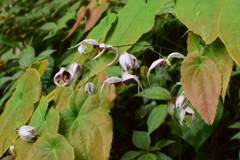
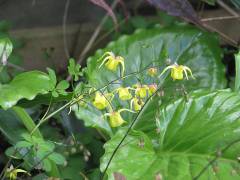
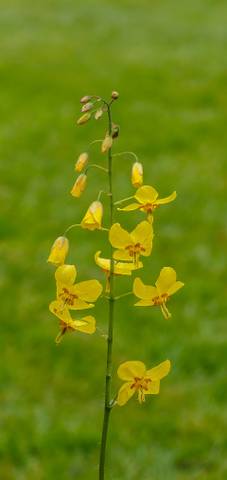
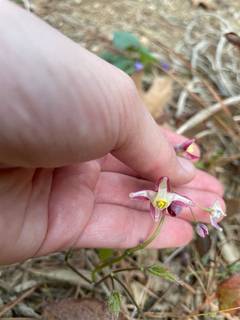
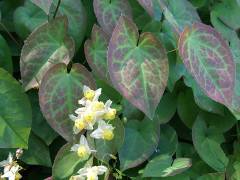
Small spurred or cup-shaped flowers 0.5-1 inch (1.3-2.5 cm) across open in loose airy panicles or racemes during March, April, and May in zones 4-9, lasting approximately 4 weeks. Flower color ranges widely across species and hybrids: white in E. × youngianum 'Niveum', pale yellow in E. × versicolor 'Sulphureum', sulfur-yellow in E. pinnatum ssp. colchicum, pink to rose in E. grandiflorum, red in many newer Chinese species and hybrids, orange in E. wushanense 'Caramel' and hybrids, and purple in E. grandiflorum 'Lilafee'. Flowers are bee-visited. The spring display is most visible when the previous year's tattered foliage has been cut to the ground during February or March before new growth begins, which clears the path for the flowering stems to show above bare soil.
Detailed Descriptions
Flower Description
variable across the genus — white, pale yellow, sulfur-yellow, pink, rose, red, orange, purple, or bicolored depending on species and hybrid; small spurred or cup-shaped flowers 0.5-1 inch (1.3-2.5 cm) across with 4 petals and frequently long curved nectar spurs, borne in loose airy panicles or racemes held above or among the foliage on thin wiry stalksFoliage Description
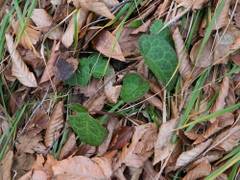
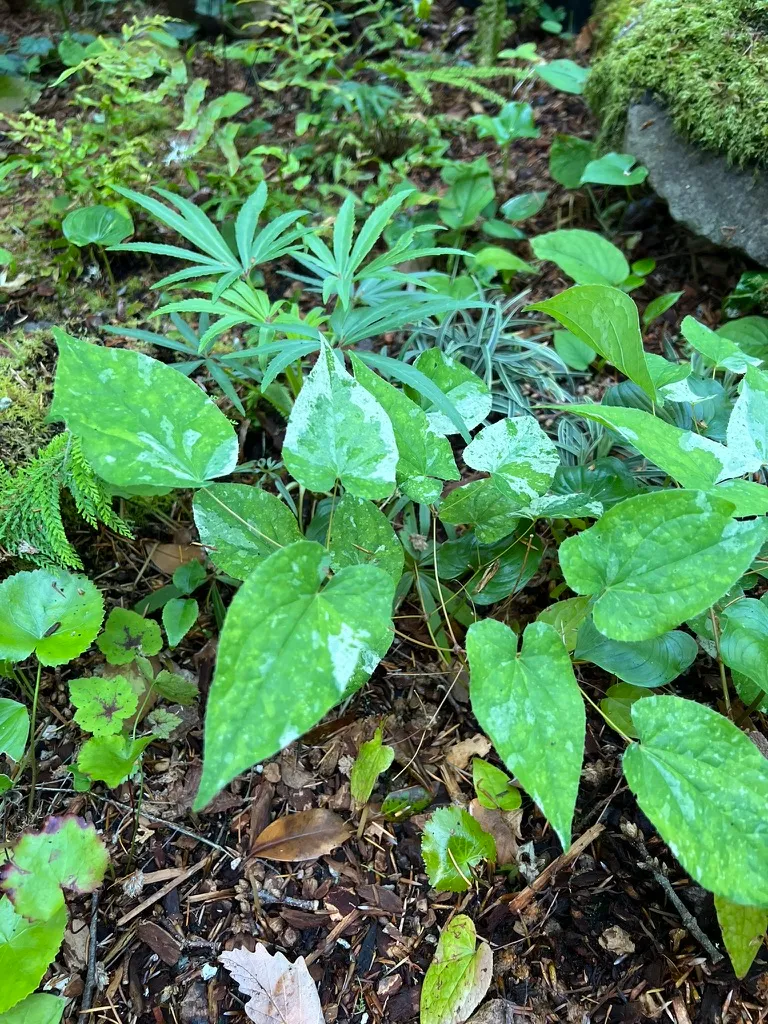
bronze-red when young in spring as leaves emerge, maturing to medium green by early summer; compound with 3-15 heart-shaped to ovate leaflets 1-3 inches (2.5-7 cm) long on wiry dark stems; many species and hybrids develop red to bronze to purple autumn tints; semi-evergreen to evergreen depending on species and climate, with foliage persisting through winter in zones 7-9 and partially dying back in zones 4-6Growing Conditions
Sun Requirements
Requires 1-4 hours of direct sunlight daily
• Full Sun: 6+ hours of direct sunlight
• Partial Shade: 3-6 hours of direct sunlight
• Full Shade: Less than 3 hours of direct sunlight
Care & Maintenance
Care Guide
Plant in well-drained soil with a pH of 5.5-7.5 in part shade to full shade (1-4 hours of direct sun); tolerated soil types include loam, clay, and sand. The genus is drought-tolerant once established — a mature colony carries through dry shade under tree-root competition better than most other shade ground covers — but new plants need consistent soil moisture through the first 2-3 growing seasons to develop adequate rhizome mass before the dry-shade tolerance is reliable. Plants set into dry shade without adequate establishment watering typically fail during the first summer before the root system is capable of pulling moisture from the drier soil. Water weekly through the first 2-3 seasons in rainfall-deficit periods. The previous year's tattered foliage is cut to the ground during February or March before new growth begins — this annual late-winter cutback removes the old leaves and exposes the spring flowers on thin wiry stalks, and without the cutback the flower display is mostly hidden by the old foliage. Spread by short creeping rhizomes is slow and non-aggressive, and containment is rarely needed. Deer avoid the foliage. Non-toxic to humans and pets.Pruning
The previous year's tattered foliage is cut to the ground during late winter (February-March) before new growth begins, either with hedge shears for large plantings or with hand pruners for individual clumps. The cutback removes wind-damaged and winter-burned leaves and clears the path for the emerging spring flower stems to rise visibly above bare soil — without the annual late-winter cutback, the flowers are mostly hidden by the old leaves and most of the spring ornamental value is lost. No other pruning is needed through the growing season. Rhizome spread is slow enough that containment is rarely needed, though unwanted rhizome extensions can be dug out in early spring if the colony exceeds its intended area.Pruning Schedule
Prune: February–March
early spring
Container Growing
Suitable for container growing
Minimum container size: 3 gallons