Epimedium, Genus, acuminatum, Species,
- Genus & species
pointed-leaved barrenwort
Southwestern China (Sichuan, Yunnan, Guizhou; moist shaded mountain forests and limestone ravines at 3,000-9,000 feet)
Overview
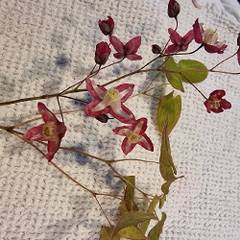
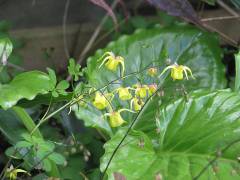
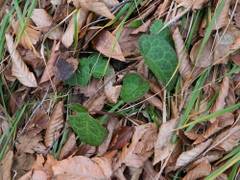
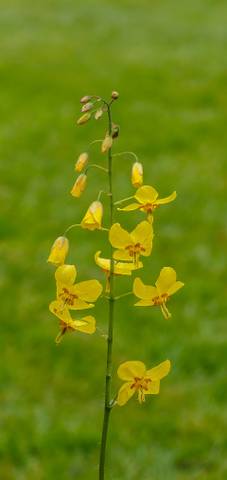
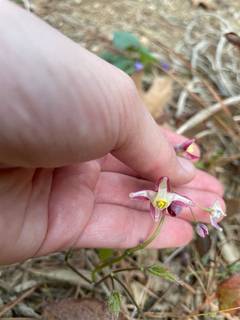
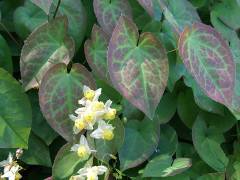
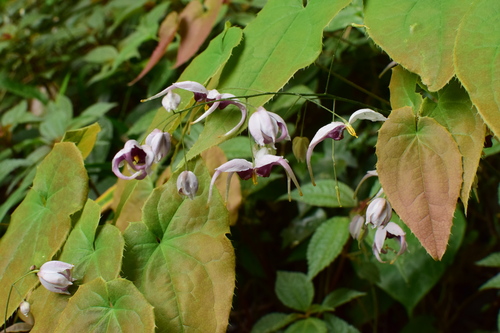
Epimedium acuminatum is a clumping rhizomatous evergreen to semi-evergreen perennial in the barberry family (Berberidaceae) reaching 12–18 inches (30–45 cm) tall with a spread of 12–18 inches (30–45 cm). This Chinese species carries some of the larger and more elongated flowers in the genus — spidery pendant flowers 1–1.5 inches (2.5–4 cm) across with long tapered spurs in white, pale pink, or lavender, held on wiry stems in April–May above the foliage. Leaves are compound with 3 leaflets, each 3–5 inches (8–13 cm) long, narrowly lance-shaped and acuminate (long-pointed) — the acuminate leaflet form is the specific epithet reference and separates this species from most other cultivated epimediums, which carry more rounded or heart-shaped leaflets. New foliage emerges bronzy-red to chocolate and matures to dark green through the growing season. Evergreen in mild climates (zone 7+), semi-evergreen in colder zones. Growth rate is slow to moderate. Clump-forming rather than aggressively spreading, which separates this species from the groundcover-type epimediums like E. × perralchicum. Hardy to zone 5.
Native Range
Epimedium acuminatum is native to southwestern China (Sichuan, Yunnan, Guizhou), where it occurs in moist shaded mountain forests and limestone ravines at 3,000–9,000 feet (900–2,700 m).Suggested Uses
Grown as a clumping groundcover or specimen in shade gardens and woodland borders at 12–18 inch (30–45 cm) spacing. Large spidery flowers carry among the showier floral displays within the genus, which positions this species for prominent bed locations where the flower form can be seen at close range. Evergreen foliage carries winter interest in mild climates (zone 7+). Planting under deciduous trees and shrubs matches the native-habitat light profile. Pairing with ferns, Hosta cultivars, and other shade perennials builds a layered shade-garden composition. Full-sun positions, dry soils at establishment, and exposed windy sites are not suitable given the shade-adapted structure and moisture requirements.How to Identify
Appearance
Size & Dimensions
Height1' - 1'6"
Width/Spread1' - 1'6"
Bloom Information
Spidery pendant flowers 1–1.5 inches (2.5–4 cm) across with long tapered spurs in white, pale pink, or lavender open on wiry stems in April–May. Bloom duration is 3–4 weeks. Flower stems hold the display above or at the level of the emerging foliage, which makes the late-winter foliage-cutback step important for full visibility of the spring bloom.
Detailed Descriptions
Flower Description
White, pale pink, or lavender; spidery pendant 1-1.5 inches with long tapered spursFoliage Description
Dark green mature; bronzy-red to chocolate new growth; narrowly lance-shaped acuminate leaflets 3-5 inches longGrowing Conditions
Sun Requirements
Requires 2-4 hours of direct sunlight daily
• Full Sun: 6+ hours of direct sunlight
• Partial Shade: 3-6 hours of direct sunlight
• Full Shade: Less than 3 hours of direct sunlight
Care & Maintenance
Care Guide
Grows in partial to full shade in moist well-drained humus-rich soil at pH 5.5–7.0, tolerating loam. Hardy to zone 5. Consistent moisture supports establishment through the first 2–3 growing seasons; established plants tolerate drier shade conditions than many epimediums. Old foliage is cut back in late winter (February) before new growth emerges to clear the spring bloom display for visibility; this late-winter cleanup is the single most important maintenance step for this species. No serious pest or disease problems. Deer-resistant, which positions this species for woodland gardens where deer pressure limits most non-epimedium shade perennials.Pruning
All old foliage is cut back to the ground in late February before new growth and flowers emerge. This cleanup is not optional — old foliage left in place obscures the flowers and reduces the spring display. No other pruning is required through the growing season.Pruning Schedule
Prune: February
winter
Container Growing
Suitable for container growing
Minimum container size: 3 gallons