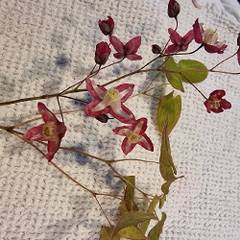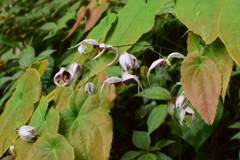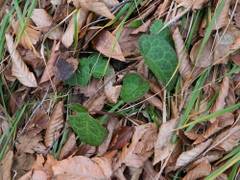
Image 1 of 5
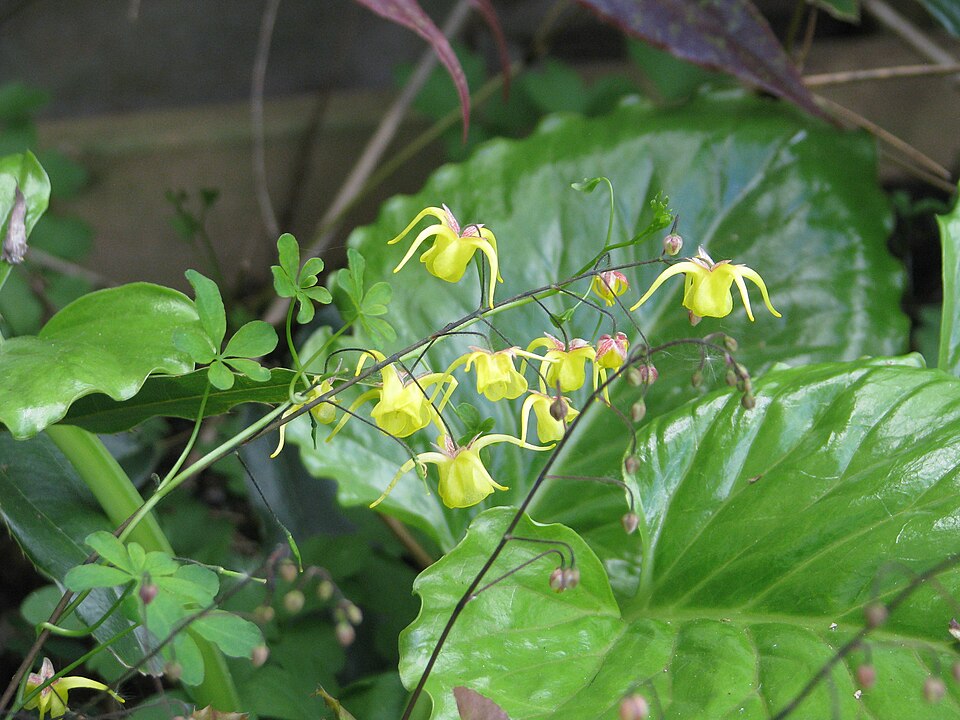
© peganum from Small Dole, England, some rights reserved (CC-BY-SA) · Wikimedia Commons
1 / 5
Epimedium, Genus, davidii, Species,
- Genus & species
David's barrenwort
Western China (Sichuan; moist shaded forests and woodland margins at 3,000-8,000 feet)
Overview
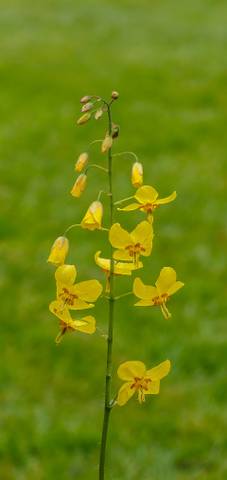
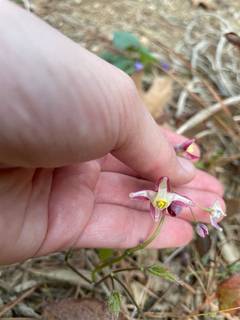
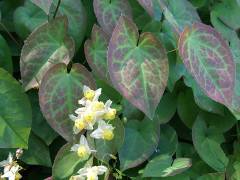
Epimedium davidii is a spreading rhizomatous evergreen perennial in the barberry family (Berberidaceae) reaching 10–14 inches (25–35 cm) tall with a spread of 18–24 inches (45–60 cm). This Chinese species stands among the small group of yellow-flowered epimediums in common cultivation and among the more vigorous groundcover members of the genus. Flowers are small pendant bright yellow with short curved spurs, 0.5–0.75 inch (1–2 cm) across, carried on wiry stems above the foliage in April–May. Compound leaves carry 3 leaflets, each 2–3 inches (5–8 cm) long, ovate to heart-shaped, with spiny margins. New foliage emerges bronze-tinted and matures to medium green through the growing season. Evergreen in mild climates (zone 6+). Growth rate is moderate to fast — the plant spreads steadily by rhizomes at 3–6 inches per year, which makes it a more reliable groundcover choice than the clumping epimedium species. Named for Père Armand David, the French missionary-naturalist who collected extensively in China in the 19th century. Hardy to zone 5.
Native Range
Epimedium davidii is native to western China (Sichuan), where it occurs in moist shaded forests and woodland margins at 3,000–8,000 feet (900–2,400 m).Suggested Uses
Grown as a groundcover under deciduous trees and shrubs at 15–18 inch (38–45 cm) spacing. The spreading habit fills in more quickly than clumping species like E. acuminatum, which makes this species a working groundcover rather than a specimen perennial. Yellow flowers brighten deep-shade garden positions where most other shade flowers read dark. Slopes, woodland paths, and weed-suppressing groundcover applications suit the species vigor. Pairing with blue-flowered shade companions such as Brunnera macrophylla or Mertensia virginica produces color-contrast compositions on matching light and soil conditions. Full-sun positions, dry soils at establishment, and very small beds where spreading is unwanted are not suitable.How to Identify
Appearance
Size & Dimensions
Height10" - 1'2"
Width/Spread1'6" - 2'
Bloom Information
Small pendant bright yellow flowers with short curved spurs 0.5–0.75 inch (1–2 cm) across open on wiry stems in April–May. Bloom duration is 3–4 weeks. The yellow flower color reads clearly against the deep shade under deciduous canopies where this species typically grows.
Detailed Descriptions
Flower Description
Bright yellow; small pendant with short curved spurs 0.5-0.75 inchFoliage Description
Medium green mature; bronze-tinted new growth; ovate to heart-shaped leaflets 2-3 inches long with spiny marginsGrowing Conditions
Sun Requirements
Requires 2-4 hours of direct sunlight daily
• Full Sun: 6+ hours of direct sunlight
• Partial Shade: 3-6 hours of direct sunlight
• Full Shade: Less than 3 hours of direct sunlight
Care & Maintenance
Care Guide
Grows in partial to full shade in moist well-drained humus-rich soil at pH 5.5–7.0, tolerating loam. Hardy to zone 5. Drought-tolerant once established, which makes this species a reliable groundcover for dry-shade positions under established trees where surface roots compete for moisture. Old foliage is cut back in late February before new growth emerges to clear the spring bloom display. Rhizome spread requires periodic edging to contain the colony within planned garden areas; plants installed near lawn edges or border fronts need annual spring edging to hold the line. No serious pest or disease problems. Deer-resistant.Pruning
All old foliage is cut back to the ground in late February before new growth and flowers emerge. Rhizomes are edged in fall as needed to contain spread within the intended planting area.Pruning Schedule
Prune: February
winter
Container Growing
Suitable for container growing
Minimum container size: 2 gallons