Epilobium, Genus, parviflorum, Species,
- Genus & species
hoary willowherb
Europe, temperate Asia, and North Africa
Overview
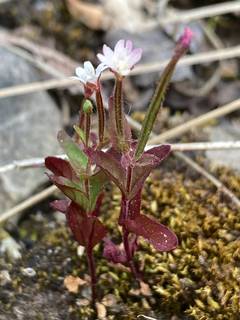
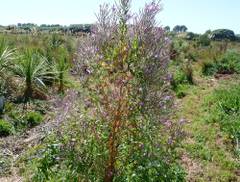
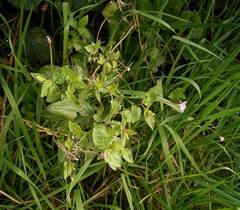
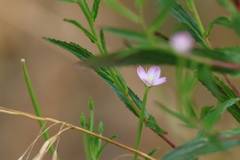
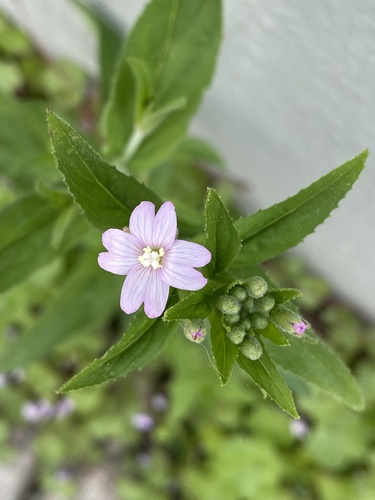
Epilobium parviflorum is an erect herbaceous perennial 1-3 feet (30-90 cm) tall, with rounded stems clothed in soft, spreading hairs that give the plant a grey-green, hoary look. Lower leaves are opposite, lance-shaped, 2-5 inches (5-12 cm) long, stalkless, finely toothed and softly hairy on both surfaces, while upper leaves become alternate. Pale rose-pink flowers 0.25-0.4 inch (6-9 mm) across open from June to August, each with four notched petals and a four-lobed, cross-shaped stigma that marks the species. Flowers sit at the tip of a long, slender ovary that ripens into a capsule 1.5-3 inches (4-8 cm) long. The capsule splits lengthwise to release many small seeds, each carried on a tuft of white hairs that disperses on the wind. The plant overwinters as a leafy basal rosette and regrows in spring. It spreads by both wind-blown seed and short stolons and can colonise wet, disturbed ground quickly.
Native Range
Native across Europe, temperate and northern Asia, and North Africa, and naturalised in North America, southern Africa, Australia, and New Zealand. It grows on marshy ground, riverbanks, ditches, fen margins, pond edges, and damp waste ground from lowland to lower montane elevations.Suggested Uses
Grown in bog gardens, pond and stream margins, rain gardens, and damp wildflower areas, spaced 12-18 inches (30-45 cm) apart. Its free seeding suits naturalised, contained wet areas rather than formal borders. Flowers draw bees and hoverflies, and the seeds feed small birds.How to Identify
Appearance
Size & Dimensions
Height1' - 3'
Width/Spread1' - 1'6"
Bloom Information
Flowers from June to August, sometimes into September in mild seasons. Individual flowers last only a day or two, but a plant blooms over 6-8 weeks as buds open in succession up the stem. Seed capsules and fresh flowers are often present together late in the season.
Detailed Descriptions
Foliage Description
grey-greenGrowing Conditions
Sun Requirements
Requires 4-8 hours of direct sunlight daily
• Full Sun: 6+ hours of direct sunlight
• Partial Shade: 3-6 hours of direct sunlight
• Full Shade: Less than 3 hours of direct sunlight
Care & Maintenance
Care Guide
Grows in full sun to part shade on consistently moist or wet soils, including clay and silt at pond and ditch margins. It needs no feeding and establishes easily from seed or stolon fragments in damp ground. Wind-dispersed seed spreads it widely, and self-sown seedlings appear across open moist soil, so removing seed capsules before they split limits spread. Powdery mildew and rust can mark the foliage in crowded, humid stands but rarely harm the plant. Foliage dies back to a basal rosette in autumn, and in drier soils growth is shorter and bloom is reduced.Pruning
Cut flowering stems back before the capsules ripen to curb wind-blown self-seeding. Whole plants are cut to the basal rosette in late autumn once foliage dies down. Removing spent stems through summer keeps stands tidy and reduces seed spread.Pruning Schedule
Prune: July–August & October
summerfall