Enkianthus, Genus, perulatus, Species,
- Genus & species
white enkianthus
Japan (Honshu; acidic mountain forests)
Overview
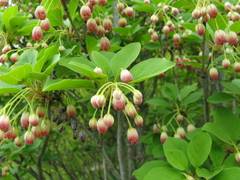
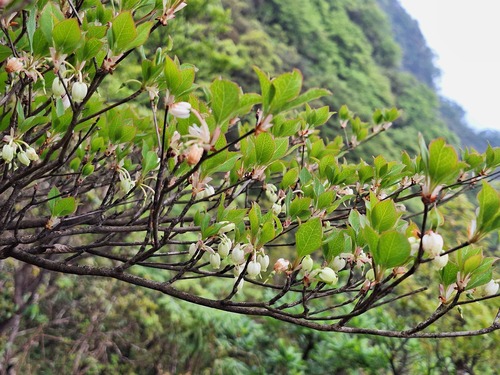
Enkianthus perulatus is a compact, upright to rounded, multi-stemmed, deciduous shrub reaching 4–6 feet (1.2–1.8 m) tall with a spread of 4–6 feet (1.2–1.8 m). This Japanese species is the smallest and most compact of the commonly grown enkianthus—approximately half the size of E. campanulatus (8–12 feet / 2.4–3.6 m). The flowers are pendant, urn-shaped, pure white bells 0.25–0.4 inch (6–10 mm) long, borne in drooping clusters of 3–10 at branch tips in April–May—blooming about 2 weeks earlier than E. campanulatus. The leaves are elliptic, 1–2 inches (2.5–5 cm) long, finely serrated, medium green, whorled at branch tips, turning brilliant scarlet to crimson-red in fall—the reddest fall color of any enkianthus. The layered, horizontal branching creates a tiered silhouette even at the smaller size. Growth rate is very slow. Requires acidic soil. Hardy to zone 5.
Native Range
Enkianthus perulatus is native to Japan (Honshu), in acidic mountain forests and woodland edges.Suggested Uses
Planted as a specimen or in woodland borders at 4–5 foot (1.2–1.5 m) spacing. The compact size suits smaller gardens, containers of at least 7 gallons (26 L), and positions where E. campanulatus would be too large. The pure white spring bells and brilliant scarlet fall color provide two-season display. Functions in acid-soil gardens with smaller rhododendrons and azaleas. Not suitable for alkaline soils, dry sites, or full sun in hot climates.How to Identify
Appearance
Size & Dimensions
Height4' - 6'
Width/Spread4' - 6'
Bloom Information
Pendant, urn-shaped, pure white bells 0.25–0.4 inch (6–10 mm) long in drooping clusters of 3–10 at branch tips in April–May. Blooms approximately 2 weeks earlier than E. campanulatus. Bloom duration is 2–3 weeks.
Detailed Descriptions
Flower Description
Pure white, pendant urn-shaped bellsFoliage Description
Medium green, elliptic, finely serrated, whorled; brilliant scarlet to crimson-red fallGrowing Conditions
Sun Requirements
Requires 3-6 hours of direct sunlight daily
• Full Sun: 6+ hours of direct sunlight
• Partial Shade: 3-6 hours of direct sunlight
• Full Shade: Less than 3 hours of direct sunlight
Care & Maintenance
Care Guide
Plant in partial shade in moist, well-drained, acidic (pH 4.5–6.0), humus-rich soil. Consistent moisture. Culturally identical to E. campanulatus. Hardy to zone 5. Very slow-growing—the compact size develops naturally without pruning. No serious pest or disease problems.Pruning
Minimal pruning needed—the naturally compact, layered habit requires little intervention. Remove dead or crossing branches in late winter. Do not shear.Pruning Schedule
Prune: February
winter
Container Growing
Suitable for container growing
Minimum container size: 7 gallons