Echium, Genus, spp., Multiple species,
- Genus
- Multiple species
Viper's-buglosses
Europe, the Mediterranean, North Africa, and the Macaronesian islands (Canary Islands, Madeira, Azores)
Overview
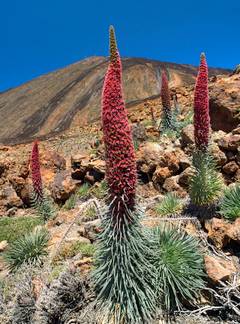
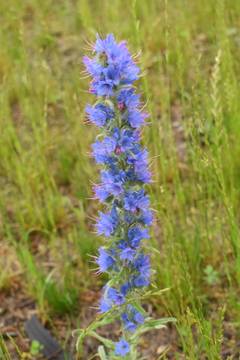
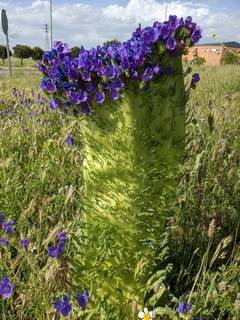
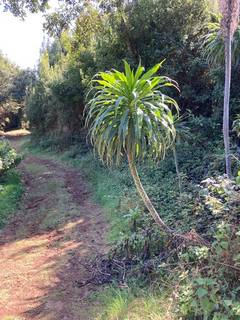
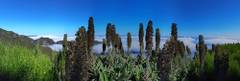
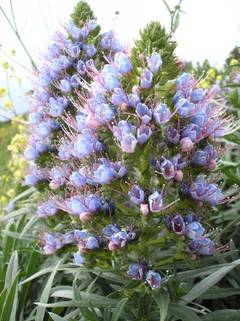
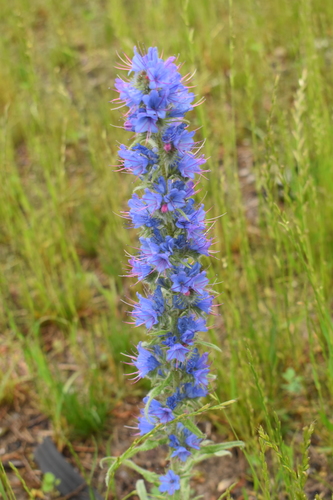
Echium is a genus of about 70 species of bristly annuals, biennials, and shrubs in the borage family (Boraginaceae), native to Europe, the Mediterranean, North Africa, and the Atlantic islands of Macaronesia. The genus spans a wide range of size, from the 1 to 3 ft (30 to 90 cm) biennial viper's bugloss E. vulgare of European grassland to the woody, tree-like Canary Island species such as E. wildpretii, whose flowering spike can rise 10 ft (3 m). Stems and leaves are covered in stiff, often stinging hairs, and the narrow leaves form rosettes and clothe the flowering stems. The funnel-shaped flowers are crowded into dense, branched or tower-like spikes and open over many weeks in shades of blue, purple, pink, red, and white, with stamens that often stick out beyond the petals. The flowers carry abundant nectar and are heavily visited by bees. Many species are biennial, forming a leaf rosette the first year and flowering and dying the second, while the Macaronesian shrubs live longer. All parts contain pyrrolizidine alkaloids that can harm the liver if eaten, and the bristly hairs irritate skin.
Native Range
Echium is native to Europe, the Mediterranean basin, North Africa, and western Asia, with a separate group of woody species found only on the Canary Islands, Madeira, and the Azores. E. vulgare has naturalized widely in North America and elsewhere, sometimes becoming a weed of rangeland.Suggested Uses
Echium grows in dry gardens, gravel gardens, coastal plantings, and sunny borders, where the tall species form vertical accents in Mediterranean-style schemes. It is planted in pollinator and wildlife gardens for its heavy nectar, spaced 2 to 4 ft (60 to 120 cm) apart depending on species. The drought- and salt-tolerant habit suits exposed seaside sites where many plants struggle.How to Identify
Appearance
Size & Dimensions
Height1' - 10'
Width/Spread1' - 5'
Bloom Information
Flowering runs from late spring through summer, roughly May to August, with the many flowers on each spike opening from the base upward over several weeks. Blooms shift through pink, blue, and purple as they age, and the protruding stamens give the spikes a fuzzy look. Bees and butterflies work the flowers steadily through the day.
Detailed Descriptions
Flower Description
blue, purple, pink, red, or white, funnel-shapedFoliage Description
green to gray-green, bristlyGrowing Conditions
Sun Requirements
Requires 6-10 hours of direct sunlight daily
• Full Sun: 6+ hours of direct sunlight
• Partial Shade: 3-6 hours of direct sunlight
• Full Shade: Less than 3 hours of direct sunlight
Water & Climate
Water Needs
Drought Tolerance
Drought tolerant when established
Care & Maintenance
Care Guide
Echium grows in full sun and free-draining, low-fertility soil at a pH of about 6.0 to 8.0, including sandy, gravelly, and chalky ground. The genus tolerates drought, heat, salt spray, and poor soil, and rich or wet conditions shorten its life and reduce flowering. E. vulgare is hardy to about USDA zone 3 as a biennial, while the Macaronesian shrubs are frost-tender and grow outdoors only in zones 9 to 11. Biennial species form a rosette the first year and flower the second, then die after setting heavy crops of self-sown seed. The bristly hairs irritate skin on contact, and all parts hold pyrrolizidine alkaloids that are toxic if eaten over time. Few pests affect the plants, though crown rot follows wet winter soil.Pruning
Echium needs little pruning. Spent flower spikes can be cut after bloom to limit the heavy self-seeding, or left to stand so seed scatters for next year's plants. On the shrubby Macaronesian species, light trimming after flowering keeps the plant compact, and the bristly stems irritate skin during the work.Pruning Schedule
Prune: August–September
summerfall
Container Growing
Suitable for container growing
Minimum container size: 5 gallons