Echium, Genus, vulgare, Species,
- Genus & species
blueweed
Overview
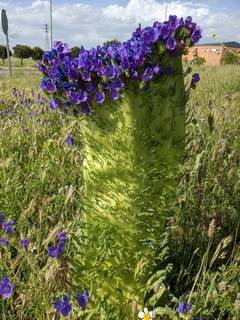
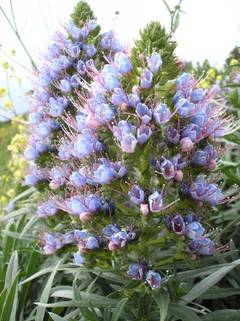
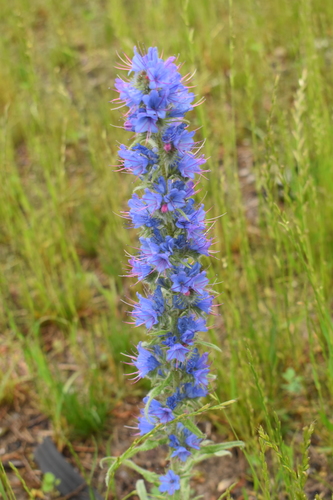
Echium vulgare is a bristly biennial in the borage family (Boraginaceae) reaching 12–36 inches (30–90 cm) tall with an 8–18 inch (20–45 cm) spread. First-year plants form a basal rosette of lance-shaped leaves 4–8 inches (10–20 cm) long, covered in stiff, hispid hairs arising from raised pustulate bases. Second-year stems are erect, stiff, branching, and densely covered in the same coarse hairs. Stem leaves are smaller upward, sessile, lance-shaped. Flowers are funnel-shaped, 0.6–0.8 inch (15–20 mm) long, bright blue to violet with protruding pink to red stamens; buds open pink and change to blue as the corolla matures. Flowers are borne on short, coiled, scorpioid cymes along one side of the upper stem branches, forming a dense, spike-like inflorescence. Fruit splits into four rough nutlets. A single plant produces 2,000–4,000 seeds that remain viable in soil for 3–5 years. The stiff hairs cause skin irritation on contact. Listed as a noxious weed in Washington State and several other western states. Plants contain pyrrolizidine alkaloids toxic to livestock when consumed in hay or green forage.
Native Range
Native to Europe and western Asia, occurring in dry grasslands, roadsides, gravel pits, and waste ground, particularly on calcareous and well-drained soils, from sea level to approximately 5,000 feet (1,500 m). Naturalized in North America, most abundant in the Pacific Northwest, northern Great Plains, and northeastern United States.Suggested Uses
Used in noxious weed identification training, particularly for teaching Boraginaceae characteristics (scorpioid cymes, pustulate hairs, four nutlets). Studied in pollination ecology due to the visible pink-to-blue color change signaling pollination status. Valued by beekeepers in some regions as a nectar source. In its native European range, the species is a component of calcareous grassland and ruderal communities.How to Identify
Appearance
Size & Dimensions
Height1' - 3'
Width/Spread8" - 1'6"
Bloom Information
Flowers from June through August. Individual flowers last 2–3 days. The scorpioid cymes uncoil progressively, producing new flowers over 4–6 weeks. In the Pacific Northwest, peak bloom occurs in July. The pink-to-blue color change correlates with pollination status; newly opened pink flowers transition to blue after pollination. Pollinated primarily by bumblebees and honeybees.
Detailed Descriptions
Flower Description
Blue to violet, buds pinkFoliage Description
Dark green, lance-shaped, covered in stiff hispid hairs arising from raised bases (pustulate); single prominent midveinGrowing Conditions
Sun Requirements
Requires 6-12 hours of direct sunlight daily
• Full Sun: 6+ hours of direct sunlight
• Partial Shade: 3-6 hours of direct sunlight
• Full Shade: Less than 3 hours of direct sunlight