Drosera, Genus, hookeri, Species,
- Genus & species
grassland sundew
Southeastern Australia and New Zealand
Overview
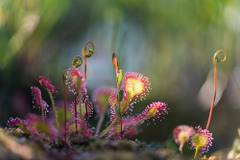
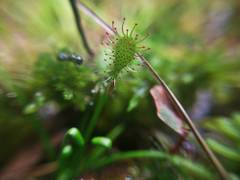
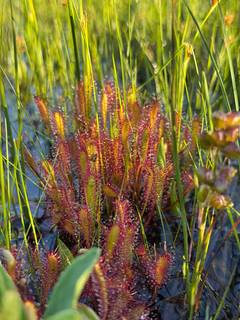
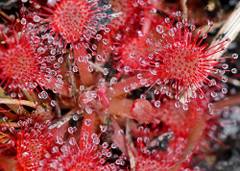
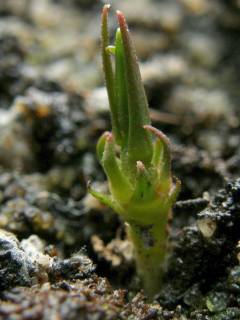
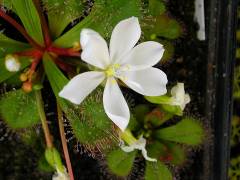
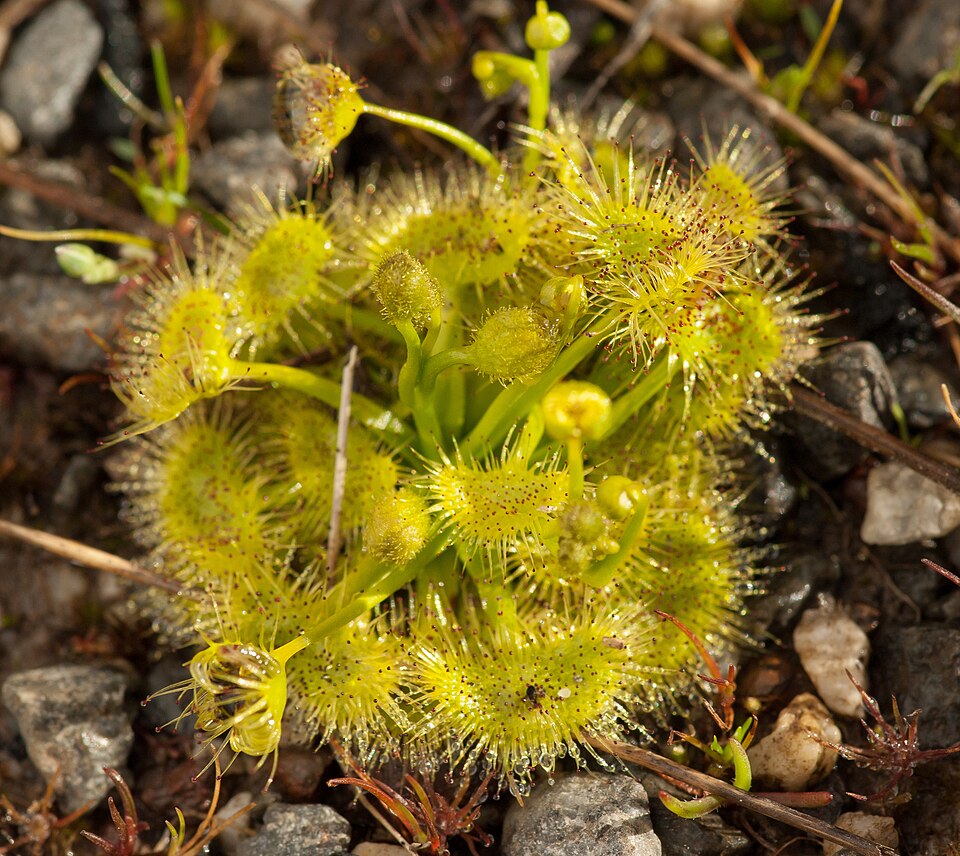
Drosera hookeri is a tuberous carnivorous perennial producing an erect to scrambling stem 4-12 inches (10-30 cm) tall from an underground tuber. The stem carries crescent- to shield-shaped leaves 0.1-0.2 inch (3-5 mm) wide, each covered with stalked red glands tipped with sticky mucilage that trap and digest small insects. Foliage ranges from green to red, with deeper red colouring in high light. White flowers about 0.4-0.6 inch (10-15 mm) across open singly along a slender raceme in late winter and spring. After flowering and seed set, the plant dies back to its dormant tuber and stays underground through the dry summer and autumn, re-emerging with autumn or winter rains. The shallow tuber sits 1-3 inches (2.5-8 cm) below the surface. Plants are small and easily overtopped by surrounding grasses, which can shade them out on fertile sites. Each plant lives several years, multiplying slowly by tuber division.
Native Range
Native to southeastern Australia, including Victoria, New South Wales, Tasmania, and South Australia, and also to New Zealand. Grows in seasonally moist grassland, woodland, and heath on sandy or peaty soils that dry out over summer.Suggested Uses
Grown in carnivorous-plant collections and bog gardens in shallow pots of at least 4 inches (10 cm) depth. Suited to a sunny windowsill or unheated greenhouse where summer dormancy can be accommodated. The seasonal dieback leaves bare soil for several months, unlike evergreen rosette sundews.How to Identify
Appearance
Size & Dimensions
Height4" - 1'
Width/Spread1" - 2"
Bloom Information
Flowers in late winter and spring, mainly August to November in its native range. Individual flowers open for a single day, and the flowering stem produces blooms in sequence over 3-5 weeks. Flowering coincides with the moist growing season ahead of summer dormancy.
Detailed Descriptions
Foliage Description
green to redGrowing Conditions
Sun Requirements
Requires 6-10 hours of direct sunlight daily
• Full Sun: 6+ hours of direct sunlight
• Partial Shade: 3-6 hours of direct sunlight
• Full Shade: Less than 3 hours of direct sunlight
Care & Maintenance
Care Guide
Grows in permanently moist, low-nutrient sandy or peaty soil during the active season, with the pot standing in 0.5-1 inch (1-2.5 cm) of rainwater or distilled water. Tap water and fertiliser damage the roots, as the plant draws its nutrients from trapped insects. Bright light produces compact growth and red colouring, while low light causes pale, stretched stems. As foliage yellows in late spring, watering is reduced and the dormant tuber is held barely moist and cool through summer. Aphids sometimes attack the flower stems. Growth resumes when watering increases with cooler autumn temperatures.Pruning
No pruning is required. Dead flower stems and spent leaves can be removed once they brown to limit fungal growth on the wet soil surface. Faded foliage is left in place until fully dry so the tuber can reabsorb stored resources.Pruning Schedule
Prune: November
spring
Container Growing
Suitable for container growing
Minimum container size: 1 gallons