Drosera, Genus, aberrans, Species,
- Genus & species
scented sundew
South-eastern Australia (Victoria, South Australia)
Overview
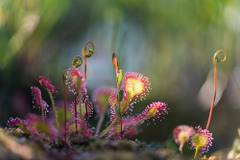
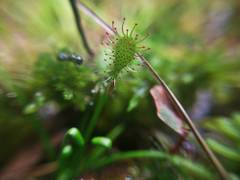
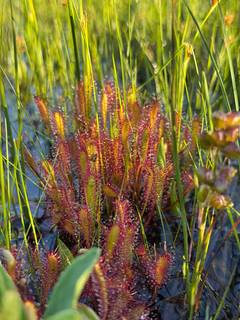
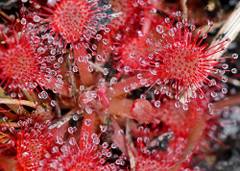
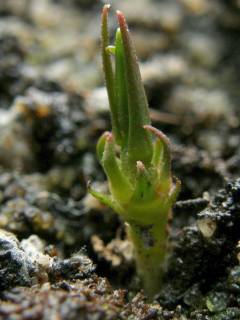
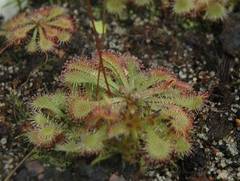
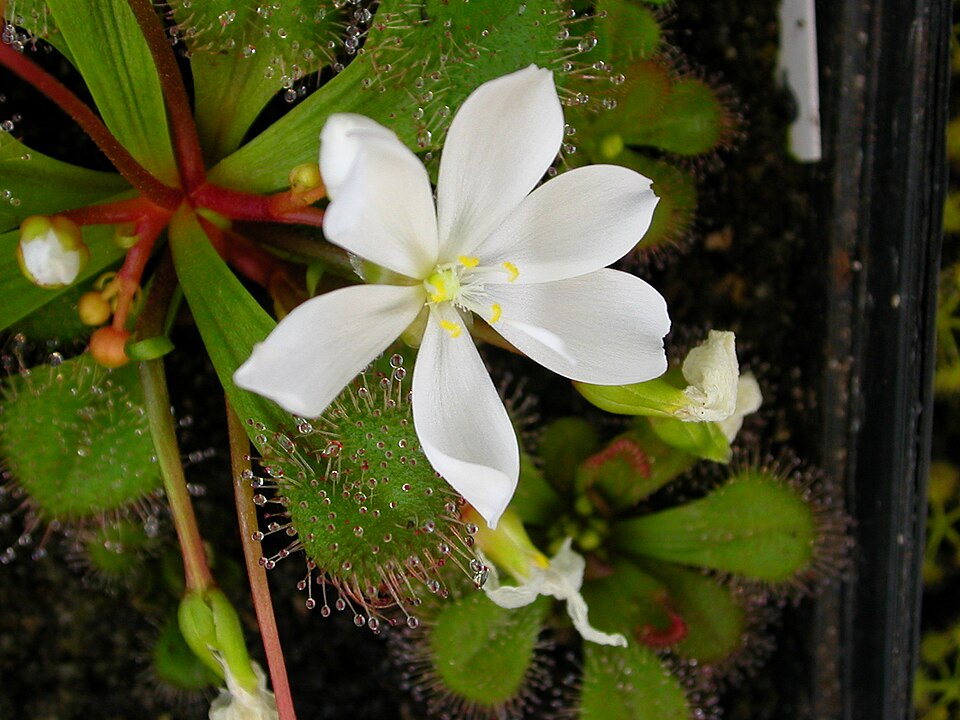
Drosera aberrans is a carnivorous tuberous perennial in the sundew family (Droseraceae), forming a flat ground-level rosette 1-2.5 inches (2.5-6 cm) across. The paddle-shaped leaves are densely covered with red, stalked glands, or tentacles, each tipped with a drop of sticky fluid that traps small insects. The leaf surface slowly folds around captured prey, and the plant absorbs nutrients from the digested insects, an adaptation to low-nutrient soils. In late winter and spring it produces one or a few white flowers about 0.6-0.8 inch (15-20 mm) across on short stalks, the flowers faintly scented. It grows in seasonally moist heath, woodland, and grassland in Victoria and South Australia, on sandy and clay-loam soils. The plant grows through the cool, wet months and dies back to an underground tuber to survive the dry summer, behaving as a geophyte. It tolerates frost while dormant. The rosette is small and easily overlooked among other low plants. It depends on seasonal moisture and bare, open ground, and is crowded out by vigorous groundcovers. Cultivation requires a winter-wet, summer-dry cycle that is difficult to maintain in general garden beds.
Native Range
Drosera aberrans is native to south-eastern Australia, in Victoria and South Australia. It grows in seasonally moist heath, open woodland, and grassland on sandy and clay-loam soils.Suggested Uses
Grown by specialist growers in pots, terrariums, and bog gardens that provide a winter-wet, summer-dry cycle. It suits collections of carnivorous and tuberous native plants. The trapping leaves draw interest as an example of insect-catching adaptation.How to Identify
Appearance
Size & Dimensions
Height1" - 2"
Width/Spread1" - 3"
Bloom Information
White, faintly scented flowers open in late winter and spring, roughly July to October in the native range. Each plant carries one or a few flowers on short stalks. The rosette dies back to its tuber once flowering ends and the soil dries.
Detailed Descriptions
Foliage Description
green to redGrowing Conditions
Sun Requirements
Requires 5-9 hours of direct sunlight daily
• Full Sun: 6+ hours of direct sunlight
• Partial Shade: 3-6 hours of direct sunlight
• Full Shade: Less than 3 hours of direct sunlight
Care & Maintenance
Care Guide
Grow in an open, sunny position in moist, low-nutrient sandy or clay-loam soil that stays wet through winter and dries in summer. No fertiliser is used, as the plant draws nutrients from trapped insects and is harmed by feeding. The rosette grows through the cool months and dies back to its tuber for the dry summer, when the soil is kept dry. Open ground around the rosette matters, as vigorous groundcovers crowd it out. Frost is tolerated during dormancy. The winter-wet, summer-dry cycle is difficult to reproduce in a mixed bed, so the plant is usually grown in dedicated pots or bog gardens.Pruning
No pruning is needed. Spent flower stalks can be removed once seed has set. The rosette withdraws to its tuber on its own as the soil dries, then reshoots in autumn.Container Growing
Suitable for container growing