Drosera, Genus, anglica, Species,
- Genus & species
great sundew
Boreal and cool temperate Northern Hemisphere
Overview
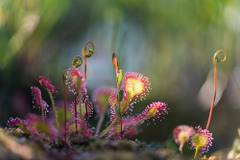
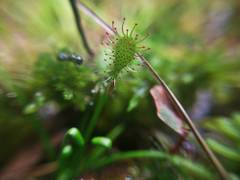
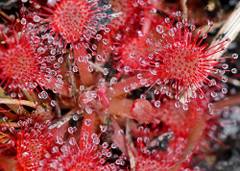
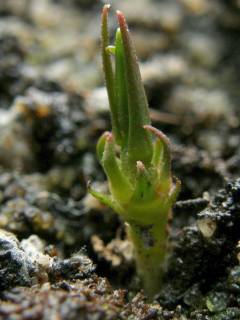
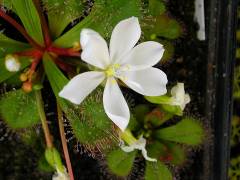
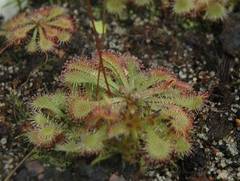
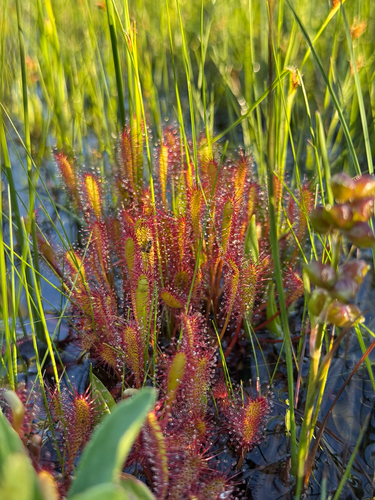
Drosera anglica is an upright carnivorous perennial in the Droseraceae, forming a rosette 2–6 inches (5–15 cm) tall in wet, acidic ground. The narrow, oblong to spoon-shaped leaf blades, 0.6–1.4 inches (15–35 mm) long, are held more or less erect on long stalks and are covered with red, gland-tipped hairs that secrete sticky droplets to catch small insects. Captured prey is digested to supplement the nitrogen-poor peat. A leafless flowering stem rises from the centre of the rosette, 2.5–7 inches (6–18 cm) tall, bearing several small white flowers about 0.2 inch (5 mm) across that open in summer. In winter the plant withdraws into a tight resting bud called a hibernaculum. It grows in sphagnum bogs, calcareous fens, and wet, peaty seeps across the cool temperate and boreal Northern Hemisphere. It needs permanently wet, low-nutrient, sunlit ground and dies in dry, shaded, or fertilised conditions. Plants are slow-growing and easily smothered by faster bog vegetation.
Native Range
Native to the cool temperate and boreal Northern Hemisphere, including northern Europe, Asia, and North America. It grows in sphagnum bogs, wet fens, and peaty seeps.Suggested Uses
Grown in bog gardens, peat trays, and carnivorous-plant collections on wet, acidic media. It also suits cool terrariums and wetland conservation plantings.How to Identify
Appearance
Size & Dimensions
Height2" - 6"
Width/Spread2" - 4"
Bloom Information
Small white flowers open in summer, from July to August, several on an erect leafless stem that rises from the rosette centre. Flowers open in bright weather and often self-pollinate, setting small seed before the plant forms its winter bud.
Detailed Descriptions
Foliage Description
green and redGrowing Conditions
Sun Requirements
Requires 6-10 hours of direct sunlight daily
• Full Sun: 6+ hours of direct sunlight
• Partial Shade: 3-6 hours of direct sunlight
• Full Shade: Less than 3 hours of direct sunlight
Care & Maintenance
Care Guide
Grows in full sun on permanently wet, low-nutrient peat or live sphagnum, with no added fertiliser. Water needs are high, and pots are stood in rainwater, since minerals in tap water are harmful. It is propagated from seed, leaf cuttings, or division of rosettes. Prey supplies its nutrients, so the soil is never fed. It forms a hibernaculum and withstands hard winter cold while dormant. It is hardy to roughly USDA zone 3.Pruning
No pruning is needed for this small carnivorous plant. Dead leaves can be removed as they blacken to limit mould. The winter bud is left undisturbed until growth resumes in spring.Container Growing
Suitable for container growing
Minimum container size: 1 gallons