Datura, Genus, wrightii, Species,
- Genus & species
sacred datura
Overview
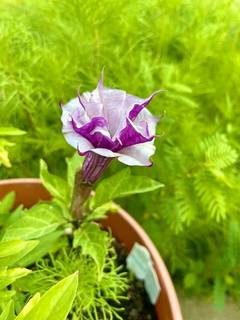
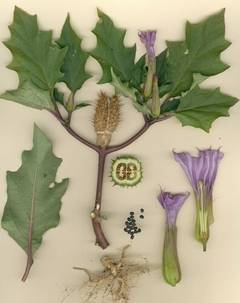
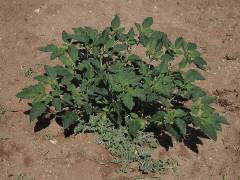
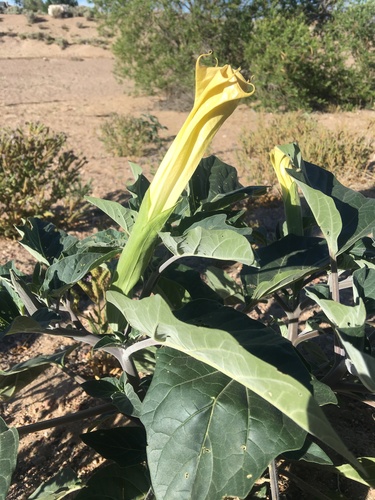
Datura wrightii is a herbaceous perennial in the nightshade family, forming a sprawling mound 2-4 feet (60-120 cm) tall and 3-6 feet (90-180 cm) wide. In regions with hard frost it dies back to a woody rootstock and regrows each spring, while in frost-free areas it persists as a short-lived perennial. The gray-green leaves are ovate to triangular, 4-8 inches (10-20 cm) long, with a velvety surface and a rank odor when crushed. From late spring through fall the plant produces white trumpet-shaped flowers 6-8 inches (15-20 cm) long, sometimes flushed pale violet at the margins; the blooms open at dusk and close by mid-morning. Pollination is carried out chiefly by nocturnal hawkmoths drawn to the fragrance and pale color. Spherical seed capsules 1-1.5 inches (2.5-4 cm) across are covered in sharp spines and split to release flattened tan seeds. All parts contain tropane alkaloids including scopolamine, atropine, and hyoscyamine, and ingestion can cause severe poisoning in people and livestock. The plant withstands heat, drought, and poor soils but is killed by prolonged saturation and waterlogged ground. It self-seeds readily and can spread beyond its planted position in warm climates.
Native Range
Datura wrightii is native to the deserts and dry grasslands of the southwestern United States and northern Mexico, ranging from California east to Texas and south into the Mexican Plateau.Suggested Uses
Grown in dry gardens, desert landscapes, and wildlife plantings where its night-opening flowers draw hawkmoths. It is set out as a single specimen or in loose groups, spaced 4-5 feet (1.2-1.5 m) apart to allow for its wide spread. Because all parts are toxic, it is positioned away from vegetable beds and play areas.How to Identify
Appearance
Size & Dimensions
Height2' - 4'
Width/Spread3' - 6'
Colors
Bloom Information
Flowers appear from late spring through the first autumn frost, with peak production in midsummer. Individual blooms last a single night, opening near sunset and wilting by late morning. Warm temperatures and occasional irrigation lengthen the flowering window, while drought-stressed plants bloom sparsely.
Detailed Descriptions
Flower Description
white, sometimes flushed pale violetFoliage Description
gray-greenGrowing Conditions
Sun Requirements
Requires 6-12 hours of direct sunlight daily
• Full Sun: 6+ hours of direct sunlight
• Partial Shade: 3-6 hours of direct sunlight
• Full Shade: Less than 3 hours of direct sunlight