Datura, Genus, metel, Species,
- Genus & species
Devil's trumpet plant
South Asia, Southeast Asia, North Africa (species)
Overview
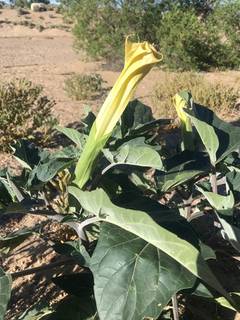
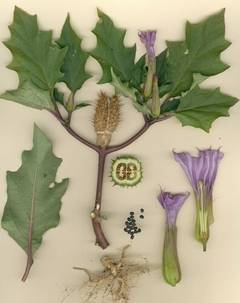
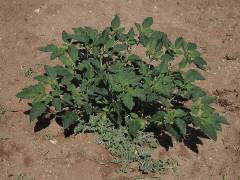
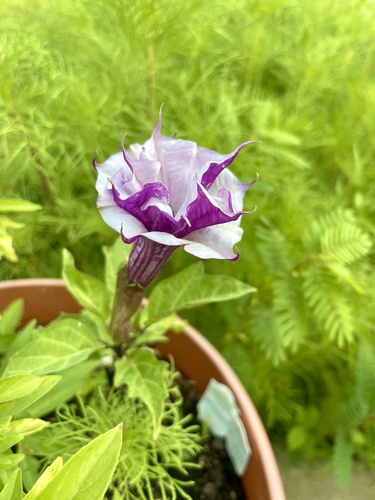
Datura metel is a tender herbaceous to woody perennial growing 36-60 inches (90-150 cm) tall and 36-48 inches (90-120 cm) wide as a short-lived perennial in zones 9-11 or as a self-seeding annual in colder zones. Trumpet-shaped flowers are 6-8 inches (15-20 cm) long and 4-5 inches (10-13 cm) across at the mouth, opening from twisted spear-shaped buds. Flower colors include white, lavender, purple, and yellow, often with picotee margins; double-flowered selections have 2-3 nested trumpet whorls. Flowers open in late afternoon and last one night, releasing strong sweet fragrance after dusk. Foliage is medium green, ovate, 4-8 inches (10-20 cm) long, with irregular lobed margins; foliage releases a sharp musty odor when crushed. Seed pods are spiny capsules containing dozens of black seeds that remain viable in soil for years. All parts of the plant — particularly seeds — contain tropane alkaloids (atropine, scopolamine, hyoscyamine) at fatal doses. Ingestion causes hallucinations, racing heart, and can be fatal in humans, dogs, cats, livestock, and birds. Skin contact with sap causes pupil dilation in sensitive individuals. Native to the Old World tropics. Frost-tender; killed by frost in temperate zones. Self-seeds prolifically. Growth rate is fast — full size in one season.
Native Range
D. metel is native to a wide range across the Old World tropics, with documented native ranges including India, southern China, Southeast Asia, and northern Africa. The species has been cultivated and naturalized worldwide and is invasive in disturbed warm-climate sites in the Americas, Australia, and parts of Africa.Suggested Uses
Grown as a fragrance and architectural specimen in summer borders and tropical-effect plantings in zones 5-11 in full sun. Often used near patios for evening fragrance. All parts highly toxic to pets, humans, livestock, and birds — seeds and self-seeded volunteers persist in soil for years.How to Identify
Appearance
Size & Dimensions
Height3' - 5'
Width/Spread3' - 4'
Bloom Information
Continuous bloom from late spring through fall (May-October) in zones 9-11. In annual culture, bloom begins 8-10 weeks after seedling transplant and continues until frost. Each individual flower opens in late afternoon, peaks at dusk releasing strong fragrance, and wilts the following morning.
Detailed Descriptions
Flower Description
White, lavender, purple, or yellow trumpet flowersFoliage Description
Medium green, ovate, lobedGrowing Conditions
Sun Requirements
Requires 6-10 hours of direct sunlight daily
• Full Sun: 6+ hours of direct sunlight
• Partial Shade: 3-6 hours of direct sunlight
• Full Shade: Less than 3 hours of direct sunlight
Water & Climate
Water Needs
Drought Tolerance
Drought tolerant when established
Care & Maintenance
Care Guide
Full sun (6+ hours) produces the densest growth and heaviest bloom; bloom reduces by half in part shade. The species tolerates a wide soil pH range (6.0-8.0) and most well-drained soils, including clay and disturbed soils. Drought-tolerant once established but flowers more freely with weekly summer watering. Self-seeding produces dozens of volunteer seedlings annually if seed pods are not removed before splitting. Spider mites infest foliage in hot, dry conditions; tomato hornworms feed on foliage. Cold damage occurs below 32°F (0°C); plants killed by hard frost.Pruning
Spent flowers drop cleanly without deadheading. Spiny seed pods can be removed before splitting to prevent self-seeding. Stems and leaves carry tropane alkaloids; sap can cause skin irritation on contact. In zones 9-11, woody stems can be cut back to 12-18 inches (30-45 cm) in late winter; new growth emerges from the base.Container Growing
Suitable for container growing
Minimum container size: 5 gallons
Toxicity Warning
Toxic to pets and humansPlanting Guide
Planting Methods & Timing
Planting Method
transplant
Indoor Start
8 weeks before last frost
Direct Sow Timing
After last frost when soil reaches 60°F (16°C)
Days to Maturity
70–90 days
Plant Spacing
36 inches