Dactylorhiza, Genus, praetermissa, Species,
- Genus & species
southern marsh-orchid
Overview
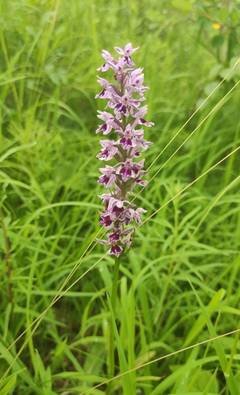
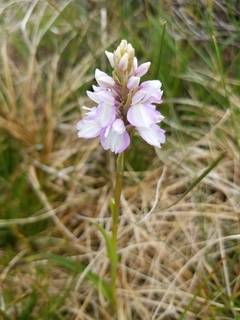
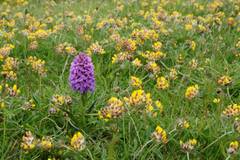
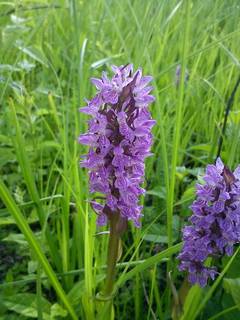
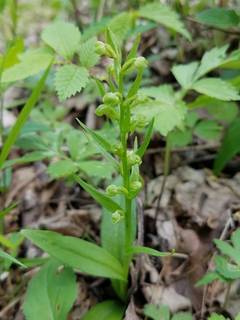
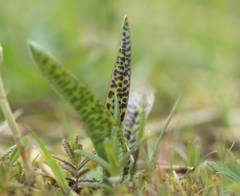
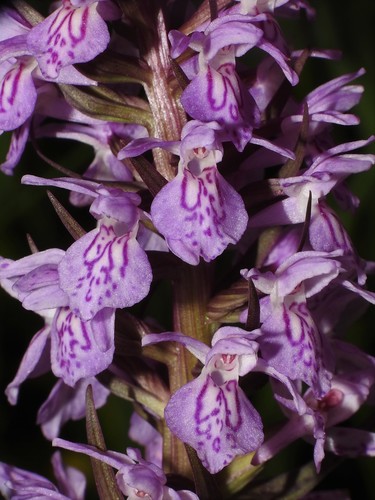
Dactylorhiza praetermissa is a hardy terrestrial orchid in the family Orchidaceae, growing 8-28 inches (20-70 cm) tall from a pair of palmately lobed underground tubers. Stout, hollow stems carry several broadly lanceolate green leaves that are usually unmarked, though some plants show faint spotting. The flower spike is a dense cylinder, 2-6 inches (5-15 cm) long, packed with pink to magenta-purple blooms; each flower has a broad, shallowly three-lobed lip patterned with darker dots and short looping lines. Plants grow in permanently wet, base-rich ground such as fens, marshes, wet meadows, and damp dune slacks. The tubers are renewed annually, with a new tuber forming beside the old as the season progresses. Establishment depends on symbiotic soil fungi, and plants are slow to settle and intolerant of soils that dry out in summer. Topgrowth dies back to the tuber in autumn, and the plant overwinters dormant below ground. It spreads by dust-like seed that germinates only where the appropriate fungal partner is present, so colonies build slowly.
Native Range
Native to western and central Europe, with a stronghold in lowland England and Wales and a range extending into the Low Countries, northern France, and Denmark. It occupies calcareous to neutral wetlands, including fens, marshes, wet grassland, and the damp hollows of coastal dunes.Suggested Uses
Grown in bog gardens, at pond and stream margins, and in permanently moist wildflower meadows on neutral to limy soils. Planted in damp, naturalistic plantings where summer moisture is reliable. Combined with other wetland species such as marsh marigold and ragged robin in conservation and wildlife gardens.How to Identify
Appearance
Size & Dimensions
Height8" - 2'4"
Width/Spread6" - 1'
Bloom Information
Flowering occurs from early June into July, with the spike opening from the base upward over two to three weeks. Plants in cooler or northern sites flower nearer the end of this window. Pollination is carried out chiefly by bumblebees, which visit the rewardless flowers and transfer pollinia between spikes.
Detailed Descriptions
Flower Description
pink to magenta-purpleFoliage Description
greenGrowing Conditions
Sun Requirements
Requires 4-8 hours of direct sunlight daily
• Full Sun: 6+ hours of direct sunlight
• Partial Shade: 3-6 hours of direct sunlight
• Full Shade: Less than 3 hours of direct sunlight