Dactylorhiza, Genus, fuchsii, Species,
- Genus & species
common spotted orchid
Overview
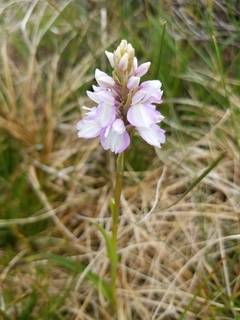
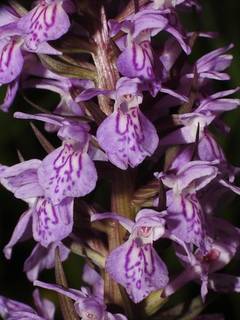
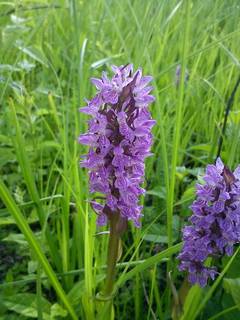
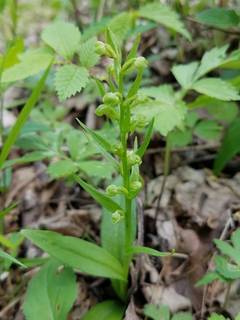
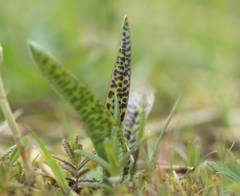
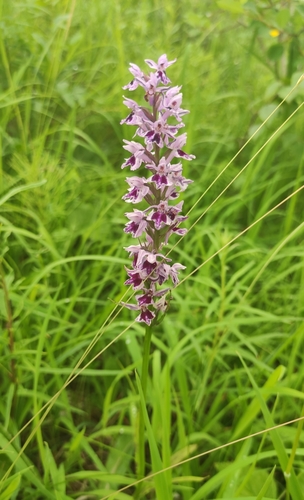
Dactylorhiza fuchsii is a terrestrial orchid in the family Orchidaceae, sending up a single flowering stem 6-24 inches (15-60 cm) tall from a pair of finger-like underground tubers. A basal rosette of four to eight lance-shaped leaves, usually marked with dark transverse spots, appears before the flower stem. The stem ends in a dense conical-to-cylindrical spike 2-5 inches (5-12 cm) long holding 20 to 60 small flowers. Each flower ranges from white through pale pink to lilac, with a three-lobed lip patterned with darker dots and looping lines and a slender spur at the back. Like other orchids, it depends on soil fungi to germinate and establish, and seedlings take several years to reach flowering size. Dactylorhiza fuchsii grows in damp, base-rich grassland, open woodland, fens, and roadside verges, mainly on chalk and limestone soils. It withstands a wide range of conditions for an orchid but grows poorly in deep shade and acidic, waterlogged ground. Populations vary in flower color and spotting, and the species hybridizes freely with related marsh orchids.
Native Range
Dactylorhiza fuchsii is native to Europe and temperate Asia, from Ireland and Scandinavia east across Russia to Mongolia. It is a widespread terrestrial orchid throughout this range.Suggested Uses
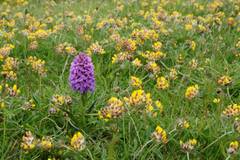
Grown in wildflower meadows, damp grassland, and naturalistic borders on alkaline soil, and sometimes in alpine troughs. It draws bees and other insects to its spurred flowers, though the blooms hold little nectar. It suits permanent meadow plantings left undisturbed, since the tubers and fungal partners take years to establish.How to Identify
Appearance
Size & Dimensions
Height6" - 2'
Width/Spread6" - 1'
Bloom Information
Flowers open from late spring into midsummer, mainly June and July, a little earlier in mild lowland sites. The spike develops from the base upward over two to three weeks. Each plant produces one spike per season, with flowering size reached only after several years of growth.
Detailed Descriptions
Flower Description
white to pink or lilac with darker markingsFoliage Description
green with dark spotsGrowing Conditions
Sun Requirements
Requires 4-8 hours of direct sunlight daily
• Full Sun: 6+ hours of direct sunlight
• Partial Shade: 3-6 hours of direct sunlight
• Full Shade: Less than 3 hours of direct sunlight
Care & Maintenance
Care Guide
Grow in full sun to light shade on moist but well-drained, neutral to alkaline soil, typically over chalk or limestone. The orchid depends on symbiotic soil fungi, so it establishes most reliably from pot-grown plants or natural colonization rather than bare-root division. Acidic soils, heavy fertilizer, and deep shade all reduce vigor and flowering. Once settled it needs little care and returns each year from its tubers. Grass and competing vegetation are cut back in late summer after the orchid has set seed. Soil should stay damp in spring but not waterlogged.Pruning
No pruning is needed for the plant itself. The spent flower spike is left to set and shed seed, then removed once brown if self-seeding is not wanted. Surrounding grass is cut in late summer and kept short over winter so the spring rosette is not shaded out.Container Growing
Suitable for container growing
Minimum container size: 2 gallons