Cyperus, Genus, croceus, Species,
- Genus & species
Baldwin's flatsedge
Overview
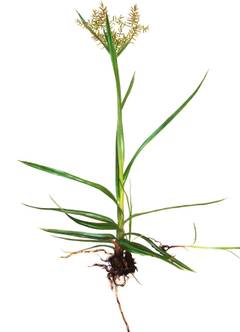
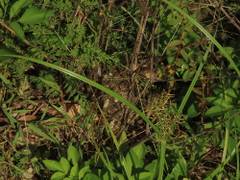
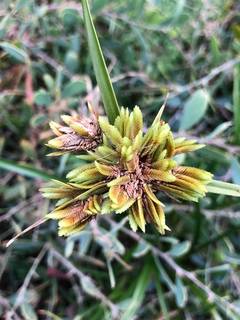
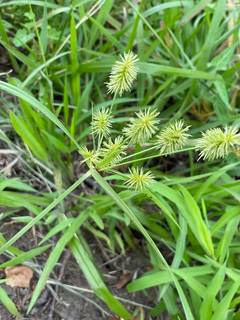
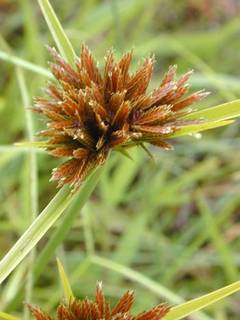
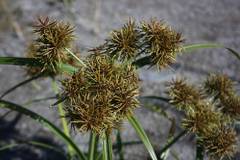
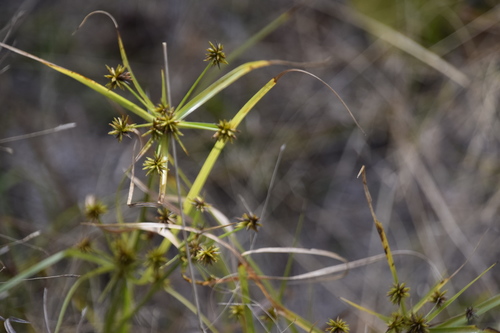
Cyperus croceus is a tufted perennial sedge that grows 8-24 inches (20-60 cm) tall from a short rhizome. The stems are three-sided in cross-section, a feature shared across the genus, and are topped by a cluster of slender leaf-like bracts that spread outward beneath the flower head. The grass-like leaves are narrow, 0.1-0.25 inch (3-6 mm) wide, and mostly basal. The flower head is a rounded to open cluster of small spikelets, straw-colored to golden-brown, each holding numerous tiny flowers and, later, seeds. Flowering runs through summer and into fall. The plant grows in sandy soils of open pine woods, fields, roadsides, and disturbed ground, tolerating both seasonally moist and dry conditions. It spreads by seed and slowly by short rhizomes, forming clumps rather than running mats. As a wind-pollinated sedge it produces no petals; the seed heads turn straw-colored to golden-brown as they ripen. It can self-sow into surrounding bare soil, and in rich, moist soil it grows larger and seeds more freely.
Native Range
Cyperus croceus is native to the southeastern and eastern United States, from Texas and Florida north along the coastal plain to the mid-Atlantic and into the lower Midwest. It grows in sandy soils of pine woodlands, fields, and disturbed open ground.Suggested Uses
Cyperus croceus is used in native plant gardens, meadow and pine-savanna restorations, and for erosion control on sandy soils. Its seeds are eaten by birds and small mammals. It suits naturalized areas more than formal beds.How to Identify
Appearance
Size & Dimensions
Height8" - 2'
Width/Spread8" - 1'6"
Bloom Information
Detailed Descriptions
Flower Description
straw-colored to golden-brownFoliage Description
greenGrowing Conditions
Sun Requirements
Requires 6-10 hours of direct sunlight daily
• Full Sun: 6+ hours of direct sunlight
• Partial Shade: 3-6 hours of direct sunlight
• Full Shade: Less than 3 hours of direct sunlight
Care & Maintenance
Care Guide
Cyperus croceus grows in full sun to part shade in sandy, well-drained soils and tolerates poor, low-nutrient ground. It withstands seasonal drought as well as periodically moist soils, which makes it adaptable to a range of sites. Grow it from seed sown on bare soil in spring, or divide established clumps. It needs little fertilizer and no routine watering once established in suitable soil. It self-sows and can spread into open ground where soil is bare. In rich, moist garden soil it grows larger and seeds more freely.Pruning
No pruning is needed. Old stems and seed heads can be cut back in late winter before new growth begins, and cutting the heads before seed drop limits self-sowing.Container Growing
Suitable for container growing
Minimum container size: 2 gallons