Crocosmia, Genus, 'Lucifer', Cultivar,
- Genus
- Cultivar
lucifer crocosmia
Hybrid of garden origin; bred at Bressingham Gardens, England, 1966; parent species from southern Africa
Overview
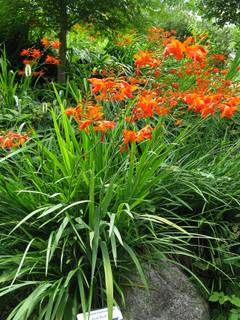
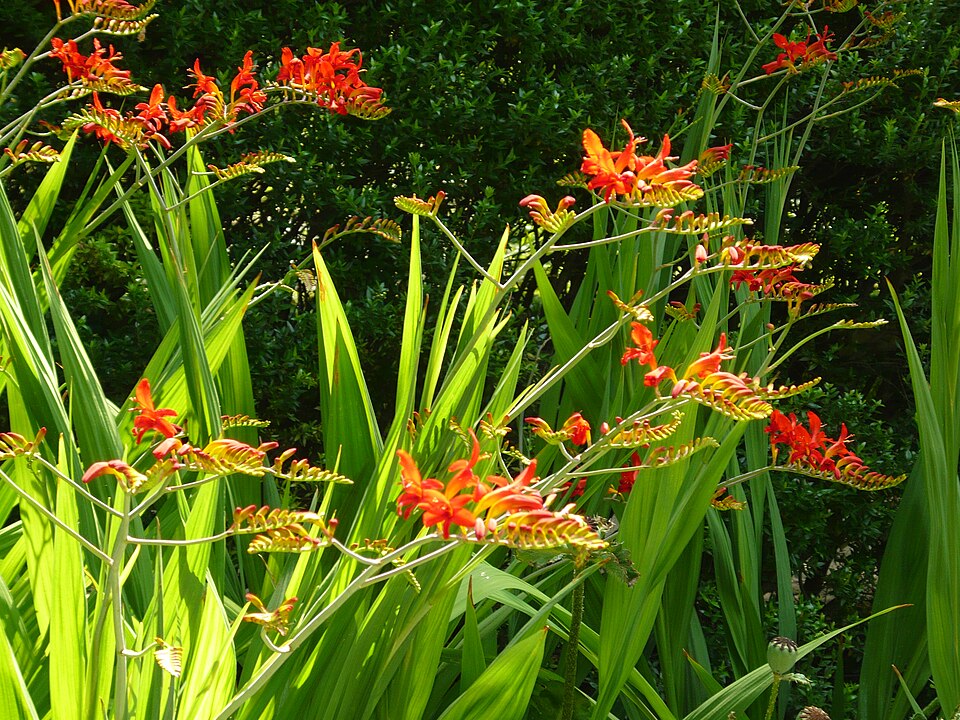
Crocosmia 'Lucifer' is a vigorous, clump-forming perennial that grows from corms, reaching 36-48 inches (90-120 cm) tall and 18-24 inches (45-60 cm) wide. It is the tallest crocosmia in general trade and is widely stocked in the UK and US as a reference point for other red-flowered selections. Scarlet-red tubular flowers 1.5-2 inches (4-5 cm) long open in dense, arching sprays in July and August, the stems curving outward and upward 12-18 inches (30-45 cm) past the upright foliage. The sword-shaped, pleated leaves are bright green and 24-36 inches (60-90 cm) long. Growth is fast, and the plant spreads by corm offsets into large colonies over 3-5 years, more forcefully than most crocosmias. Cold hardiness reaches zone 5 without mulch. It was bred by Alan Bloom at Bressingham Gardens, Norfolk, England in 1966 from C. paniculata and C. masoniorum. In mild, moist regions such as the coastal Pacific Northwest and parts of the British Isles, the plant naturalizes freely and appears on some regional invasive-plant lists, which is its main drawback. Hardy in zones 5-9 in full sun.
Native Range
Crocosmia 'Lucifer' is a hybrid of garden origin, bred by Alan Bloom at Bressingham Gardens, Norfolk, England, and released in 1966. Its parent species, C. paniculata and C. masoniorum, come from southern Africa.Suggested Uses
Grown in mixed borders, cottage gardens, and mass plantings, spaced 8-12 inches (20-30 cm) apart, or in containers of at least 5 gallons (19 L). The tall arching sprays carry back-of-border scale and pair with large late-summer perennials such as Echinacea purpurea and ornamental grasses. The scarlet color draws ruby-throated hummingbirds during their late-summer migration. In small confined beds the vigorous spread overwhelms neighbors within 2-3 seasons, so slower-spreading crocosmias are a better match for small beds.How to Identify
Appearance
Size & Dimensions
Height3' - 4'
Width/Spread1'6" - 2'
Bloom Information
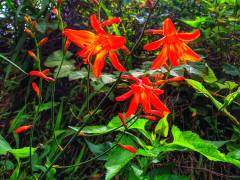
Dense, arching sprays of scarlet-red tubular flowers 1.5-2 inches (4-5 cm) long open in July and August for 4-6 weeks. Flowers open in sequence along each arching stem from base to tip. Hummingbirds and bees work them.
Detailed Descriptions
Flower Description
Scarlet-red, tubular, 1.5-2 inches (4-5 cm) long, in dense arching spraysFoliage Description
Bright green, sword-shaped, pleated, 24-36 inches (60-90 cm) longGrowing Conditions
Sun Requirements
Requires 6-10 hours of direct sunlight daily
• Full Sun: 6+ hours of direct sunlight
• Partial Shade: 3-6 hours of direct sunlight
• Full Shade: Less than 3 hours of direct sunlight
Care & Maintenance
Care Guide
Set corms 4-5 inches (10-13 cm) deep in full sun in moist, well-drained soil. Full sun brings the heaviest flowering. The vigorous spread needs managing, either by dividing every 2-3 years or by sinking a root barrier 8-12 inches (20-30 cm) deep to hold the clump. In mild, moist climates such as the coastal Pacific Northwest and the British Isles the plant naturalizes freely, and invasive-plant lists in Washington, Oregon, and parts of the UK name it, so a regional check before planting is worthwhile. Tall flower stems may lean in windy sites. Cold hardiness reaches zone 5 without mulch.Pruning
Cut spent flower stalks after bloom. Leave the foliage until it yellows in fall, then remove it. Digging out surplus corm offsets each spring holds the lateral spread in check; young offsets lift more easily than established clumps.Pruning Schedule
Prune: September–October
fall
Container Growing
Suitable for container growing
Minimum container size: 5 gallons