Crocosmia, Genus,
- Genus
montbretias
Overview
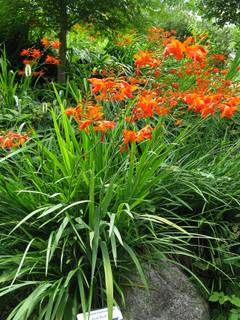
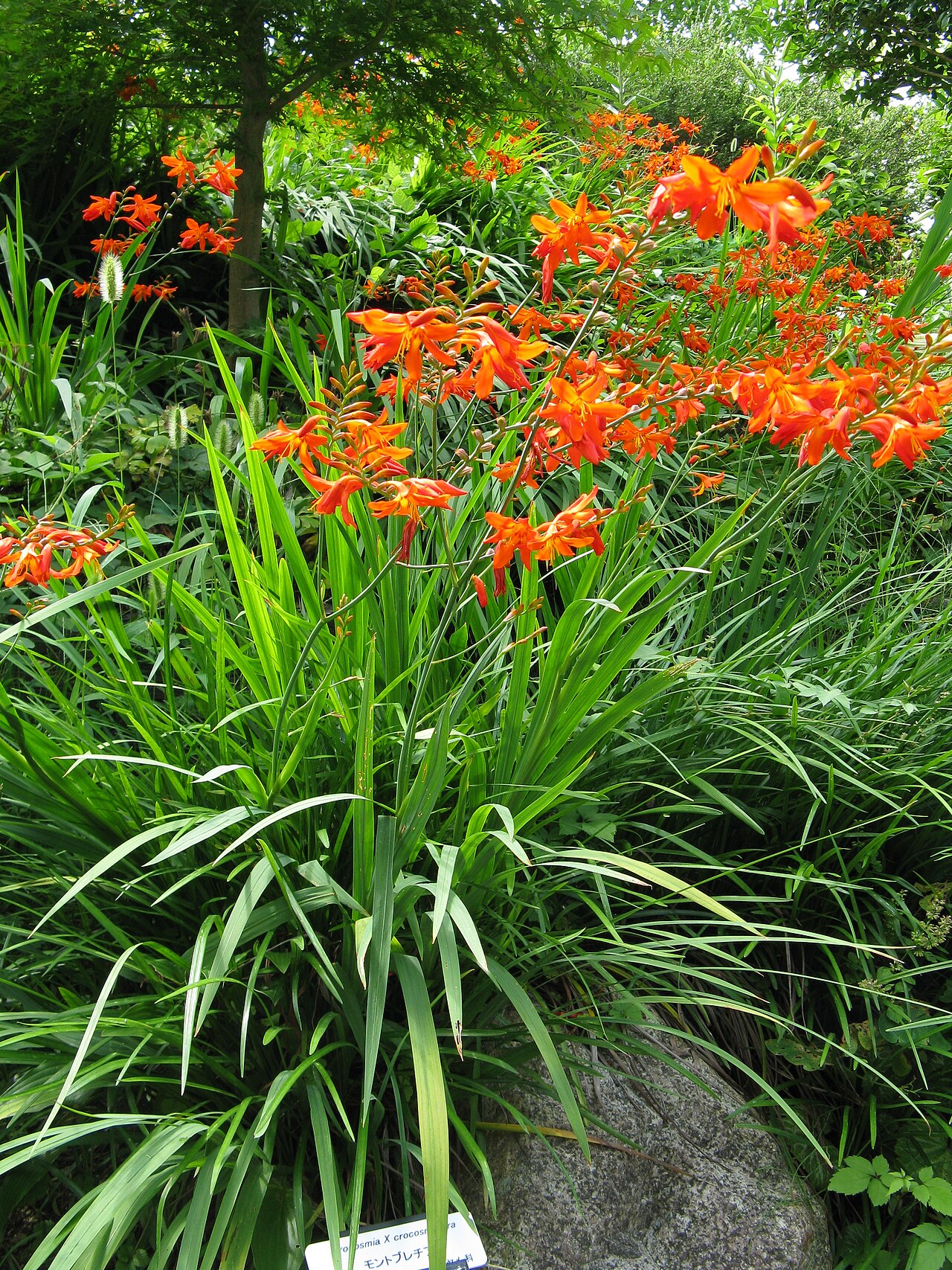
Crocosmia is a genus of about eight species of cormous perennials in the iris family Iridaceae, native to the grasslands and woodland margins of central and southern Africa. Plants grow from corms that form vertical chains, sending up fans of narrow, pleated, sword-shaped leaves 18-40 inches (45-100 cm) long. In mid to late summer, wiry arching stems carry branched, one-sided sprays of funnel-shaped flowers in red, orange, and yellow, opening in succession from the base of each spray. Flower stems reach 24-48 inches (60-120 cm) tall across the genus, and the blooms are followed by rounded seed capsules. The foliage dies back in autumn, and the corms overwinter underground, with the hardiest types surviving in USDA zones 5-6 under a winter mulch. Crocosmia spreads steadily as the corm chains multiply, forming dense clumps over a few seasons. The widely grown hybrid C. ×crocosmiiflora has naturalized and become an invasive weed in parts of the British Isles, western North America, and New Zealand, where it crowds out native vegetation. Plants are grown for the arching flower sprays, which are also cut for indoor arrangements.
Native Range
Crocosmia is native to central and southern Africa, from South Africa north to Sudan, where the species grow in moist grassland, on stream banks, and at forest margins. Most garden plants derive from a few South African species and their hybrids.Suggested Uses
Grown in sunny borders, gravel gardens, and among grasses and perennials for the arching summer flower sprays, and cut for indoor arrangements. The red and orange forms suit hot-color schemes, while the flowers draw hummingbirds and other nectar feeders. In mild regions the vigorous hybrids are placed where their spread can be contained.How to Identify
Appearance
Size & Dimensions
Height2' - 4'
Width/Spread1' - 2'
Bloom Information
Flowering occurs in mid to late summer, roughly July to September, with each arching spray opening its flowers in sequence over several weeks. Different species and cultivars flower at slightly different times, so a planting can carry color over a long mid-summer span. The flowers are followed by rounded seed capsules in autumn.
Detailed Descriptions
Flower Description
red, orange, or yellowFoliage Description
greenGrowing Conditions
Sun Requirements
Requires 6-10 hours of direct sunlight daily
• Full Sun: 6+ hours of direct sunlight
• Partial Shade: 3-6 hours of direct sunlight
• Full Shade: Less than 3 hours of direct sunlight
Water & Climate
Water Needs
Drought Tolerance
Drought tolerant when established
Care & Maintenance
Care Guide
Crocosmias grow in full sun to light shade in moist, well-drained, fertile soil and flower most freely in sun. Corms are planted 3-5 inches (8-13 cm) deep in spring, and clumps establish quickly. The hardiest types survive winters in USDA zones 5-6 under a mulch, while tender species need lifting or a frost-free site. Clumps become congested after a few years and flower less, so dividing the corm chains in spring restores vigor. In mild climates the vigorous hybrids can spread beyond where they are wanted and are hard to remove once established. Plants tolerate short dry spells but bloom better with summer moisture.Pruning
Cut flower stems for arrangements or remove them after bloom if seed is not wanted. Leave the foliage to die back naturally in autumn, as it feeds the corms for the next year, then clear the dead leaves. Lift and divide congested clumps in spring every few years to maintain flowering.Container Growing
Suitable for container growing
Minimum container size: 3 gallons