Cotinus, Genus, obovatus, Species,
- Genus & species
American smoke tree
Southeastern United States (disjunct populations from Tennessee and Alabama west to Oklahoma and Texas; limestone glades and rocky uplands)
Overview
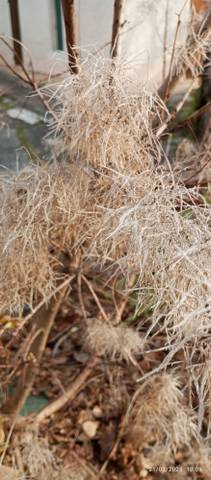
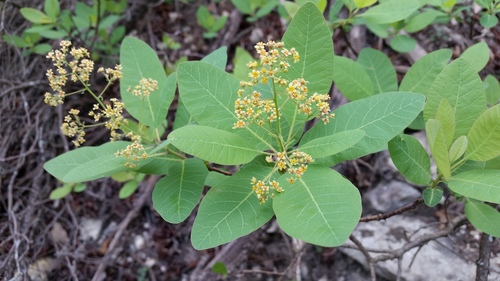
Cotinus obovatus is a large upright to rounded deciduous shrub or small tree in the cashew family (Anacardiaceae) reaching 20–30 feet (6–9 m) tall with a spread of 15–25 feet (4.5–7.5 m). This is the North American species of smoke tree, carrying greater mature size, more tree-like architecture, and more vivid multi-tonal fall color than the Eurasian C. coggygria. Leaves are obovate 3–6 inches (8–15 cm) long, substantially larger than those of C. coggygria at 2–3 inches, medium to dark green with a slight blue-green cast. Fall color is vivid and multi-tonal: shades of orange, scarlet, red, and purple appear simultaneously on the same plant and produce one of the strongest fall displays among North American native small trees. Loose feathery panicles of tiny yellowish-green flowers open in April–May; spent flower stalks elongate into wispy grayish smoke plumes that are less profuse than those of C. coggygria. Growth rate is moderate at 10–14 inches (25–36 cm) per year. Hardy to zone 4. The species is dioecious (male and female flowers on separate plants); smoke plumes develop more prominently on female specimens. The species is rare in the wild and listed as threatened or of conservation concern in several states within its native range. Poor rocky alkaline soils are tolerated, reflecting the native habitat of limestone glades and rocky uplands.
Native Range
Cotinus obovatus is native to the southeastern United States, where it occurs in scattered disjunct populations in limestone glades and rocky uplands from Tennessee and Alabama west to Oklahoma and Texas. The species is listed as threatened or rare in several states within its range.Suggested Uses
Grown as a specimen tree in large gardens, parks, and naturalistic landscapes at 12–18 foot (3.6–5.5 m) spacing. The vivid multi-tonal orange-scarlet-purple fall color is the primary ornamental feature and carries the species through October in most of its growing range. Native plant gardens and conservation-oriented plantings benefit from the species inclusion given the wild conservation status. Dry rocky alkaline sites where other small trees struggle match the species native-habitat tolerance for limestone-glade conditions. Pairing with C. coggygria cultivars produces a smoke-tree collection showing the range of forms and colors within the genus on adjacent specimens. Small residential gardens, heavy wet soils, and formal hedging roles are not suitable given the large mature size, the drainage requirement, and the species architectural growth habit.How to Identify
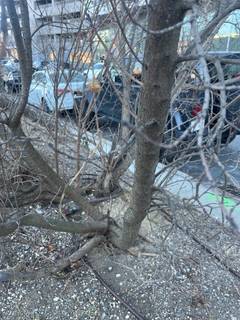
Appearance
Size & Dimensions
Height20' - 30'
Width/Spread15' - 25'
Bloom Information
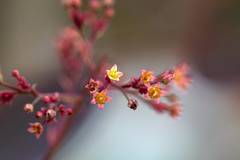
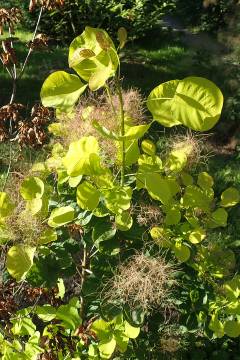
Loose feathery panicles of tiny yellowish-green flowers open in April–May. Spent flower stalks elongate into wispy grayish smoke plumes on female plants; male plants produce less smoke and are functionally pollen-source specimens rather than display specimens. Bloom duration is 2–3 weeks; smoke plume display persists 6–10 weeks into mid-summer.
Detailed Descriptions
Flower Description
Yellowish-green panicles developing into wispy grayish smoke plumes on female plantsFoliage Description
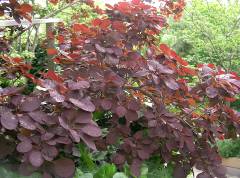
Medium to dark green with blue-green cast; obovate 3-6 inches long; vivid orange, scarlet, red, and purple multi-tonal in fallGrowing Conditions
Sun Requirements
Requires 6-12 hours of direct sunlight daily
• Full Sun: 6+ hours of direct sunlight
• Partial Shade: 3-6 hours of direct sunlight
• Full Shade: Less than 3 hours of direct sunlight
Care & Maintenance
Care Guide
Grows in full sun in average to poor well-drained soil at pH 6.0–8.0, tolerating loam, sand, rocky, and chalk substrates. Hardy to zone 4. Lean rocky alkaline soil produces the strongest fall color and most compact growth, reflecting the species native habitat on limestone glades and rocky uplands. Rich moist soil drives vigorous leggy growth with reduced fall color intensity. Full sun is required for vivid fall color; partial-shade positions produce duller coloring. Established plants tolerate drought and thrive on dry rocky sites where other trees fail. The species is dioecious; female specimens produce the prominent smoke plume display, and nursery purchases that specify female plants retain the ornamental smoke effect. Limestone soils and calcareous rocky sites are tolerated. Verticillium wilt can develop in heavy wet soils; drainage is the primary disease-prevention factor. No other serious pest or disease problems.Pruning
Minimal pruning is required. Dead or damaged branches are removed in late winter. The species develops a natural rounded form that can be trained to a single trunk or left as a multi-stemmed large shrub. Heavy pruning reduces smoke plume production because flowers form on older wood; pruning that removes 2+ year wood eliminates the plume display for that season.Pruning Schedule
Prune: February–March
winter