Cotinus, Genus, coggygria, Species, 'Royal Purple', Cultivar,
- Genus & species
- Cultivar
royal purple smoke tree
Species native to southern Europe east through central Asia to China — rocky dry slopes, scrubland, and limestone outcrops; cultivar 'Royal Purple' developed in the Netherlands in the 1950s and selected for the non-fading deep wine-purple foliage character
Overview
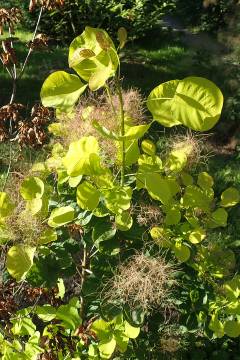
Cotinus coggygria 'Royal Purple' is the Royal Purple smoke tree (also called purple smoke bush), an upright multi-stemmed deciduous shrub in the cashew family Anacardiaceae growing 10-15 feet (3-4.5 m) tall and 10-15 feet (3-4.5 m) wide in cultivation across a 5-8 year establishment to mature ornamental size. The cultivar was developed in the Netherlands in the 1950s and selected for the deep wine-purple to burgundy-red foliage that is retained through the full growing season without fading to green — the non-fading purple is a trait improvement over earlier purple-leaved cultivars of the species that lost their purple saturation by mid-summer in most climates. The generic name Cotinus is derived from the Greek name for a wild olive, and the specific epithet coggygria is from the Greek kokkugia, an ancient name for the plant used by Dioscorides and Theophrastus. The cultivar's two combined ornamental characters are the non-fading deep purple foliage and the smoky inflorescence display: large loose terminal panicles 6-12 inches (15-30 cm) are carried above the purple foliage in June through August across a 10-week display, and the ornamental smoke effect that is the genus's signature display is produced not by the tiny inconspicuous flowers themselves but by the persistent feathery pinkish-purple to pink-gray hairs on the elongated sterile flower pedicels — these feathery pedicel hairs expand after the few fertile flowers fade and produce the billowing smoky-cloud appearance that is the source of the common name smoke tree. The fall foliage turns vivid orange-red to scarlet before leaf drop — the fall color display on the purple-leaved 'Royal Purple' is more saturated than on the green-leaved species type because the transition from purple through orange to scarlet produces a broader color shift. Limitation: Verticillium wilt (Verticillium dahliae and Verticillium albo-atrum) is the most significant disease concern — the soilborne fungal pathogens enter through the root system and produce progressive branch dieback, wilting, and eventual death, and the disease is incurable once the plant is infected. Verticillium wilt is managed by siting in well-drained soil on sites without a history of Verticillium infection (the fungal spores persist in the soil for years after infected plants are removed) and by avoiding site preparation that mixes infected soil from adjacent areas. The species is a member of the cashew family (Anacardiaceae), and the sap can produce contact dermatitis in sensitive individuals — the dermatitis potential is the same family-level Anacardiaceae pattern shared with poison ivy (Toxicodendron radicans) and mango (Mangifera indica), and gloves are warranted when pruning or handling the stems. Two pruning approaches support different ornamental outcomes: light pruning in early spring (March) that removes dead and crossing branches but preserves the previous year's wood produces the smoky inflorescence display (which forms on second-year wood), while hard coppice pruning in early spring — cutting all stems to 6-12 inches (15-30 cm) above the ground — sacrifices the smoke flowers entirely but produces vigorous new shoots carrying extra-large vivid purple leaves that are larger and more saturated than the leaves on unpruned stems. Drought-tolerant once established. Tolerates poor, rocky, and alkaline soils to pH 8.0. Deer-resistant.
Native Range
Species native to southern Europe east through central Asia to China — rocky dry slopes, scrubland, and limestone outcrops from sea level to 5,000 feet (1,500 m) elevation. The cultivar 'Royal Purple' was developed in the Netherlands in the 1950s and selected for the non-fading deep wine-purple foliage character that holds through the full growing season. The generic name Cotinus derives from the Greek name for a wild olive, and the specific epithet coggygria is from the Greek kokkugia, an ancient name for the plant used by Dioscorides and Theophrastus.Suggested Uses
Used as a specimen shrub on residential lawns and in mixed borders for season-long purple foliage color, as a color-contrast anchor against green-foliaged shrub and perennial companions, as a coppiced foliage-accent mass where extra-large vivid purple leaves on vigorous annual shoots are the design goal, and as a large-scale screen or informal hedge at 10-15 foot (3-4.5 m) spacing in USDA zones 5 through 8. The deep wine-purple foliage retained through the full growing season without fading to green, the large airy smoky pinkish-purple inflorescences above the purple foliage across a 10-week summer display (or the extra-large vivid purple leaves produced by hard coppice pruning as an alternative to the smoke flowers), the vivid orange-red to scarlet fall foliage color, the tolerance of poor rocky alkaline soils to pH 8.0, and the drought tolerance once established combine to make 'Royal Purple' a foundation purple-foliaged shrub for full-sun color-contrast design. Verticillium-infested sites are unsuitable (the disease is soilborne, incurable, and the fungal spores persist in the soil for years). Partial-shade positions reduce the purple saturation. Positions adjacent to walkways and seating areas where visitors may brush against the stems carry the Anacardiaceae contact-dermatitis risk from the sap.How to Identify
Appearance
Size & Dimensions
Height10' - 15'
Width/Spread10' - 15'
Bloom Information
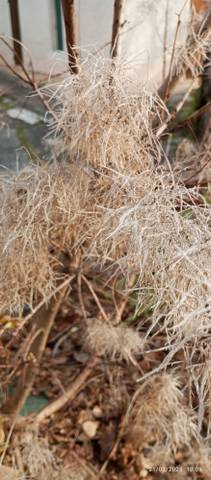
Summer (June through August) across a 10-week display period. Tiny inconspicuous yellowish-green flowers in large loose terminal panicles 6-12 inches (15-30 cm) above the purple foliage. The ornamental smoke effect is produced not by the flowers themselves but by the persistent feathery pinkish-purple to pink-gray hairs on the elongated sterile flower pedicels — these feathery pedicel hairs expand after the few fertile flowers fade and produce the billowing smoky-cloud appearance over the canopy. Bees and butterflies visit the flowers across the bloom period. The smoke display forms only on second-year wood and is sacrificed if the plant is hard-coppiced in spring.
Detailed Descriptions
Flower Description
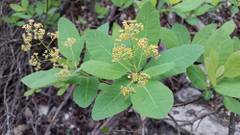
tiny inconspicuous yellowish-green flowers in large loose terminal panicles 6-12 inches (15-30 cm) in summer (June through August) across a 10-week display period — the ornamental smoke effect that is the genus's signature display is produced not by the flowers themselves but by the persistent feathery pinkish-purple to pink-gray hairs on the elongated sterile flower pedicels (the slender stalks that carried the few fertile flowers); these feathery pedicel hairs expand after the fertile flowers fade and produce the billowing smoky-cloud appearance that is the source of the common name smoke treeFoliage Description
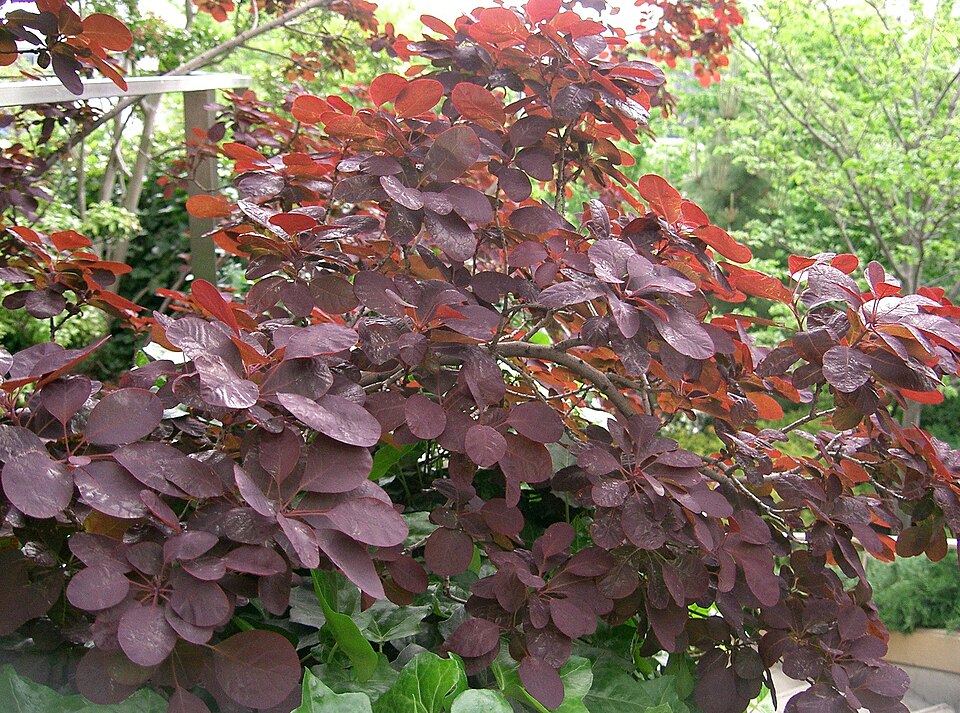
deep wine-purple to burgundy-red, oval to nearly round, 2-3 inches (5-7.5 cm), held on red petioles; the purple color is retained through the full growing season without fading to green (a trait improvement over earlier purple-leaved cultivars of the species); foliage turns vivid orange-red to scarlet in fall before leaf drop; deciduousGrowing Conditions
Sun Requirements
Requires 6-12 hours of direct sunlight daily
• Full Sun: 6+ hours of direct sunlight
• Partial Shade: 3-6 hours of direct sunlight
• Full Shade: Less than 3 hours of direct sunlight
Care & Maintenance
Care Guide
Site in full sun with 6-12 hours of direct sun per day for the deepest and most saturated purple foliage color — partial-shade siting reduces the purple intensity. Site in well-drained loam, sand, clay, chalk, or rocky soil with a pH of 6.0-8.0 — the species tolerates poor, rocky, and alkaline soils more readily than most ornamental shrubs. Water weekly during the first two growing seasons to establish the root system; established plants tolerate moderate drought. Verticillium wilt (Verticillium dahliae and V. albo-atrum) is the most significant disease concern — the soilborne fungal pathogens enter through the root system and produce progressive branch dieback, wilting, and eventual death; the disease is incurable once the plant is infected, and management consists of siting in well-drained soil on sites without a history of Verticillium infection (the fungal spores persist in the soil for years after infected plants are removed). The species is a member of the cashew family (Anacardiaceae) and the sap can produce contact dermatitis in sensitive individuals — gloves are warranted when pruning or handling the stems. Two pruning approaches: (1) light pruning in early spring (March) that removes dead and crossing branches but preserves second-year wood produces the smoky inflorescence display; (2) hard coppice pruning in early spring — cutting all stems to 6-12 inches (15-30 cm) above the ground — sacrifices the smoke flowers entirely but produces vigorous new shoots carrying extra-large vivid purple leaves. Drought-tolerant once established. Deer-resistant. Hardy in USDA zones 5-8.Pruning
Two pruning approaches support different ornamental outcomes: (1) light pruning in early spring (March) removes dead, damaged, and crossing branches but preserves the previous year's wood — this approach retains the smoky inflorescence display because the smoke-producing panicles form on second-year wood. (2) Hard coppice pruning in early spring cuts all stems to 6-12 inches (15-30 cm) above the ground, sacrificing the smoke display entirely but producing vigorous new shoots that carry extra-large vivid purple leaves with more saturated color and larger size than the leaves on unpruned stems — the coppice approach is used where the purple foliage effect is the primary ornamental goal and the smoke flowers are secondary. Gloves are warranted when pruning because the sap can produce contact dermatitis in sensitive individuals (the family-level Anacardiaceae pattern shared with poison ivy and mango). Dead and damaged branches are removed as found at any time of year.Pruning Schedule
Prune: March
early spring