Chelone, Genus, spp., Multiple species,
- Genus
- Multiple species
turtlehead
Overview
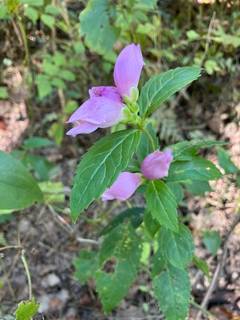
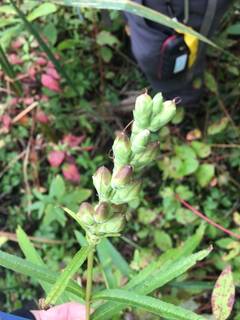
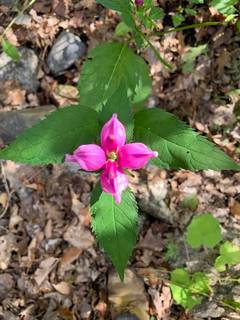
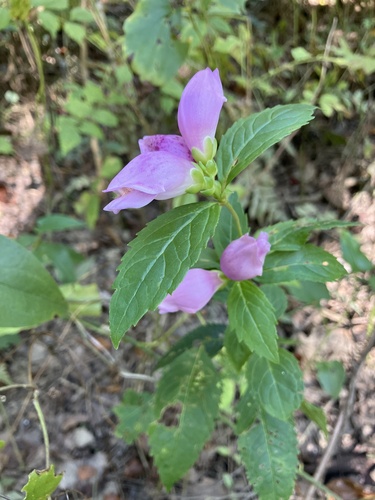
Chelone is a genus of about six herbaceous perennials in the family Plantaginaceae, native to eastern and central North America. Plants form upright clumps from spreading rhizomes, reaching 2-4 feet (60-120 cm) tall and 1.5-2.5 feet (45-75 cm) wide. The opposite leaves are lance-shaped to ovate, 3-6 inches (8-15 cm) long, with toothed margins and a dark green surface that turns yellow before dropping in autumn. From late summer into mid-autumn, terminal spikes carry tubular two-lipped flowers 1-1.5 inches (2.5-4 cm) long; the inflated, hooded shape resembles a turtle's head, which gives the genus its common name. Flower color ranges across the genus from white in C. glabra to rose-pink and purple in C. lyonii and C. obliqua. Species occur naturally along streambanks, in wet meadows, and at the margins of swamps, and they require consistent moisture in cultivation. The flowers are pollinated mainly by bumblebees large enough to force the lips apart, and the foliage is a larval host for the Baltimore checkerspot butterfly. Plants spread slowly into colonies and tolerate heavy clay. One limitation is sensitivity to drought: in dry soils the lower leaves brown and flowering is reduced. Most species grow in zones 3-8.
Native Range
Chelone is native to eastern and central North America, from Newfoundland and Ontario south to Georgia, Mississippi, and Alabama. Species grow in wetlands, along streams, and in moist woodland openings through the Appalachian region and across the coastal plains.Suggested Uses
Used in rain gardens, pond and stream margins, and moist borders where the soil does not dry out. Combines with Lobelia cardinalis, Eupatorium, and ferns in damp settings. Suited to naturalized plantings and butterfly gardens.How to Identify
Appearance
Size & Dimensions
Height2' - 4'
Width/Spread1'6" - 2'6"
Bloom Information
Flowering runs from late summer into mid-autumn, roughly August to October depending on species and latitude. Individual spikes open over 3-5 weeks, with flowers maturing from the base of the cluster upward. Bloom continues into October in cooler regions, after many summer-flowering perennials have faded.
Detailed Descriptions
Flower Description
white to rose-pink and purpleFoliage Description
dark greenGrowing Conditions
Sun Requirements
Requires 4-8 hours of direct sunlight daily
• Full Sun: 6+ hours of direct sunlight
• Partial Shade: 3-6 hours of direct sunlight
• Full Shade: Less than 3 hours of direct sunlight
Care & Maintenance
Care Guide
Grow Chelone in full sun to part shade in soil that stays consistently moist to wet; plants in full sun need reliably damp ground. Rich, humus-laden soils with a slightly acidic to neutral pH suit the genus, and compost amendments improve moisture retention. Water during dry spells, as the genus does not tolerate prolonged drought. Plants are slow to establish but form spreading clumps over several seasons and seldom need division more than every four to five years. Pinching the stems in early summer produces shorter, branched growth with more flower spikes. Powdery mildew can appear on foliage in crowded, dry conditions.Pruning
Spent flower spikes can be removed after bloom to tidy the clump, though this does not produce a second flush. Stems may be left standing through winter for structure and cut back to the ground in early spring before new growth emerges. A single pinch of the stem tips in late spring reduces height and increases branching.Pruning Schedule
Prune: March–April
early spring