Chelone, Genus, glabra, Species,
- Genus & species
white turtlehead
Eastern North America, from Newfoundland south to Georgia and west to Manitoba and Missouri
Overview
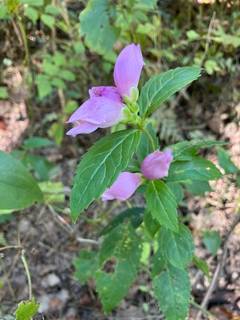
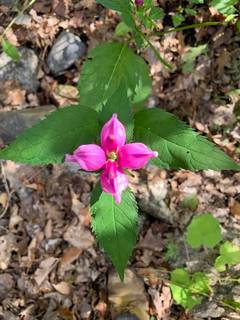
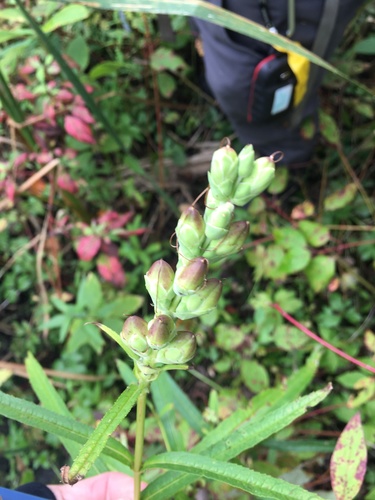
Chelone glabra is an upright, clump-forming native perennial in the plantain family (Plantaginaceae) that grows 24-48 inches (60-120 cm) tall and 18-24 inches (45-60 cm) wide. Dense terminal spikes of white, two-lipped flowers that resemble the head of a snapping turtle appear from August through October. The upper lip arches over the lower lip, creating the hooded, mouth-like shape that gives the genus its common name turtlehead. Flowers are sometimes flushed pink at the tips. Dark green, glossy, lance-shaped leaves with serrated margins are arranged in opposite pairs along sturdy, square stems. The species grows naturally in wet meadows, stream margins, and swamp edges and requires consistently moist to wet soil. In dry conditions, the lower leaves yellow and drop, and the plant declines. Full sun to partial shade is acceptable; in deep shade, stems become lanky. Pinching stem tips by one-third in early June produces shorter, more compact growth in garden settings. The species is the primary larval host plant for the Baltimore checkerspot butterfly (Euphydryas phaeton), a declining species. Clumps expand slowly by short rhizomes. Deer avoid the bitter foliage.
Native Range
Chelone glabra is native to eastern North America, from Newfoundland and Manitoba south to Georgia and Missouri. It grows in wet meadows, stream margins, swamp edges, and moist ditches, often in acidic to neutral soils.Suggested Uses
Used in rain gardens, bioswales, stream margins, and wet meadow plantings. The late bloom and wet-site tolerance fill a niche that few other perennials occupy. An essential planting for Baltimore checkerspot butterfly habitat restoration. Suited to pond edges and areas with seasonally saturated soils. Mass plantings of 5-9 create a concentrated white turtlehead display in late summer.How to Identify
Appearance
Size & Dimensions
Height2' - 4'
Width/Spread1'6" - 2'
Colors
Bloom Information
Flowering begins in August and continues through October. Dense terminal spikes of white turtle-shaped flowers open from the base upward over approximately 5 weeks. The late bloom fills a gap between summer perennials and fall asters. Individual flowers last for 7-10 days.
Detailed Descriptions
Flower Description
White, sometimes flushed pink at the tipsFoliage Description
Dark green, glossy, lance-shaped, serratedGrowing Conditions
Sun Requirements
Requires 4-8 hours of direct sunlight daily
• Full Sun: 6+ hours of direct sunlight
• Partial Shade: 3-6 hours of direct sunlight
• Full Shade: Less than 3 hours of direct sunlight
Care & Maintenance
Care Guide
Plant in partial shade to full sun with 4-8 hours of light. Consistently moist to wet soil is essential; the species naturally grows in swamp and stream-margin habitats. Watering is regular and heavy; drought causes rapid decline. Mulching with 2-3 inches (5-8 cm) of organic material retains moisture. All stem tips are pinched by one-third in early June for more compact, bushy growth. No fertilisation is typically needed. All stems are cut to ground level in late fall or early spring.Pruning
Stem tips are pinched by one-third in early June for shorter, denser growth. All stems are cut to 3-4 inches (8-10 cm) above ground in late fall or early spring. No deadheading is needed.Pruning Schedule
Prune: March, June & November
summerfallearly spring