Carduus, Genus, tenuiflorus, Species,
- Genus & species
slenderflower thistle
Mediterranean Europe, northern Africa, western Asia
SunFull Sun
Overview
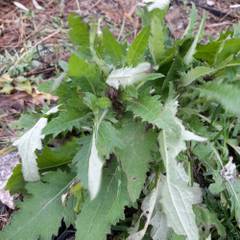
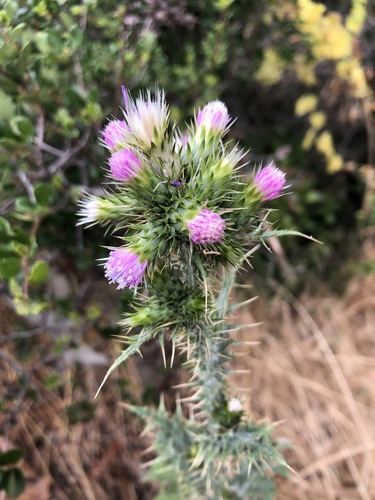
Carduus tenuiflorus is a winter annual or biennial thistle in the daisy family (Asteraceae) reaching 12–48 inches (30–120 cm) tall with an 8–18 inch (20–45 cm) spread. Stems are erect, branching, and conspicuously winged by the decurrent leaf bases, with spiny wings running continuously between leaf nodes. Leaves are deeply lobed, 4–8 inches (10–20 cm) long, gray-green above and white-woolly beneath, with sharp yellow-tipped spines along the margins. Flower heads are small, cylindrical, 0.3–0.5 inch (8–12 mm) in diameter, borne in dense terminal clusters of 5–20 heads. Florets are pink to purple, tubular, with protruding styles. Each head produces 20–40 seeds bearing a pappus for wind dispersal. A single plant produces 5,000–20,000 seeds. Seeds lack deep dormancy and germinate primarily in fall with the onset of autumn rains. Listed as a noxious weed in Oregon, Washington, and several other western states. Dense stands form in overgrazed pastures, roadsides, and disturbed coastal grasslands. The spiny stems and foliage deter browsing by livestock, allowing it to increase in grazed landscapes.
Native Range
Native to the Mediterranean basin, including southern Europe, northern Africa, and western Asia. Found in grasslands, disturbed fields, and roadsides on a range of soil types from sea level to approximately 3,000 feet (900 m). Naturalized along the Pacific coast of North America from British Columbia to California, and in scattered inland locations.Suggested Uses
Used in noxious weed identification training for county and state weed board personnel. Studied in rangeland ecology courses as an example of thistle invasion in overgrazed pastures. Seeds consumed by goldfinches and other seed-eating birds.How to Identify
Appearance
Size & Dimensions
Height1' - 4'
Width/Spread8" - 1'6"
Bloom Information
Flowers from May through July. Individual flower heads bloom for 5–7 days. Flowering progresses from the terminal cluster downward to lateral branches over 4–6 weeks. Seeds mature 2–3 weeks after flowering and disperse by wind via the pappus. In coastal Pacific Northwest climates, peak flowering occurs in June.
Detailed Descriptions
Flower Description
Pink to purpleFoliage Description
Gray-green above, white-woolly beneath; deeply lobed with spiny margins and decurrent spiny wings along stemsGrowing Conditions
Sun Requirements
Requires 6-12 hours of direct sunlight daily
• Full Sun: 6+ hours of direct sunlight
• Partial Shade: 3-6 hours of direct sunlight
• Full Shade: Less than 3 hours of direct sunlight