Overview
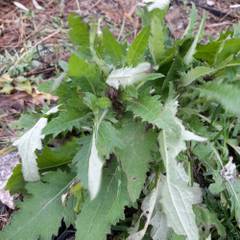
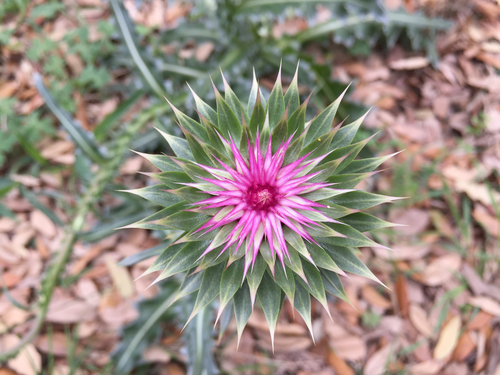
Carduus nutans is a spiny biennial in the daisy family that forms a flat leaf rosette in its first year and a branched flowering stem 2-6 feet (0.6-1.8 m) tall in its second. The deeply lobed, dark green leaves carry sharp marginal spines and run down the stem as spiny wings. From late spring into summer the plant produces solitary flower heads 1.5-3 inches (4-7.5 cm) across that nod sideways on the stem, each ringed with broad, spine-tipped bracts beneath deep rose-purple to magenta florets. A single robust plant can carry dozens of heads and shed up to 10,000 wind-borne seeds, which spread it quickly across open ground. After flowering the plant sets seed and dies. Carduus nutans colonizes pastures, roadsides, and disturbed land, where its spines deter grazing and it crowds out forage and native plants. It is listed as a noxious weed across much of North America and parts of Australia. The taproot lets it persist in dry, compacted soil that limits competing vegetation.
Native Range
Carduus nutans is native to Europe and western and central Asia. It has spread as an invasive weed across North America, southern Africa, Australia, and New Zealand.Suggested Uses
Not planted in gardens and managed as a noxious weed where it appears. The flower heads do draw bees, butterflies, and seed-eating birds such as goldfinches, which is the plant''s main wildlife value. Any use is limited to its incidental role in disturbed habitats rather than deliberate planting.How to Identify
Appearance
Size & Dimensions
Height2' - 6'
Width/Spread1' - 3'
Bloom Information
Detailed Descriptions
Flower Description
rose-purple to magentaFoliage Description
dark greenGrowing Conditions
Sun Requirements
Requires 6-12 hours of direct sunlight daily
• Full Sun: 6+ hours of direct sunlight
• Partial Shade: 3-6 hours of direct sunlight
• Full Shade: Less than 3 hours of direct sunlight
Water & Climate
Water Needs
Drought Tolerance
Drought tolerant when established