Overview
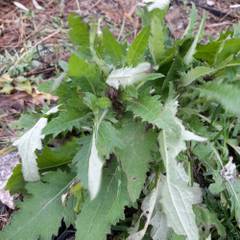
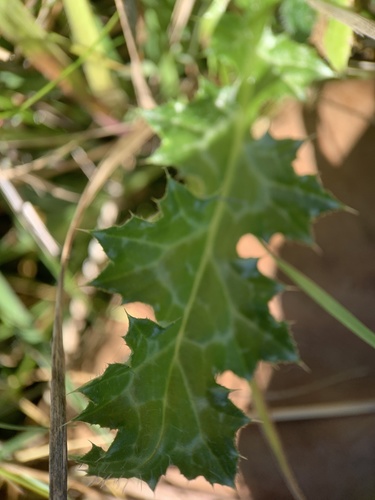
Carduus pycnocephalus is a spiny annual or winter-annual thistle, sometimes biennial, growing 8-80 in (20-200 cm) tall, with erect, branched stems edged by spiny, leaf-like wings. The deeply lobed leaves are 2-8 in (5-20 cm) long, green with a thin cobwebby coating beneath, and tipped with sharp yellow spines along the margins. From spring into summer the plant carries small, narrow flowerheads 0.5-0.8 in (12-20 mm) long, usually grouped two to five together at the branch tips, each holding tubular pink to purple florets above a spiny, cobwebby base. Each head produces many small seeds tipped with slender white bristles that disperse on the wind. The plant forms a basal rosette in autumn or winter, bolts and flowers in spring, then dies after setting seed. It establishes quickly on disturbed, overgrazed, and roadside ground, forming dense, spiny stands that crowd out other vegetation, and is listed as a noxious or invasive weed in California, Australia, and elsewhere. It grows from a stout taproot and relies on prolific seeding rather than perennial regrowth.
Native Range
Native to the Mediterranean region and western Asia, from southern Europe and North Africa east to the Middle East. It has naturalised as a weed in North and South America, southern Africa, and Australia.Suggested Uses
This species is not cultivated and is treated as an agricultural and environmental weed. It has no recognised ornamental or horticultural use.How to Identify
Appearance
Size & Dimensions
Height8" - 6'8"
Width/Spread1' - 2'
Bloom Information
Detailed Descriptions
Foliage Description
greenGrowing Conditions
Sun Requirements
Requires 6-12 hours of direct sunlight daily
• Full Sun: 6+ hours of direct sunlight
• Partial Shade: 3-6 hours of direct sunlight
• Full Shade: Less than 3 hours of direct sunlight
Water & Climate
Water Needs
Drought Tolerance
Drought tolerant when established
Care & Maintenance
Care Guide
Carduus pycnocephalus grows in full sun on a wide range of soils, including poor, dry, compacted, and disturbed ground. It germinates after autumn rain, overwinters as a rosette, and grows rapidly in spring. The plant tolerates drought and grazing pressure, which gives it an advantage on overgrazed pasture. It needs no cultivation and is managed as a weed rather than grown. Removing rosettes before stems bolt and flower limits the heavy seed production that drives its spread.Pruning
No pruning is required for this weed. Plants are cut, mown, or pulled at the rosette or early flowering stage to prevent seed set. Cutting after seed has formed spreads the bristly seed rather than controlling it.Toxicity: Not assessed
UnknownPlanting Guide
Planting Methods & Timing
Planting Method
direct sow
Direct Sow Timing
autumn
Days to Maturity
180–240 days
Plant Spacing
12 inches