Carduus, Genus, spp., Multiple species,
- Genus
- Multiple species
plumeless thistles
Europe, Mediterranean, temperate Asia, and North Africa
Overview
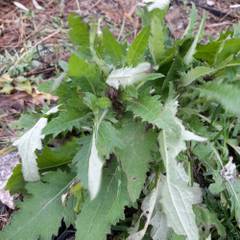
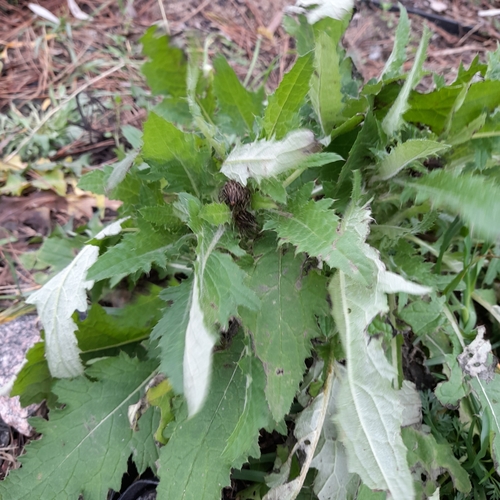
Carduus is a genus of about 90 species of spiny annual, biennial, and perennial herbs in the daisy family (Asteraceae), known as plumeless thistles. Plants form a basal rosette of deeply lobed, spine-edged leaves in the first year and send up branched, winged, prickly flowering stems 1 to 8 ft (0.3 to 2.4 m) tall in the second. The stems carry spiny wings of leaf tissue running down their length, a feature that helps separate the genus from true thistles. Flower heads are rounded to egg-shaped, 0.4 to 2.4 in (1 to 6 cm) across, packed with pink to red-purple disk florets ringed by spine-tipped bracts, and often nod to one side. The name plumeless points to the seed pappus, whose hairs are simple and rough rather than feathered as in Cirsium. Seeds are wind-dispersed and set in large numbers, with a single musk thistle (C. nutans) plant making thousands per season. The genus is native to Europe, Asia, and North Africa, and several species, including musk, Italian, and plumeless thistle, are listed as noxious weeds across North America and Australia, where they invade pasture and disturbed ground.
Native Range
Carduus is native to Europe, the Mediterranean, temperate Asia, and northern and eastern Africa, growing in grassland, pasture, roadsides, and disturbed soils. Several species have naturalized as weeds in North America, South America, Australia, and New Zealand.Suggested Uses
Carduus is rarely cultivated and matters chiefly as a weed of pasture and rangeland. The flowers are a nectar source for bees and butterflies, and finches eat the seeds. Where it is managed, control centers on cutting or removing plants before they seed.How to Identify
Appearance
Size & Dimensions
Height1' - 8'
Width/Spread1' - 3'
Bloom Information
Carduus flowers from late spring through summer, roughly May to August, with the exact timing set by whether a species is annual or biennial. Each plant carries a long succession of heads over several weeks. Wind-borne seed follows within a few weeks of flowering.
Detailed Descriptions
Flower Description
pink to red-purpleFoliage Description
green, often with a paler midribGrowing Conditions
Sun Requirements
Requires 6-12 hours of direct sunlight daily
• Full Sun: 6+ hours of direct sunlight
• Partial Shade: 3-6 hours of direct sunlight
• Full Shade: Less than 3 hours of direct sunlight
Care & Maintenance
Care Guide
Carduus species grow in full sun on a wide range of soils, from poor and stony to fertile loam, and tolerate dry conditions once the deep taproot is set. They favor neutral to alkaline ground, pH 6.0 to 8.0, and colonize overgrazed pasture, disturbed soil, and roadsides. The genus needs no cultivation and self-sows freely, which is why several species spread as weeds. Biennial species flower in their second year and then die, while annuals complete their cycle in one season. Most tolerate cold across USDA zones 3 to 9 as rosettes or seed.Pruning
Flower heads are cut and removed before seed sets to limit spread, since each plant makes thousands of wind-blown seeds. Rosettes are severed below the crown to stop regrowth. Cut material with developing heads still ripens seed and is bagged rather than composted.Pruning Schedule
Prune: June–July
summer