Calystegia, Genus, sepium, Species,
- Genus & species
hedge bindweed
Native range spans Europe and temperate Asia, with some subspecies considered native to parts of North America; in the introduced range the species colonizes hedgerows, fence lines, riparian areas, gardens, and agricultural margins from sea level to approximately 5,000 ft (1,500 m); naturalized across all 50 U.S. states and through southern Canada; the deep rhizome system and counterclockwise-twining stem habit together make the species one of the more persistent perennial weeds in temperate gardens
Overview
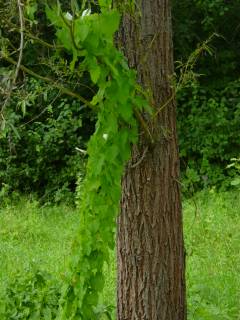
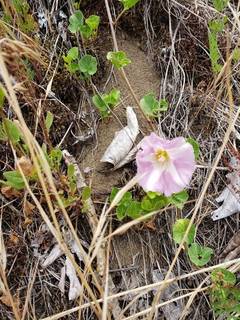
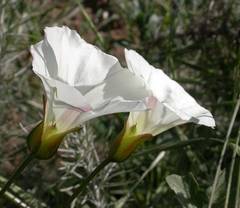
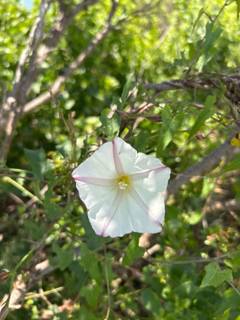
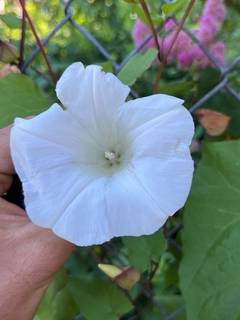
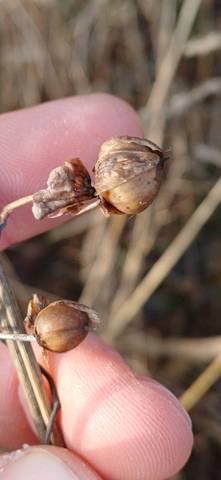
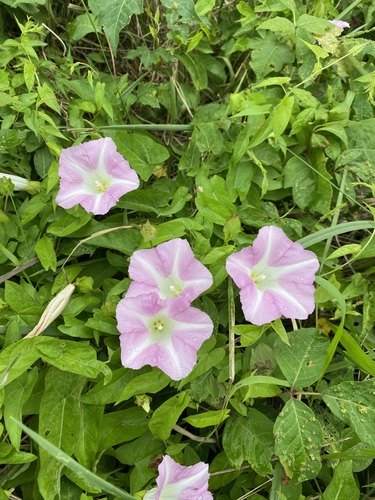
Calystegia sepium is a twining herbaceous perennial vine in the morning glory family (Convolvulaceae) growing 3-10 ft (0.9-3 m) in length per growing season. Stems are smooth, slender, and twine counterclockwise around adjacent plants, fences, and other structures. Leaves are alternate, arrow-shaped (hastate), 2-5 inches (5-13 cm) long, with squared-off or angular basal lobes that separate the species from Convolvulus arvensis (field bindweed) at the leaf level. Flowers are funnel-shaped, 1.5-3 inches (4-8 cm) across, white to pale pink, each subtended by two large heart-shaped bracts that enclose the calyx — the paired bract character is diagnostic for the genus. Individual flowers open in the morning and close by afternoon, each lasting one day. Fruit is a round capsule containing 2-4 dark brown to black seeds. The plant spreads aggressively by white cord-like rhizomes that extend 3-10 ft (0.9-3 m) per season at depths of 6-18 inches (15-45 cm). Rhizome fragments as small as 2 inches (5 cm) regenerate into new plants. The extensive rhizome network makes eradication difficult once established. Both native and introduced subspecies occur in North America; the introduced Eurasian forms are more aggressive colonizers of disturbed and cultivated ground than the native subspecies.
Native Range
Calystegia sepium native range spans Europe and temperate Asia, with some subspecies considered native to parts of North America. In the introduced range, the species colonizes hedgerows, fence lines, riparian areas, gardens, and agricultural margins from sea level to approximately 5,000 ft (1,500 m). Naturalized across all 50 U.S. states and through southern Canada.Suggested Uses
Studied in weed science as a model for rhizomatous perennial weed management. Used in weed identification training to separate from Convolvulus arvensis (field bindweed), a closely related and equally persistent species. Native subspecies contribute to riparian and hedgerow plant communities in some regions.How to Identify
Appearance
Size & Dimensions
Height3' - 10'
Width/Spread3' - 10'
Bloom Information
Flowers from June through September across a 10-14 week bloom window. Individual flowers open in the morning and wilt by afternoon, each lasting a single day. New flowers open continuously on extending vines over the 10-14 week period. In the Pacific Northwest, peak flowering runs July through August. Pollinated primarily by bees, though flowers are also capable of self-pollination when insect visitation is limited.
Detailed Descriptions
Flower Description
White to pale pink funnel-shaped flowers 1.5-3 inches (4-8 cm) across, each subtended by two large heart-shaped bracts that enclose the calyx; individual flowers open in the morning and close by afternoon, lasting one day eachFoliage Description
Medium green alternate arrow-shaped (hastate) leaves 2-5 inches (5-13 cm) long with squared-off or angular basal lobesGrowing Conditions
Sun Requirements
Requires 4-10 hours of direct sunlight daily
• Full Sun: 6+ hours of direct sunlight
• Partial Shade: 3-6 hours of direct sunlight
• Full Shade: Less than 3 hours of direct sunlight