Calystegia, Genus, purpurata, Species,
- Genus & species
Pacific false bindweed
Overview
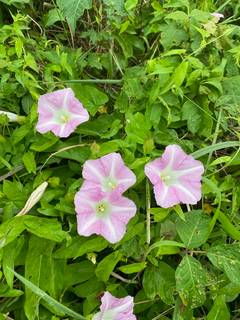
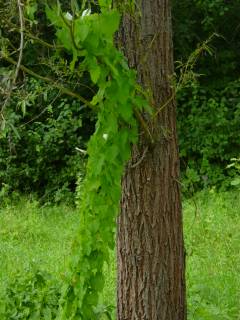
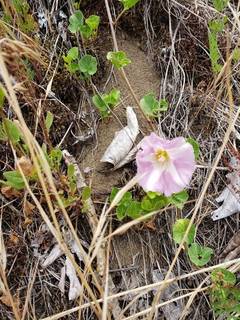
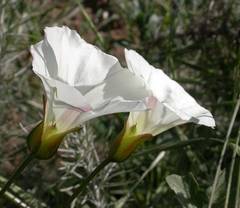
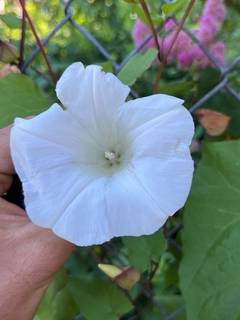
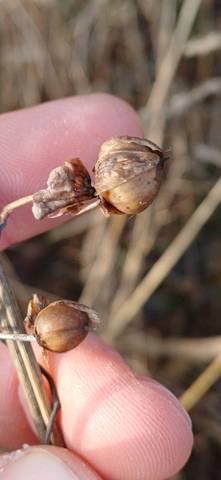
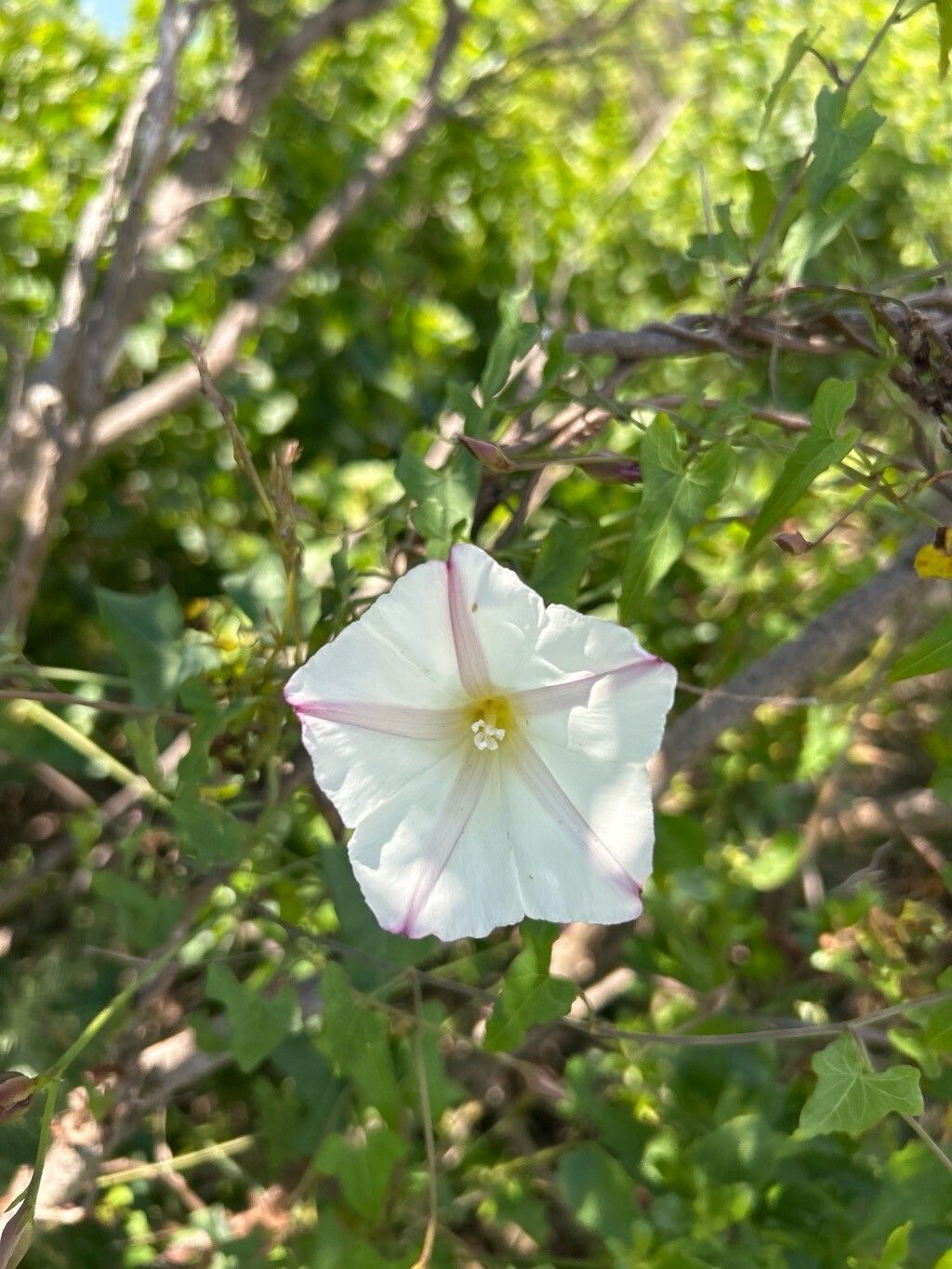
Calystegia purpurata is a herbaceous perennial vine with twining stems 3-10 feet (0.9-3 m) long that climb over shrubs or trail across the ground. Leaves are arrowhead-shaped, triangular with basal lobes, 1-3 inches (2.5-7.5 cm) long, smooth, and arranged alternately along the stems. Funnel-shaped flowers 1.5-2.5 inches (4-6 cm) long open white to cream, sometimes flushed with pink or pale purple, above a pair of bracts at the base of the flower. Bloom occurs from April to August. The flowers open in morning light and close by afternoon in hot weather. Stems arise from a perennial root system and die back over winter, regrowing each spring. The fruit is a rounded capsule containing several seeds. Growth is rapid in the growing season, with stems extending several feet over a few weeks, and unsupported plants form a low tangle. In dry summers the above-ground growth withers early.
Native Range
Native to California and southern Oregon, mainly in the Coast Ranges and Sierra Nevada foothills. Grows in chaparral, coastal scrub, and open woodland on slopes and disturbed ground, from sea level to about 5,500 feet (1,700 m).Suggested Uses
Grown on trellises, fences, and banks in native and habitat gardens, or allowed to scramble through shrubs, spaced 24-36 inches (60-90 cm) apart where vines are trained on a support. The spreading root system can move into adjacent plantings, which limits use in small formal beds.How to Identify
Appearance
Size & Dimensions
Height3' - 10'
Width/Spread2' - 3'
Bloom Information
Flowers from April through August, with peak bloom in late spring. Individual flowers last a single day, opening in the morning and closing by afternoon in warm weather. New flowers open in succession over several weeks, so a plant in bloom carries open flowers for 8-12 weeks in favorable conditions.
Detailed Descriptions
Flower Description
white to cream, sometimes pink-tingedFoliage Description
greenGrowing Conditions
Sun Requirements
Requires 4-8 hours of direct sunlight daily
• Full Sun: 6+ hours of direct sunlight
• Partial Shade: 3-6 hours of direct sunlight
• Full Shade: Less than 3 hours of direct sunlight
Care & Maintenance
Care Guide
Grows in full sun to part shade in well-drained soil of low to moderate fertility. Water occasionally during the first season; established plants draw on a perennial root system and tolerate dry summers, going dormant early in drought. It adapts to sandy, loamy, or rocky soils across a wide pH range. Stems climb by twining and need a support such as a trellis or shrub to grow upright. The root system spreads and resprouts, so the plant can persist and expand once established. Aphids occasionally cluster on new growth.Pruning
Cut back dead stems to the ground in late fall or winter after they wither. Stems can be cut during the growing season to limit spread, since the twining growth climbs into nearby shrubs. Cutting does not harm the perennial root system, which resprouts in spring.Pruning Schedule
Prune: November–December
fallwinter